Warrior I (Virabhadrasana I)

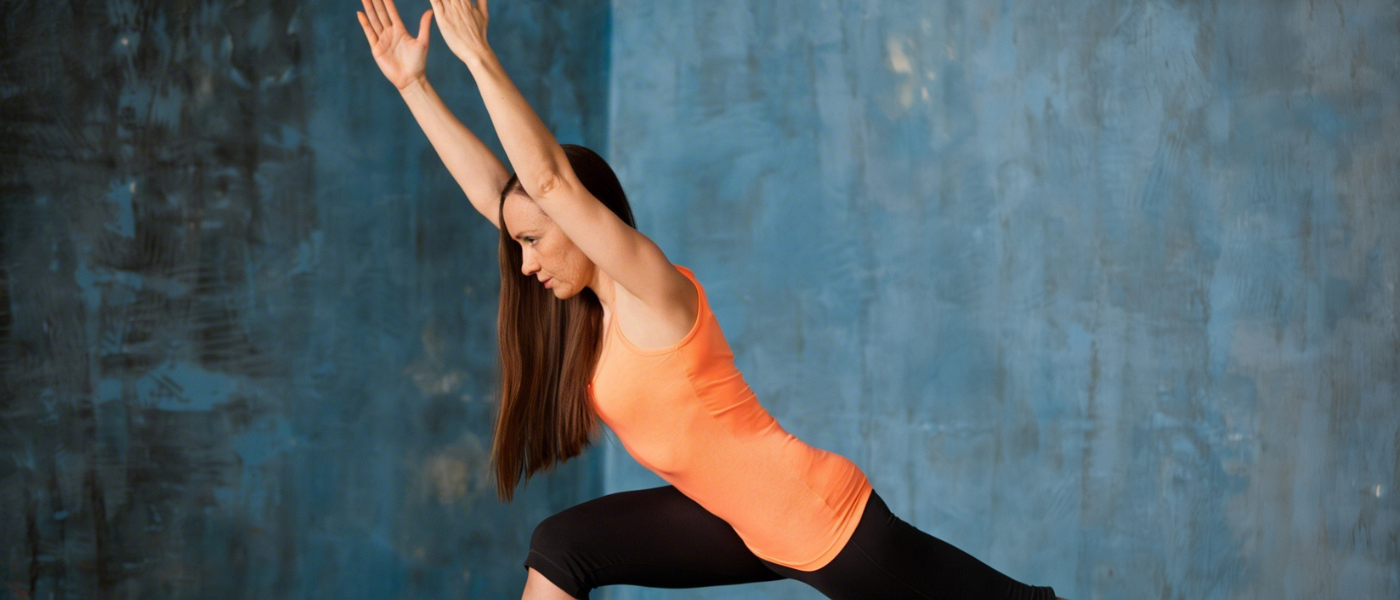
Warrior I is one of the first standing poses I teach in every yoga teacher training I lead. Since 2015, from Bali retreats to Costa Rica intensives, I’ve watched thousands of students discover how this single yoga pose reveals alignment habits and builds both physical power and mental resilience. As a standing backbend and hip opener, pose Virabhadrasana I channels the energy of the mythological warrior Virabhadra, transforming raw effort into focused strength.
Quick answer
Warrior I (Virabhadrasana I) is a standing pose that combines a deep front-knee bend with a backbend through the upper spine, building leg strength and hip-opening at once. Squaring the hips toward the front of the mat is more important than how deep you bend the front knee.
Warrior I (Virabhadrasana I) is a standing yoga pose that strengthens the legs, opens the hips, and improves balance.
How to do it:
- Step one foot back
- Bend front knee
- Lift arms overhead
- Square hips forward
- Hold for 5 breaths
You’ll find Warrior I frequently in sun salutations and vinyasa flows, where it serves as the foundation for the entire warrior series.
This guide covers benefits, step-by-step instructions, alignment tips, modifications, variations, and preparatory and counterposes to support your yoga practice whether you’re a beginner or intermediate practitioner with tight hips, knee sensitivity, or pregnancy considerations.
What is Warrior I (Virabhadrasana I)?
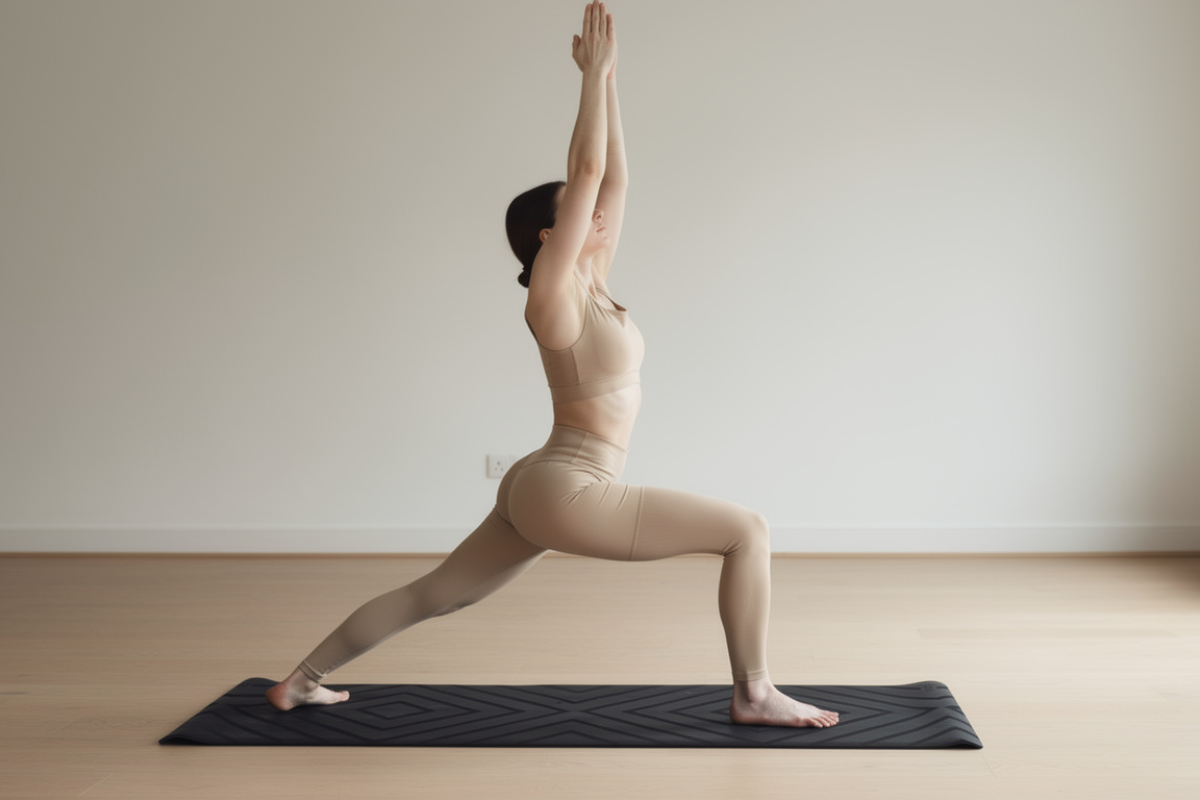
Warrior I is a standing yoga pose that strengthens the legs, opens the hips, and improves balance. It is commonly practiced in vinyasa and sun salutation sequences.
To do Warrior I:
- Step one foot back
- Bend the front knee
- Lift your arms overhead
- Square your hips forward
- Hold for 3–8 breaths
Pose facts box
| Attribute | Details |
|---|---|
| Pose Type | Standing backbend, hip opener |
| Sanskrit Name | Virabhadrasana I |
| Level | Beginner to intermediate |
| Primary Benefits | Strengthens legs and core, opens hips and chest, improves balance and focus |
| Chakra Focus | Activates root (grounding), sacral (hip fluidity), and heart (courage) chakras |
Benefits of Warrior I pose
Warrior I pose strengthens the entire body while cultivating the spiritual warrior’s mindset of courage and determination. The myth of Virabhadra reminds us that focused energy, not aggression, creates true power.
Physical benefits:
- Strengthens quadriceps with eccentric load up to 1.5x bodyweight
- Builds hamstrings, glutes, and ankle stability
- Opens hip flexors, especially the psoas of the back leg (countering 8+ hours of daily sitting)
- Develops core stability through transversus abdominis engagement
- Lengthens spine and reduces kyphosis through thoracic extension
- Opens chest and shoulders, potentially improving breathing capacity by 10-15%
- Enhances balance and proprioception
Mental and emotional benefits:
- Sharpens focus through balance challenges
- Builds determination and emotional resilience
- Encourages presence in the present moment during challenging sensations
- Cultivates inner steadiness for off-mat challenges
This pose strengthens functional movement patterns for desk workers, runners, and hikers working on posture and breathing.
How to do Warrior I pose (Step-by-step)
Begin in Mountain Pose (Tadasana) at the top of your mat with feet hip distance apart.
- Inhale, raise arms overhead with palms facing each other or joined
- Exhale, step your right foot back 3-4 feet (use a shorter stance of 2.5 feet for tight hips)
- Angle your back foot at 30-45 degrees with toes turned slightly forward
- Ground the outer edge of your back heel and big-toe mound of your front foot
- Bend your front knee to approximately a 90-degree angle with knee stacked over your right ankle
- Draw your front hip back and back hip forward, keeping hips facing forward
- Engage your abdominal muscles and lengthen your tailbone toward the floor
- Extend arms parallel overhead, shoulder-width apart, with shoulders relaxed away from ears
- Choose your gaze: forward for stability, slightly up, or toward thumbs depending on neck comfort
- Inhale to lengthen your upper body; exhale to deepen the bend and ground through both legs
- Hold for 3-8 breaths, then step forward and repeat on the opposite side
Alignment tips for Virabhadrasana I
Warrior I contains “opposite actions”, front hip flexion paired with spinal extension, back leg rooting while heart lifts. Proper alignment balances these forces rather than forcing perfection.
Key alignment cues:
- Keep front knee tracking over your second toe (engage outer hip to prevent collapse)
- Press evenly through all four corners of the front foot with front heel grounded
- Root the outer edge of back foot while lifting the inner arch
- Imagine drawing your front hip back and back hip forward toward a neutral position
- Soften your rib cage toward your pelvis to protect the low back
- Maintain a long neck with ears over shoulders
Your hips do not need to be perfectly squared, prioritize knee and lower-back safety. For tight calves, use a shorter stance or turn the left foot inwards at a greater angle. Visualize “pulling the mat apart” with your feet to activate the inner thighs and stabilize your pelvis.
Common mistakes in Warrior I
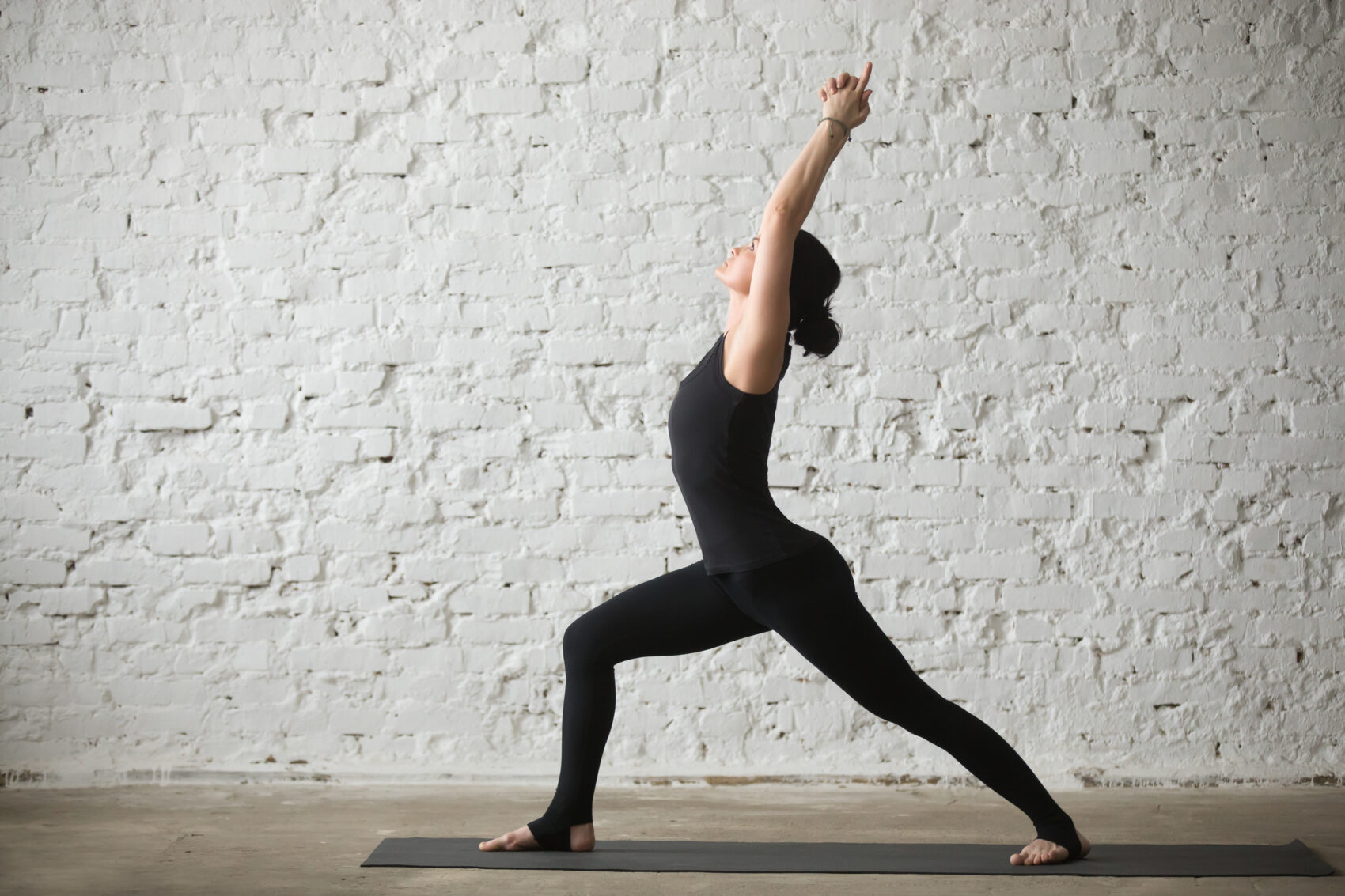
Most students struggle with Warrior I initially. Adjusting these patterns creates more stability and spaciousness in the pose.
| Mistake | Correction |
|---|---|
| Front knee collapsing inward | Squeeze outer glute, track left knee or right knee over second toe |
| Knee past ankle | Shorten stance by 6-12 inches |
| Back heel lifted unintentionally | Widen to hip-width or use a block under heel |
| Over-arching lower back | Tuck tailbone slightly, engage abs |
| Shoulders hunched to ears | Micro-bend elbows, soften shoulder blades down |
| Ribs flaring forward | Draw ribs toward hips |
| Back leg collapsing | Firm back thigh isometrically, keep leg straight |
Consider High Lunge for students who cannot ground the back heel without strain. Better hamstring opening from Pyramid Pose or Downward-Facing Dog supports easier heel grounded positioning.
Modifications for safety and accessibility
At YOGI TIMES, we believe modifying is wisdom, not weakness. Practice Warrior I with adaptations for different bodies, injuries, and life stages.
Chair-Supported Version: Place hands lightly on a chair back, foot flat behind you with a shorter stance, or practice seated with front knee bent and left leg extended behind.
Wall Support: Position your left heel or right heel at a wall for grounding. For shoulder injury, place hands on wall instead of arms overhead.
Upper Body Options: Try cactus arms (elbows at degree angle), hands on hips, or hands in prayer at heart center to reduce shoulder strain.
Stance Adjustments: Widen feet to hip-width+ for hips open comfort. Reduce front leg bend depth for sensitive knees. Use a shorter stance for low-back sensitivity.
Safety Notes: For high blood pressure, vertigo, or balance issues, keep gaze forward or down, avoid holds longer than 5 breaths, and work with a qualified yoga teacher.
Advanced variations of Warrior I
Once your foundation feels stable, explore these variations to challenge strength, balance, and mobility while maintaining breath awareness.
- Humble Warrior: Interlace fingers behind back, fold inside your left thigh or right thigh for deep shoulder and heart opening
- Eagle Arms Warrior I: Wrap arms in Garudasana position for upper-back stretch and shoulder mobility
- Bound Warrior I: Clasp hands behind back with raised arms parallel to floor for chest expansion
- Straight-Leg Front Variation: Keep front leg straight for deeper hamstring emphasis and balance challenge
Try flowing between High Lunge and Warrior I on breath (heel lifted to heel grounded) for 10-15 repetitions to build endurance and simultaneous movements control.
Preparatory poses for Warrior I
Warming the hips, ankles, hamstrings, and shoulders before practice makes Warrior I more accessible for the lower body and reduces strain.
- Mountain Pose (Tadasana): Establishes basic standing alignment
- High Lunge: Opens hip flexors without requiring heel grounding
- Downward-Facing Dog: Lengthens hamstrings and calves
- Low Lunge (Anjaneyasana): Releases the psoas of the back leg
- Pyramid Pose: Prepares hamstrings and spine
- Chair Pose (Utkatasana): Builds leg and core strength
Suggested Sequence: 2-3 rounds Cat-Cow → Downward Dog → Low Lunge each side → Pyramid → Warrior I
Counterposes and follow-up poses
Because Warrior I is a strong standing backbend and hip opener, counterposes should release the low back, hips, and shoulders while releasing tension in the nervous system.
- Uttanasana (Standing Forward Fold): Decompresses spine and hamstrings
- Prasarita Padottanasana (Wide-Legged Forward Fold): Releases hips
- Downward-Facing Dog: Full posterior chain release
- Child’s Pose (Balasana): Grounds breath and calms
- Seated Twist: Neutralizes spine
- Knees-to-Chest Supine: Calms low back
Transitioning from Warrior I to Warrior II or Reverse Warrior , and eventually Warrior III, creates a well-rounded standing series before cooling forward bends.
Frequently asked questions about Warrior I (Virabhadrasana I)
What is Warrior I (Virabhadrasana I)?
Warrior I is a standing yoga pose that strengthens the legs, opens the hips, and improves balance. It is commonly practiced in vinyasa flows and sun salutations as a foundational posture in the warrior series.
Is Warrior I safe for beginners?
Yes, Warrior I is generally safe for beginners when practiced with proper alignment and simple modifications.
Beginners can make the pose more accessible by shortening their stance, keeping the gaze forward, and using support like a wall or chair. The key is to focus on stability and avoid forcing the hips or lower back.
Why can’t I keep my back heel down in Warrior I?
This is very common and usually happens بسبب tight calves, ankles, or limited hip mobility.
To help:
- Shorten your stance
- Turn your back foot in slightly more
- Practice regularly to improve flexibility
You can also practice High Lunge instead, which builds strength without requiring the heel to stay grounded.
What is the difference between Warrior I and Warrior II?
The main difference is the position of the hips and arms.
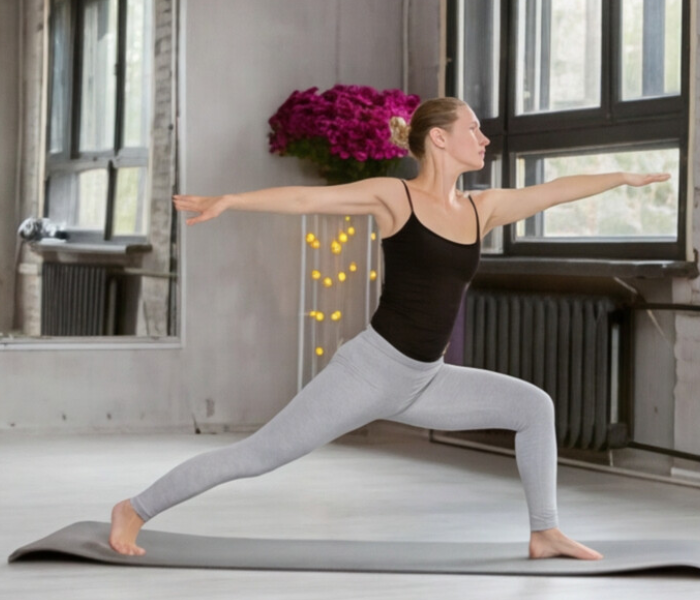
In Warrior I, the hips face forward and the arms reach overhead. In Warrior II, the hips open to the side and the arms extend parallel to the floor.
Each pose develops different types of strength and mobility.
How long should you hold Warrior I?
Most practitioners hold Warrior I for 3 to 8 breaths.
Beginners may start with shorter holds, while more experienced practitioners can stay longer to build strength and stability.
What are the benefits of Warrior I?
Warrior I strengthens the legs and core, opens the hips and chest, and improves balance and focus.
It also helps counteract the effects of long periods of sitting by stretching the hip flexors and encouraging better posture.
Can Warrior I cause knee pain?
Warrior I can cause discomfort if the front knee is not properly aligned.
To avoid this:
- Keep the knee stacked over the ankle
- Avoid letting the knee collapse inward
- Shorten your stance if needed
If pain persists, it’s best to modify the pose or consult a yoga teacher.
Related poses and sequencing ideas
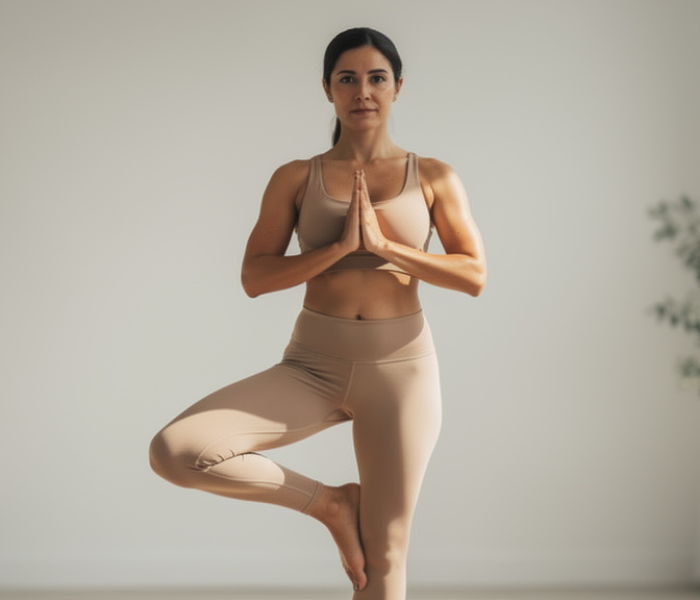
Warrior I often appears alongside other standing poses. Explore the “warrior family” to build strength, focus, and better balance across your entire body.
Related Poses:
- Warrior II: Lateral plane strength
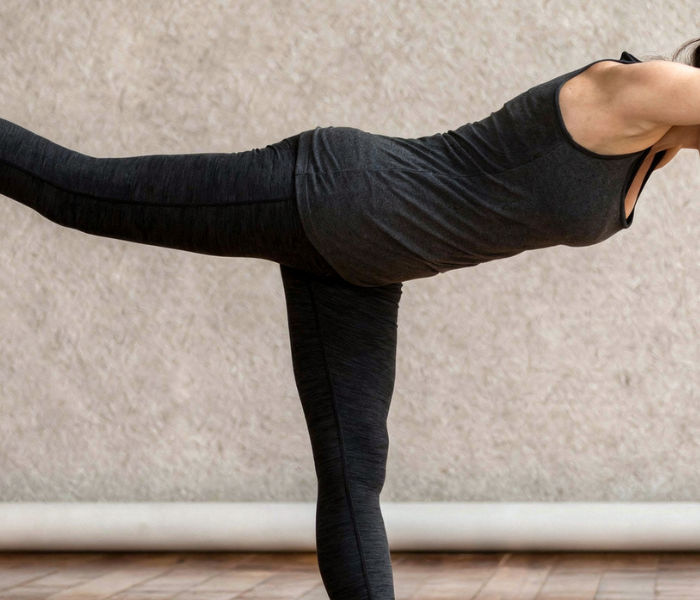
- Warrior III: Balance pinnacle
- Reverse Warrior: Side stretch integration
- Humble Warrior: Forward fold with bound arms
- Extended Side Angle: Oblique engagement
- Triangle Pose: Lateral hamstring work
- High Lunge/Crescent Lunge: Heel-off precursor
Mini-Sequences:
- Downward Dog → Warrior I → Warrior II → Reverse Warrior → Extended Side Angle → Downward Dog
- Mountain → High Lunge → Warrior I → Humble Warrior → Standing Forward Fold
Warrior I builds more than physical strength in the legs and core, it cultivates the focused determination you need both on and off the mat.
Bring the qualities of steadiness, courage, and conscious choice into your daily challenges, and let this foundational yoga pose remind you that true power comes from grounded, mindful action.
If Warrior I is a pose you love teaching, represent it through Pose for a Cause.
FAQs
Yes, prioritize knee and lower-back safety over a perfectly squared pelvis. A shorter stance or practicing with the back heel lifted can help if your hips are tight.
Warrior I squares the hips toward the front with a backbend through the spine, while Warrior II keeps the hips open to the side with the torso upright and arms extended.
Free Wellness E-Book
Find Your Zen!
Your Free Guide
To Wellness
Download Your Free Guide & Receive Weekly Inspirations From The Lifestyle Of a Modern Yogi!