Savasana (Corpse Pose): Benefits, meaning, and how to practice

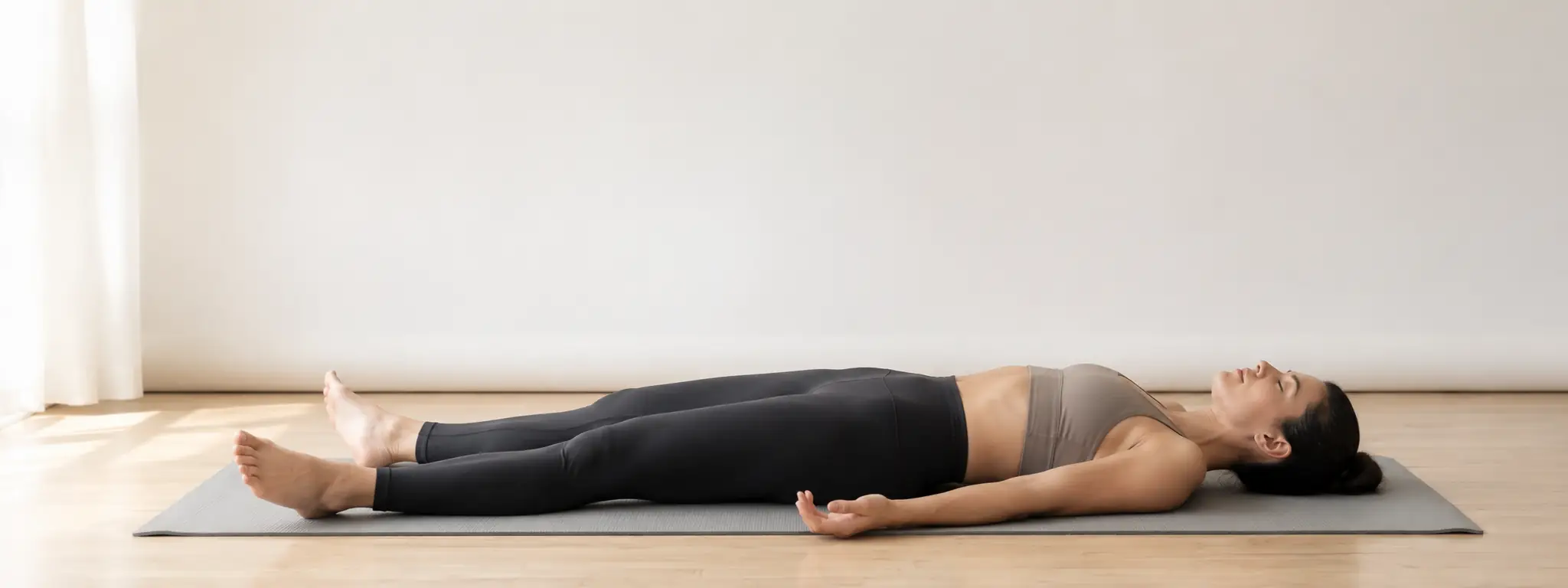
Savasana is the pose many students wait for and the one many others quietly avoid. Physically, it looks simple. You lie on your back, let the body rest, and do nothing. But for anyone who has tried to stay awake, relaxed, and present at the end of practice, Savasana can be surprisingly revealing.
Also called Corpse Pose or final resting pose, Savasana gives the body time to absorb the effects of yoga. It helps the nervous system settle, the breath return to its natural rhythm, and the mind begin to loosen its grip.
The pose is not just a nap at the end of class. It is a practice of conscious rest
What is Savasana?
Savasana is the final resting posture traditionally practiced at the end of a yoga class. The body lies still on the back, legs relaxed, arms resting by the sides, palms open, and eyes closed.
At first glance, it may look like doing nothing. In reality, it is a transition from physical effort into conscious stillness.
After movement, stretching, strengthening, twisting, balancing, and breathing, Savasana allows the body and mind to integrate the practice. This is why many teachers consider it one of the most important poses in yoga.
A common misunderstanding is that Savasana is just a reward after the “real” practice. It is not. It is part of the practice itself.
The relationship between yoga and back pain is more complicated than most people realize. Learn when yoga helps, when it hurts, and what to do about it.
Why practice Savasana?
Many teachers describe Savasana as the hardest pose in yoga. Not because it demands strength, flexibility, or balance, but because it asks for something many of us rarely practice: stillness.
During a challenging sequence, the mind has a task. It focuses on alignment, breath, effort, and movement. In Savasana, those distractions disappear. Suddenly there is nothing to achieve, nowhere to go, and nothing to fix.
For some students, this feels peaceful. For others, it reveals how busy the mind really is. Thoughts, emotions, plans, memories, and worries can become surprisingly loud when the body becomes quiet.
This is one reason Savasana is considered such an important yoga practice. It teaches us how to remain present without constantly doing something.
After years of teaching yoga, Mike has noticed that many students find five minutes of stillness more challenging than a demanding sequence of standing poses or backbends. Physical effort often feels familiar. True rest can feel surprisingly unfamiliar.
In many ways, Savasana is not simply the end of practice. It is where the practice becomes most honest.
Could your favorite pose inspire students worldwide?
Through Pose for a Cause, yoga teachers can become the featured guide for a pose they love on YOGI TIMES.
Each feature includes a dedicated editorial article, your photos and video, a link back to your website or offerings, visibility across our community of 500,000+ followers, and exposure to 22,000+ yoga enthusiasts on our mailing list.
Plus, 10% of every participation supports a yoga-aligned charity.
Learn more about Pose for a CauseMeaning of the Sanskrit name
The word Savasana comes from two Sanskrit roots:
Sava means corpse
Asana means posture or seat
You may also see the word written as Shavasana, which reflects the Sanskrit pronunciation more closely. Both spellings are commonly used in English.
Savasana is sometimes associated with Mrtasana, from mrta, meaning death.
This does not mean the pose is morbid. It points to a deeper yogic idea: lying still, releasing effort, and practicing the temporary letting go of identity, control, and striving.
In simple terms, Savasana asks: can you rest without needing to become anything else?
Benefits of Savasana
Physical benefits
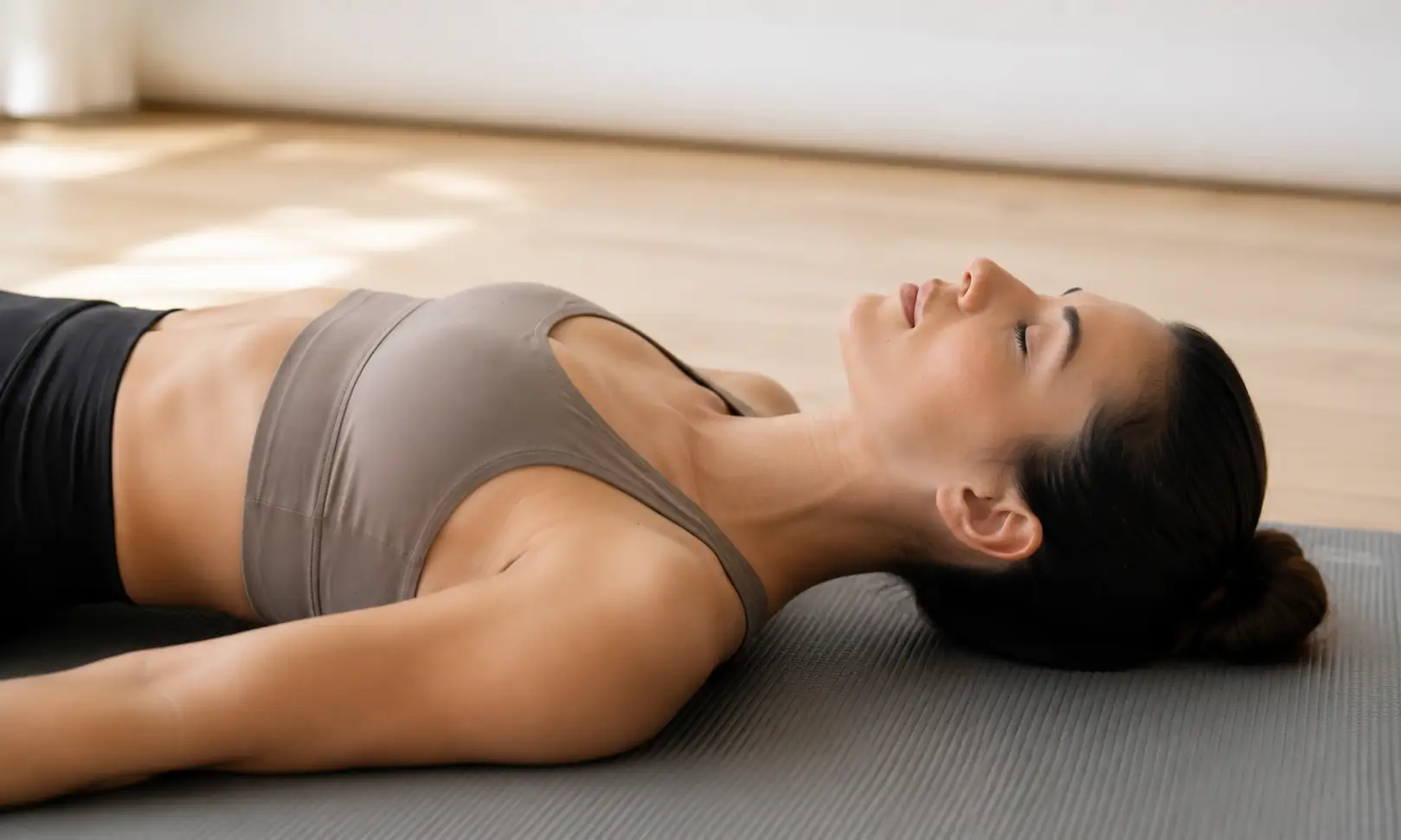
Savasana helps the body recover after practice.
It can support:
- muscular relaxation
- slower breathing
- reduced physical tension
- lower stimulation in the body
- recovery after strong asana practice
- awareness of subtle holding patterns
Many students only notice how tense they are once they lie down. The jaw grips. The belly holds. The shoulders hover slightly off the floor. The hands remain half-active.
Savasana gives the body permission to stop bracing.
Mental benefits
The mental challenge of Savasana is staying present without being busy.
This can help develop:
- concentration
- patience
- self-observation
- emotional regulation
- awareness of thought patterns
The mind may wander. That is normal. The practice is not to force the mind empty. The practice is to notice thinking without chasing every thought.
Energetic and emotional benefits
Savasana can feel deeply grounding after a strong practice. It allows the energy of movement to settle instead of scattering outward.
Some students experience emotion in Savasana, especially after backbends, hip openers, or intense sequences. This does not need to be dramatized. Stillness simply creates space to notice what was already present.
Muscles worked in Savasana
Savasana is not a strengthening pose, but it is still a full-body posture.
The main “work” is release.
Areas that often need attention include:
- jaw
- tongue
- forehead
- eyes
- neck
- shoulders
- lower back
- abdomen
- hips
- inner thighs
- hands
- feet
The joints are placed in a neutral, supported position. The spine rests, the shoulders soften, and the feet naturally fall outward.
For people with lower back discomfort, the legs fully extended may not feel neutral. In that case, placing a bolster or folded blanket under the knees can make the pose much more effective.
How to do Savasana step by step
- Lie on your back
Come down onto your mat and lie flat on your back. Let the body settle before trying to relax.
- Adjust your legs
Separate the feet slightly wider than hip-width. Let the toes fall open naturally.
- Place your arms comfortably
Rest the arms a little away from the torso. Turn the palms upward or let them face slightly inward if that feels better for your shoulders.
- Lengthen the back of the neck
Gently tuck the chin just enough to create space at the back of the neck. Avoid forcing the head into position.
- Soften the lower back
Let the pelvis feel heavy. If the lower back arches sharply or feels uncomfortable, place support under the knees.
- Close the eyes
Allow the eyes to close or soften the gaze if closing the eyes feels uncomfortable.
- Release the body gradually
Move attention from the feet to the head, relaxing one area at a time.
- Let the breath become natural
After a few deeper breaths, allow breathing to happen on its own.
- Stay for several minutes
Five minutes is a useful minimum. Ten minutes or more can be appropriate after a longer or more intense practice.
- Come out slowly
Deepen the breath. Move the fingers and toes. Bend the knees. Roll to one side and pause before sitting up.
Has a pose shaped your teaching journey?
For some teachers it is Savasana. For others it may be Crow, Wheel, Half Moon, Triangle, or another posture that transformed the way they teach.
Become the featured teacher for a pose on YOGI TIMES and share your philosophy, teaching approach, photos, and video with a global audience.
One teacher per pose • 500K+ social community • 22K+ newsletter subscribers • 10% donated to charity
Discover Pose for a CauseAlignment tips for Savasana
Let the body be symmetrical, but not rigid
The body should feel balanced, but not forced into perfect lines.
Support the lower back if needed
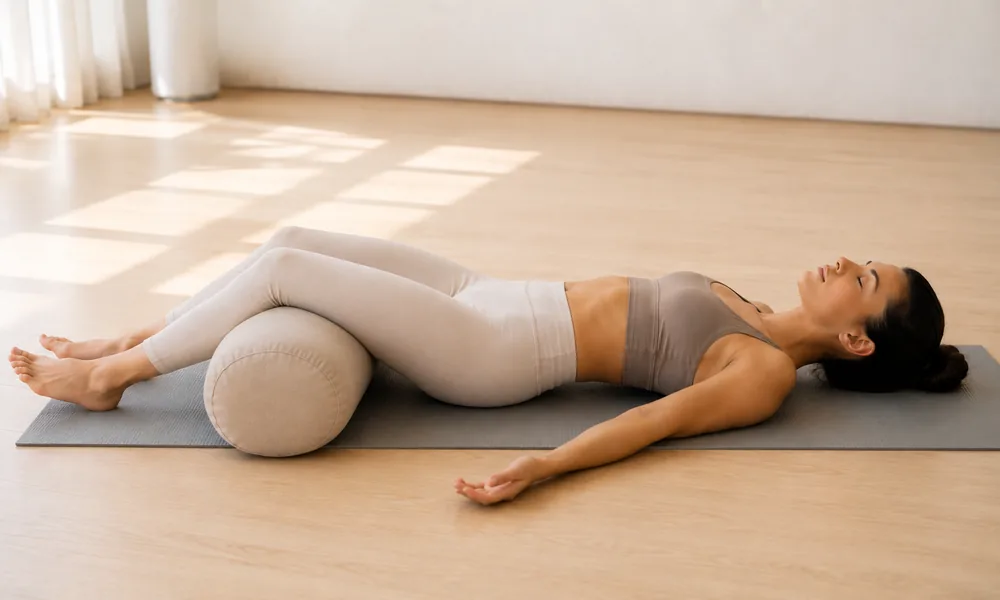
A bolster under the knees can reduce lumbar tension.
Keep the neck long
If the chin lifts toward the ceiling, place a folded blanket under the head.
Let the palms be natural
Palms up can feel open and receptive. Palms inward can feel more grounded. Choose what helps the shoulders relax.
Cover the body if you get cold
Body temperature often drops in stillness. A blanket can make the difference between relaxing and waiting for the pose to end.
Common mistakes
Mistake: treating Savasana like a nap
Correction: let the body rest while keeping a soft thread of awareness.
Mistake: forcing relaxation
Correction: allow relaxation gradually. The body may need time to trust the floor.
Mistake: skipping the pose
Correction: stay for at least a few minutes, especially after strong practice.
Mistake: lying flat despite lower back discomfort
Correction: support the knees with a bolster, blanket, or cushion.
Mistake: judging a busy mind
Correction: notice thoughts as thoughts. The mind thinking does not mean you are failing.
Beginner modifications and props
Bolster under the knees
This is one of the best modifications for lower back sensitivity.
Blanket under the head
Helpful if the neck feels strained or the chin lifts too much.
Eye pillow
Can help soften the eyes and quiet visual stimulation.
Blanket over the body
Useful in cooler rooms or after slow practice.
Knees bent, feet on the floor
A good option for students who feel uncomfortable with legs extended.
Side-lying Savasana
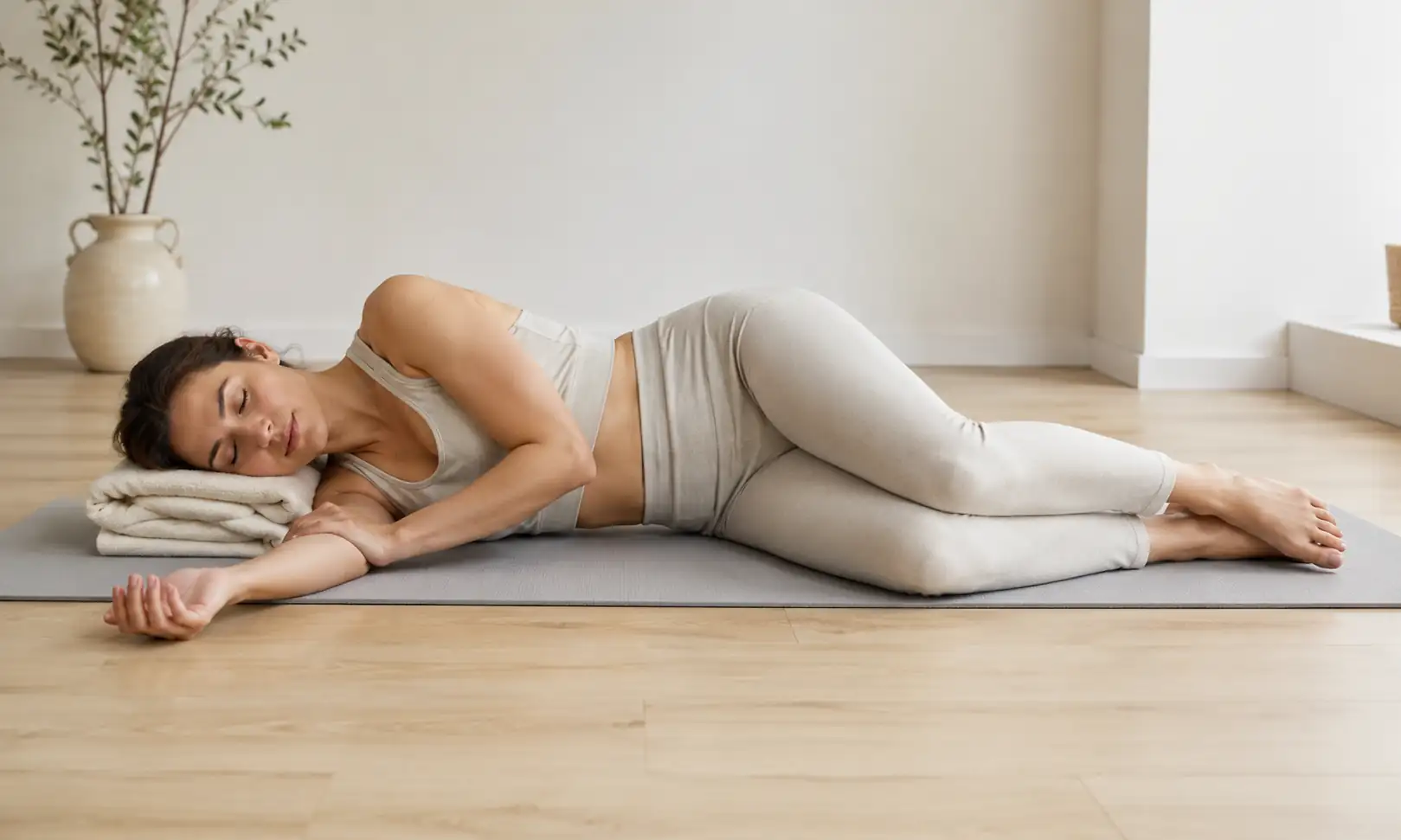
Often useful during pregnancy or for people who cannot lie comfortably on the back.
Deeper ways to practice Savasana
Savasana can remain simple, but experienced practitioners may explore it more deeply.
Body scan
Move awareness slowly through the body, releasing each area.
Breath awareness
Observe natural breath without controlling it.
Pratyahara practice
Use Savasana as a doorway into sense withdrawal, where attention turns inward.
Yoga nidra preparation
Savasana is often the physical position used for Yoga Nidra, though the practices are not exactly the same.
Contraindications and safety tips
Savasana is generally safe, but not every version suits every body.
Modify if you have:
- lower back pain
- pregnancy
- dizziness lying flat
- neck discomfort
- anxiety triggered by stillness
- trauma sensitivity
- difficulty breathing while flat
If lying still creates distress, keep the eyes open, bend the knees, hold a grounding object, or practice a shorter version.
Rest should feel supportive, not forced.
Teacher cues for Savasana
Let the weight of the body drop into the floor.
Soften the jaw.
Let the tongue rest.
Release the space between the eyebrows.
Feel the breath move without changing it.
Let the hands be quiet.
Let the floor hold you.
There is nothing to fix for the next few minutes.
Preparatory poses
Savasana usually comes after practice, but these poses prepare the body especially well:
- Child’s Pose
- Supine Twist
- Reclined Bound Angle Pose
- Supported Bridge Pose
- Legs on a chair
- Gentle forward fold
How to come out of Savasana
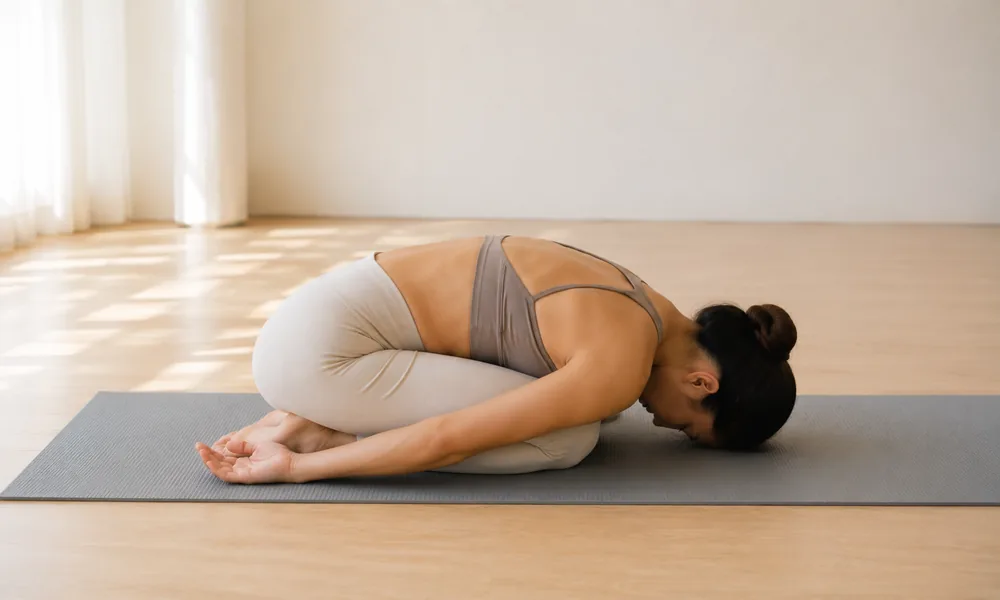
Coming out of Savasana is part of the pose.
Start by deepening the breath. Move the fingers and toes. Stretch the arms overhead if that feels natural.
Bend the knees and roll to one side. Many traditions suggest rolling to the right, though the most important thing is to move slowly and with care.
Pause in a fetal position for a few breaths.
Then use the hands to press yourself up, keeping the head heavy and the eyes soft.
Avoid jumping up too quickly. The nervous system has just settled. Let the transition respect that.
Yoga sequences including Savasana
Gentle practice sequence
Cat-Cow
Child’s Pose
Low Lunge
Seated Forward Fold
Supine Twist
Savasana
Restorative sequence
Supported Fish Pose
Reclined Bound Angle Pose
Legs on a chair
Supported Twist
Savasana
After a dynamic practice
Sun Salutations
Standing poses
Backbends
Forward Fold
Supine Twist
Savasana
What this pose teaches
Savasana teaches the difference between collapse and surrender.
Collapse is unconscious. Surrender is awake.
The body lies still, but the practice is not passive. You are observing the impulse to move, plan, manage, judge, or improve the moment.
This is why Savasana can feel harder than it looks.
The pose also brings us close to the symbolism of death. Not in a frightening or dramatic way, but in the sense of letting go. The role, the effort, the performance, the identity of “the one practicing yoga” all soften for a few minutes.
You do not need to believe anything specific about death, God, reincarnation, or the afterlife to practice Savasana well.
You only need to be willing to release what you are holding, one breath at a time.
That is already a profound practice.
Yoga teacher Judith Hanson Lasater, a leading voice in restorative yoga, has often described relaxation as a skill that can be cultivated through practice rather than something that simply happens automatically. Savasana reminds us that rest is not passive. Like strength, flexibility, and balance, it is something we learn over time.
Related poses
Explore these related restorative and grounding practices:
- Child’s Pose
- Supported Fish Pose
- Reclined Bound Angle Pose
- Supine Twist
- Constructive Rest Pose
- Yoga pose directory
Could you be the teacher behind a pose?
Every yoga teacher has a pose that changed their practice.
Through Pose for a Cause, one teacher is selected to represent each pose on YOGI TIMES through a dedicated editorial feature, embedded video, professional exposure, and direct links to their offerings.
- Dedicated feature on YOGI TIMES
- Backlink to your website, studio, or training
- Visibility across 500,000+ social followers
- Exposure to 22,000+ newsletter subscribers
- 10% supports a yoga-aligned charity
- Only one teacher per pose
If there is a pose that has shaped your teaching, perhaps it is time to share it with the world.
Become a featured teacherFrequently asked questions
Is Savasana the same as sleeping?
No. Sleep is unconscious rest. Savasana is conscious rest. It is fine if you occasionally fall asleep, but the traditional practice is to remain gently aware.
Why is Savasana called Corpse Pose?
The name comes from the Sanskrit word sava, meaning corpse. The pose symbolizes stillness, surrender, and the temporary release of effort.
How long should I stay in Savasana?
Five minutes is a good minimum after most practices. After a longer class, ten minutes or more may be appropriate.
Is it okay to skip Savasana?
It is better not to. Even a short Savasana helps the body integrate the practice and allows the nervous system to settle.
Why do I feel restless in Savasana?
Stillness can reveal how active the mind and nervous system are. Restlessness does not mean you are doing it wrong. It may be exactly what the pose is showing you.
What should I do if my lower back hurts in Savasana?
Place a bolster, cushion, or folded blanket under your knees. You can also bend the knees and keep the feet on the floor.
Can I practice Savasana during pregnancy?
Lying flat on the back may not be appropriate later in pregnancy. A side-lying version with support is often more comfortable. Ask a qualified teacher or healthcare provider if unsure.
What is the difference between Savasana and Yoga Nidra?
Savasana is the resting posture. Yoga Nidra is a guided relaxation or meditation practice often done while lying in Savasana.
Final thoughts
Savasana looks simple because the body is still. But stillness does not always come easily.
This pose reminds us that rest is not wasted time. It is where the practice lands. It is where the body receives. It is where the mind learns, slowly, that it does not have to hold everything all the time.
If you want to understand alignment, sequencing, and the deeper purpose of yoga practice more fully, explore the YOGI TIMES guide to the best online yoga teacher trainings.
Free Wellness E-Book
Find Your Zen!
Your Free Guide
To Wellness
Download Your Free Guide & Receive Weekly Inspirations From The Lifestyle Of a Modern Yogi!