Warrior II (Virabhadrasana II)

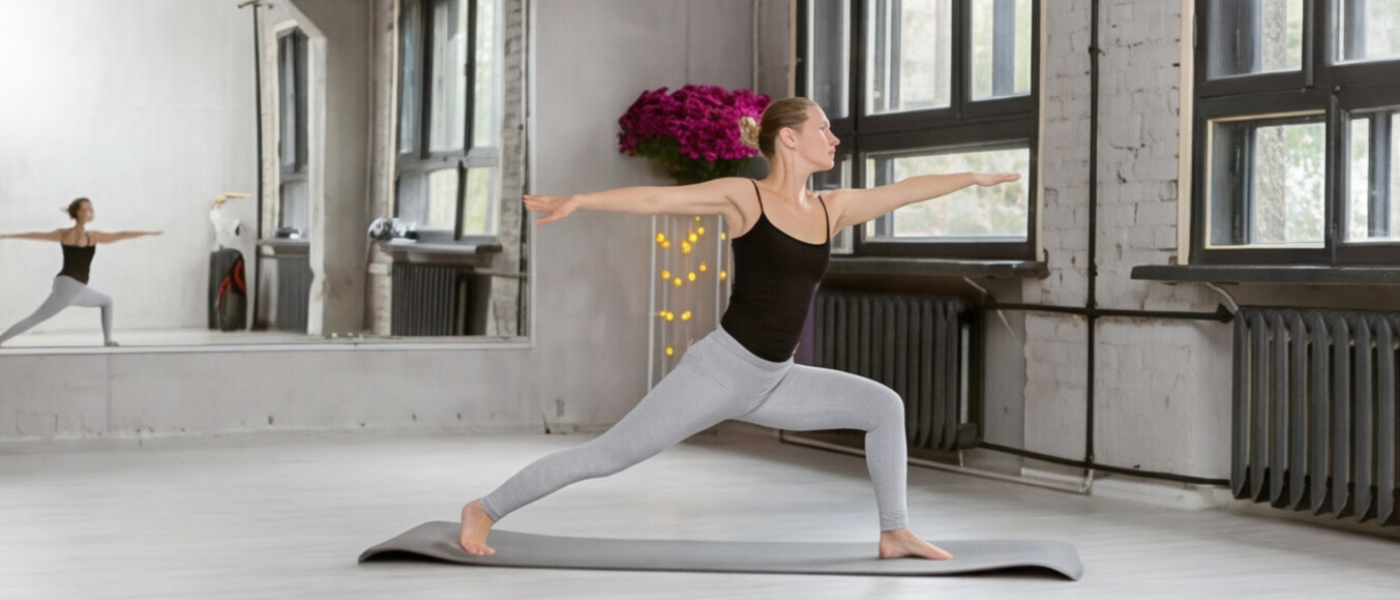
In my Bali teacher trainings, Warrior II is one of the first standing poses I refine with students, often building directly on Warrior I, because it immediately reveals alignment habits that affect every other yoga pose in their practice.
Quick answer
Warrior II (Virabhadrasana II) is a standing pose with the hips open to the side, front knee bent over the ankle, and arms extended parallel to the floor. Stacking the front knee directly above the ankle, rather than letting it drift forward, keeps the pose safe.
Still building your standing-pose vocabulary? Our best beginner yoga app picks are a solid place to practice this kind of alignment work.
Warrior II (Virabhadrasana II) is a foundational standing posture that builds strength, stamina, and focus while opening the hips and chest. This fierce warrior stance grounds practitioners through the lower body while cultivating a broad, expansive upper body. Whether you’re new to yoga or deepening your practice, this article provides a complete guide covering benefits, step-by-step instructions, alignment tips, modifications, and safe sequencing. We’ll also explore how Warrior II connects to poses like Triangle Pose, Extended Side Angle Pose, and Reverse Warrior.
Pose Facts
| Element | Details |
|---|---|
| Pose type | Standing hip-opening, strengthening pose |
| Sanskrit name | Virabhadrasana II (veer-ah-bah-DRAHS-uh-nuh two) |
| Level | Beginner to intermediate (accessible but nuanced) |
| Primary benefits | Strengthens legs, glutes, and core; opens hips, groin, and chest; improves balance and concentration; builds stamina for longer flows |
Warrior II is typically held for 3–10 breaths in vinyasa and hatha classes and serves as a base pose for transitions to Half Moon, Extended Side Angle, and Reverse Warrior.
A teacher’s perspective
During a recent Costa Rica retreat, a student approached me after class with widened eyes. She’d spent years practicing Warrior 2 with her front knee collapsing inward, until we placed a block beside her right knee for feedback. That single adjustment transformed her entire standing practice.
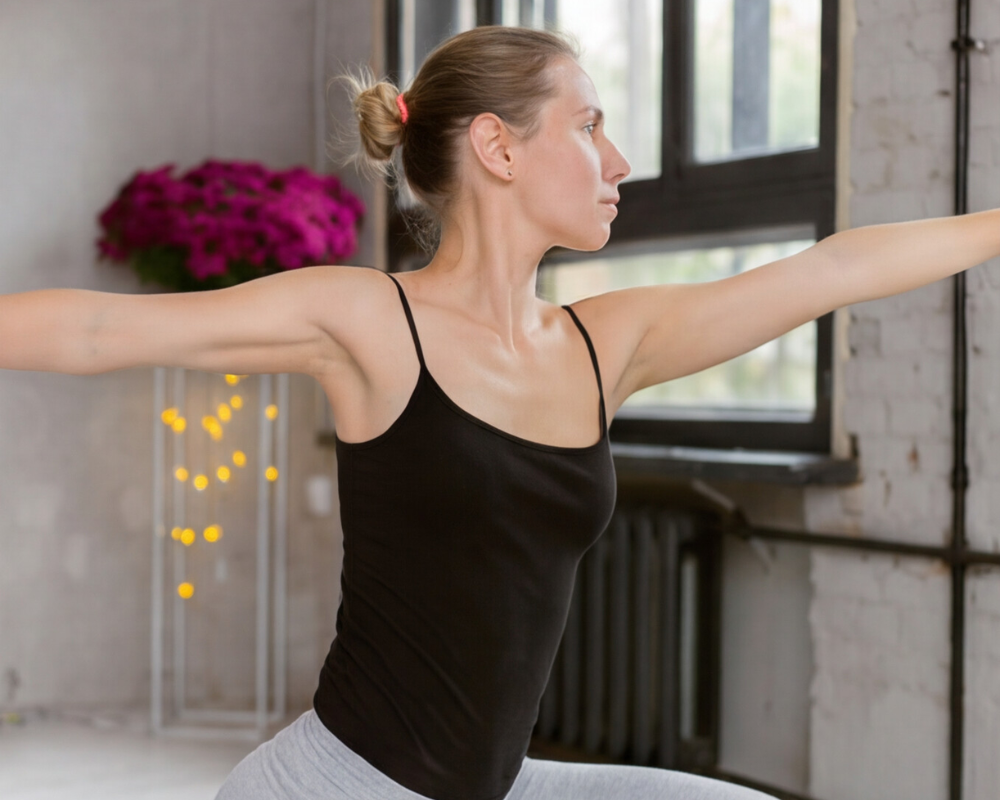
This yoga pose reveals patterns we carry unconsciously: collapsing into the front hip, over-arching the spine, or disconnecting breath from effort. The warrior quality here isn’t aggression, it’s grounded strength, clear focus, and compassionate awareness. Understanding alignment in Warrior II supports more complex poses like Half Moon Pose and Warrior III, connecting physical practice to the mindful living we cultivate at YOGI TIMES.
Benefits of Warrior II
From years of teaching, I’ve witnessed both visible physical changes and subtler shifts in practitioners who commit to this posture.
The lower body benefits are substantial: stronger quadriceps, hamstrings, calf muscles, and glutes develop through sustained holds. Hip flexibility improves as the groin and inner thighs stretch, while the ankle and feet gain stability. The back leg works continuously, engaging the gluteus medius and creating endurance in muscles often neglected. Your pelvic floor activates to maintain stability.
This posture strengthens postural awareness through core engagement and spinal support, while the extended arms open the chest and shoulders, counteracting desk-bound patterns. Ray Long, orthopedic surgeon and anatomist, notes the lengthening in pectoralis major and biceps that enhances breathing capacity.
Mentally, holding Warrior II cultivates the balance between steadiness (sthira) and ease (sukha). The drishti over your front fingers sharpens focus, building resilience that transfers to athletic activities like hiking or climbing stairs. We regularly use this pose in YOGI TIMES retreat flows before balancing postures.
How to do Warrior II pose (step-by-step)
Warm up with a few Sun Salutations or gentle hip openers before holding Warrior II.
- Begin in Mountain Pose facing the long side of your yoga mat
- Step your feet wide into a wide stance (3–4 feet apart, ankles roughly under wrists), keeping your feet parallel to start
- Turn your right foot 90 degrees toward the mat’s front; angle back toes slightly inward
- Align the front heel with the back arch or slightly wider for stability
- Bend your right knee to stack directly above the right ankle, aim for thigh parallel to floor if accessible
- Press through the outer edge of the back foot, keeping the back leg straight and strong, gripping the earth and pressing firmly into the outer edge to distribute weight evenly
- Extend your arms out to the sides at shoulder height, parallel to the floor with palms facing down
- Relax shoulders away from ears; draw shoulder blades gently down the back
- Find your gaze softly over front fingers while maintaining steady breath (5–8 cycles)
- To exit, straighten the front knee, lower arms, and repeat on the other side
Note: Warrior II requires a wide stance with the front knee bent at 90 degrees over the ankle and the back leg straight, while keeping the torso upright and arms extended parallel to the floor, gazing over the front fingertips.
For an advanced variation, add a challenge by turning your palms and inner elbows toward the ceiling.
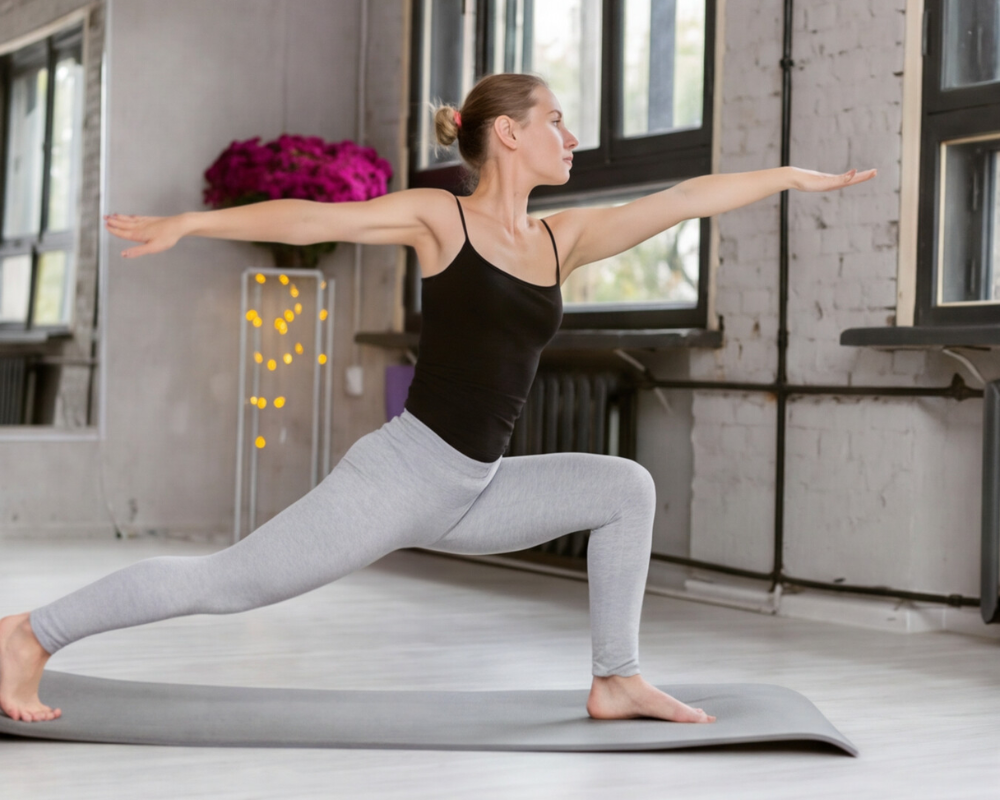
Explore flowing sequences like Warrior II → Reverse Warrior → Extended Side Angle to build heat and maintain focus.
Alignment tips
Intelligent alignment protects knees, hips, and low back while deepening strength.
Front knee: Track toward the little-toe side to prevent the bent knee from caving inward. Stack it above the ankle, never let the knee drift beyond toes, which creates shearing force.
Pelvis: Keep front hip and back hip points level and broad. Avoid aggressively squaring the pelvis forward, but don’t collapse toward the front thigh either. A slight forward rotation of the back hip creates space in the sacroiliac joint.
Spine and torso: Maintain an upright torso over the pelvis rather than leaning forward. Engage lower belly to prevent the low back from over-arching; keep ribs from flaring.
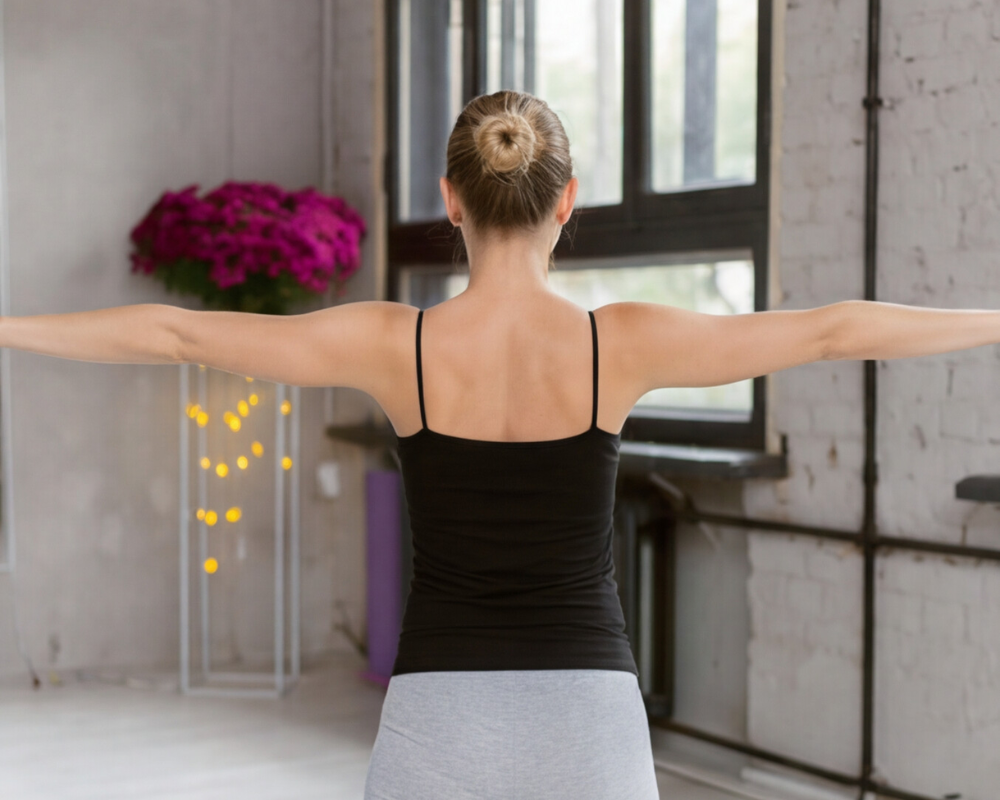
Arms and shoulders: Soften the trapezius, extend through fingers in opposite directions from the heart. Imagine reaching from fingertip to fingertip.
Wall practice: Stand with back heel, pelvis, and shoulder blades lightly touching a wall to sense vertical alignment. Remember that anatomy differs, pain-free stability matters more than textbook aesthetics.
Common mistakes
These patterns appear regularly in classes and teacher trainings, all are fixable with awareness.
The front knee drifting inward (valgus collapse) stresses the joint, while letting it pass the toes creates anterior knee strain. Collapsing into the inner arch of the front foot compromises the entire leg line. Locking or over-rotating the back knee reduces stability and can torque the hip.
Upper body errors include shoulders hiking toward ears, over-reaching arms until the chest collapses forward, or letting the head drop back excessively.
These misalignments stress knees, hips, sacroiliac joint, and low back over time. Correct by placing a block beside the front knee for feedback or practicing with a wall behind the back leg. Refining grounding in Mountain Pose and alignment in Triangle Pose cleans up Warrior II form significantly.
Modifications
Warrior II adapts beautifully for beginners, pregnancy, and students with sensitive joints.
- Shorter stance: Reduce intensity in hips and legs; prioritize stability over depth
- Chair-supported: Rest front thigh on a chair seat or sit sideways while maintaining classical arm and torso position
- Wall support: Practice with heel against wall for balance feedback
- Block under thigh: Support longer holds without strain
- Breath-focused: Hold fewer breaths initially, gradually increasing as strength builds
Consult a healthcare provider for current knee, ankle, or hip injury and work with experienced teachers during retreats or trainings.
Advanced variations
Once your foundation feels steady and pain-free, explore these challenges:
Add Eagle arms (Garudasana arms) to intensify shoulder and upper-back engagement while sharpening focus. Flow between Warrior II, Reverse Warrior, and Extended Side Angle in a “dancing warrior” sequence, this builds endurance and fluidity in the body.
Experiment with longer holds (10–20 breaths) while maintaining smooth Ujjayi breath to test mental stamina. Explore micro-adjustments of pelvic tilt and back thigh rotation to find more space in hips without compromising the knee.
Warrior II serves as a gateway to balancing poses like Half Moon Pose and Warrior III, where leg and core strength become essential.
Preparatory poses
Warming hip flexors, hamstrings, and shoulders makes Warrior II safer and more enjoyable.
Low Lunge (Anjaneyasana) opens hip flexors essential for the back leg position. High Lunge builds front-leg strength and prepares thighs for sustained effort. Wide-Legged Forward Bend stretches inner thighs and hamstrings. Mountain Pose imprints the vertical alignment you’ll maintain.
Triangle Pose and Extended Side Angle Pose develop leg and hip awareness critical for Warrior 2.
Mini warm-up sequence: Sun Salutations → Low Lunge → High Lunge → Warrior I → Warrior II.
Counterposes
Counterposes release intensity in hips, thighs, and lower back after holding Warrior II.
Wide-Legged Forward Bend, Pyramid Pose, and Runner’s Lunge stretches hamstrings and rebalances legs. Bound Angle Pose (Baddha Konasana) or supine figure-four eases groin and outer hips. Child’s Pose integrates effects and calms the nervous system.
In full class settings, Warrior II flows into Reverse Warrior, then Triangle Pose, before forward bends and seated postures gradually cool the body.
Related poses & flowing from Warrior II
Warrior II serves as a central hub in vinyasa and hatha flows, connecting to multiple standing postures.
Related warrior poses include Warrior I (squares hips forward) and Warrior III (balances on one leg), each sharing themes of strength and focus while changing hip and spine orientation. Side-body openers like Extended Side Angle, Reverse Warrior, and Half Moon evolve naturally from Warrior II positioning.
Balancing poses such as Tree Pose and Pyramid Pose benefit from the stability cultivated here.
Explore these related poses through YOGI TIMES online classes, articles, and teacher training modules. Return to Warrior II regularly, noticing how your physical alignment and inner warrior qualities evolve through consistent practice.
Warrior II often becomes a teacher’s signature pose. Get recognized for it through Pose for a Cause.
Building comfort in standing poses like this one gets easier with some structure between classes. Our best beginner yoga app picks are worth a look.
FAQs
This usually happens when the outer hip and glute aren’t engaged enough to support the position. Placing a block beside the knee for feedback, or shortening your stance, can help you feel the correction.
Aim for the thigh roughly parallel to the floor if it’s accessible, but pain-free stability matters more than matching a textbook depth, since anatomy differs from person to person.
Free Wellness E-Book
Find Your Zen!
Your Free Guide
To Wellness
Download Your Free Guide & Receive Weekly Inspirations From The Lifestyle Of a Modern Yogi!