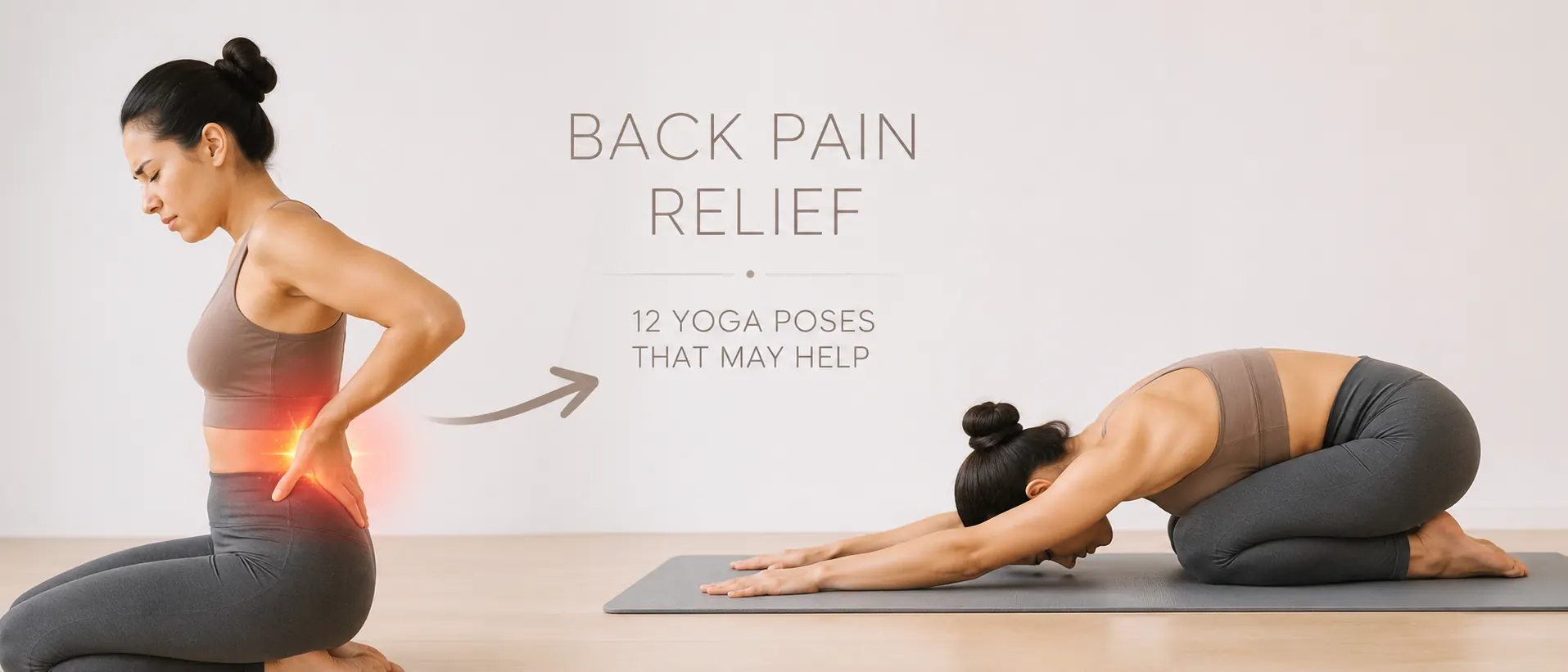
12 yoga poses for back pain: gentle stretches to relieve lower back tension

In short
If you’re looking for the best yoga poses for back pain, start with Child’s Pose, Cat-Cow, Sphinx Pose, Supine Twist, Bridge Pose, Low Lunge, and Legs-Up-the-Wall.
For many people, gentle mobility, hip-opening stretches, and light core strengthening work better than deep stretching alone.
Not all back pain responds the same way. If your pain is sharp, radiating, or linked to numbness, weakness, or bowel/bladder changes, get medical guidance before practicing.
Editor’s note
At YOGI TIMES, we have spent more than two decades reviewing yoga programs, interviewing teachers, and practicing yoga ourselves. While yoga can help many cases of muscular lower back discomfort, it is not a substitute for medical care. If your pain includes numbness, weakness, loss of strength, loss of bladder or bowel control, or symptoms traveling down the leg, consult a qualified healthcare professional before beginning any exercise program.
Can yoga actually help back pain?
For many people, yes.
Low back pain is one of the most common physical complaints worldwide. Depending on the study, roughly 80% of adults will experience significant low back pain at some point in their lives.
Yet “back pain” is not really one condition.
A stiff lower back after eight hours at a desk is different from a bulging disc. Tight hip flexors create different problems than degenerative spinal changes. Stress-related muscular tension feels different from nerve irritation.
This distinction matters because yoga does not treat every cause of back pain equally.
What yoga tends to do well is improve several contributors that frequently make back discomfort worse:
- Reduced spinal mobility
- Tight hips and hamstrings
- Weak core muscles
- Poor postural habits
- Chronic muscular tension
- Stress-related muscle guarding
One reason yoga often works when other approaches fail is that it rarely targets only one factor.
A good yoga practice simultaneously addresses breathing, movement quality, body awareness, strength, flexibility, and nervous system regulation.
That combination can be surprisingly powerful.
We’ve also observed something many practitioners eventually notice themselves: people often blame their spine for pain that is actually coming from tight hips, weak glutes, restricted thoracic mobility, or prolonged sitting.
The lower back frequently becomes the victim of problems originating elsewhere.
These 12 poses may help relieve lower back tension for many people. However, yoga is not always the solution. In some cases, certain poses, movement habits, or underlying spinal conditions can actually make symptoms worse. If you’ve ever wondered can yoga cause back pain?, for a deeper perspective, read YOGI TIMES co-founder Jesse Gabler’s personal story about what his MRI revealed after 25 years of yoga practice.
Before you begin: when yoga may not be the right starting point
Certain back conditions deserve additional caution before attempting even gentle yoga stretches.
Speak with a healthcare professional before beginning a new exercise program if you have:
- A recent spinal injury
- Severe sciatica
- A diagnosed herniated disc with active symptoms
- Progressive weakness in the legs
- Numbness or tingling that is worsening
- Recent spinal surgery
- Unexplained weight loss alongside back pain
- Changes in bowel or bladder function
Even among yoga teachers, there is sometimes a tendency to assume movement is always the answer.
Sometimes it is.
Sometimes it isn’t.
Good teaching starts with understanding what problem you’re actually dealing with.
The poses below are designed for common mechanical low back discomfort, stiffness, postural tension, and mild muscular tightness rather than acute medical conditions.
Why lower back pain develops in the first place
When people think about back pain, they often focus on the place where they feel the pain.
The body doesn’t always work that way.
A surprisingly large percentage of lower back discomfort can be traced to a handful of recurring patterns.
Behind every pose is a teacher
The poses in this article have helped thousands of students move with greater ease and less pain. Behind every pose is a teacher whose experience, observation, and years of practice help make yoga safer and more accessible.
Through Pose for a Cause, YOGI TIMES highlights yoga teachers through the poses they know and teach best while supporting meaningful charitable causes.
Explore Pose for a CauseToo much sitting
Modern life places many people in spinal flexion for most of the day.
Driving.
Working.
Scrolling.
Watching television.
Over time, prolonged sitting can contribute to tight hip flexors, reduced glute activation, and increased stress on the lumbar spine.
This is one reason people often feel better after standing up and moving around.
The body is asking for movement variability.
Weakness disguised as tightness
Many people describe their backs as “tight.”
Sometimes they are.
Sometimes the sensation of tightness is actually the body’s protective response to instability.
When the deep stabilizing muscles of the trunk are underperforming, surrounding muscles often increase tension to compensate.
Stretching alone may provide temporary relief without addressing the underlying issue.
This is why strengthening poses like Bridge Pose and Plank frequently deserve a place alongside restorative stretches.
Tight hips and hamstrings
This is one of the most common patterns yoga teachers encounter.
When the hips lose mobility, the lower back often picks up extra movement.
The result?
More strain where you least want it.
Improving hip mobility can sometimes reduce back discomfort far more effectively than repeatedly stretching the lower back itself.
Stress and the nervous system
Back pain is not purely mechanical.
Many people notice their symptoms worsen during periods of stress, poor sleep, anxiety, or emotional overwhelm.
This isn’t imaginary.
The nervous system influences muscular tension, pain sensitivity, and recovery.
One reason gentle yoga can be helpful is that slow breathing and mindful movement may help calm an overactive stress response while encouraging healthier movement patterns.
The best yoga poses for back pain
The poses below are not ranked by popularity. They are ranked by how often we see them help people with everyday lower back tension, stiffness from sitting, and mild mechanical back discomfort.
You do not need to perform all 12.
For most people, choosing four to six poses and practicing consistently will produce better results than doing an occasional 45-minute routine.
1. Child’s pose (Balasana)
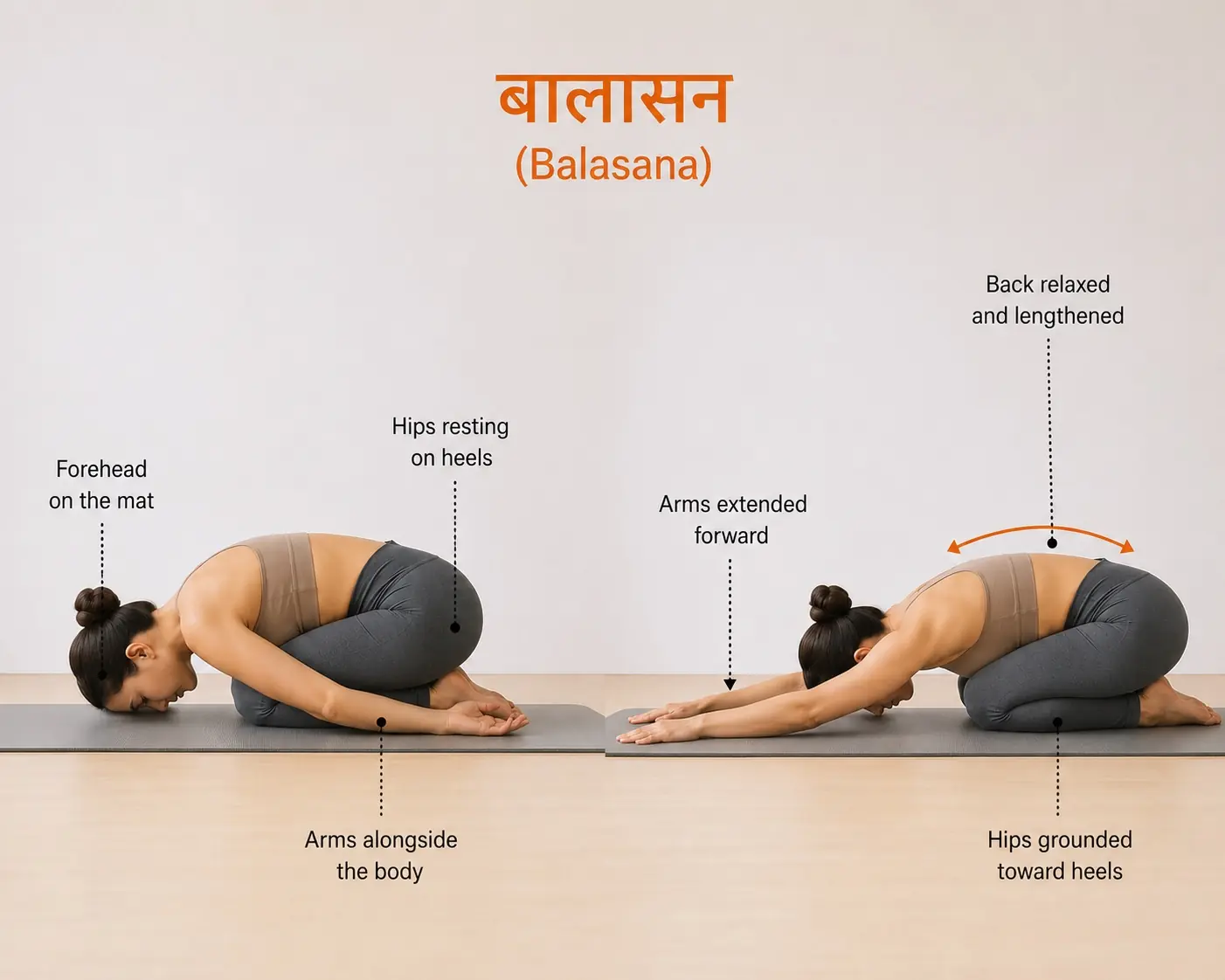
If there is one pose almost every beginner can start with, it is Child’s Pose.
It gently lengthens the muscles along the spine, encourages diaphragmatic breathing, and gives the nervous system a chance to relax.
One reason this pose feels so effective is that it combines movement and rest. The lower back is lightly stretched while the body remains supported.
How to do it:
- Kneel on your mat.
- Bring your big toes together.
- Sit back toward your heels.
- Fold your torso forward.
- Extend your arms in front of you or alongside your body.
- Rest your forehead on the mat.
Hold for 30 seconds to 2 minutes.
Teaching note: If your hips do not comfortably reach your heels, place a folded blanket between them.
2. Cat-Cow stretch (Marjaryasana-Bitilasana)
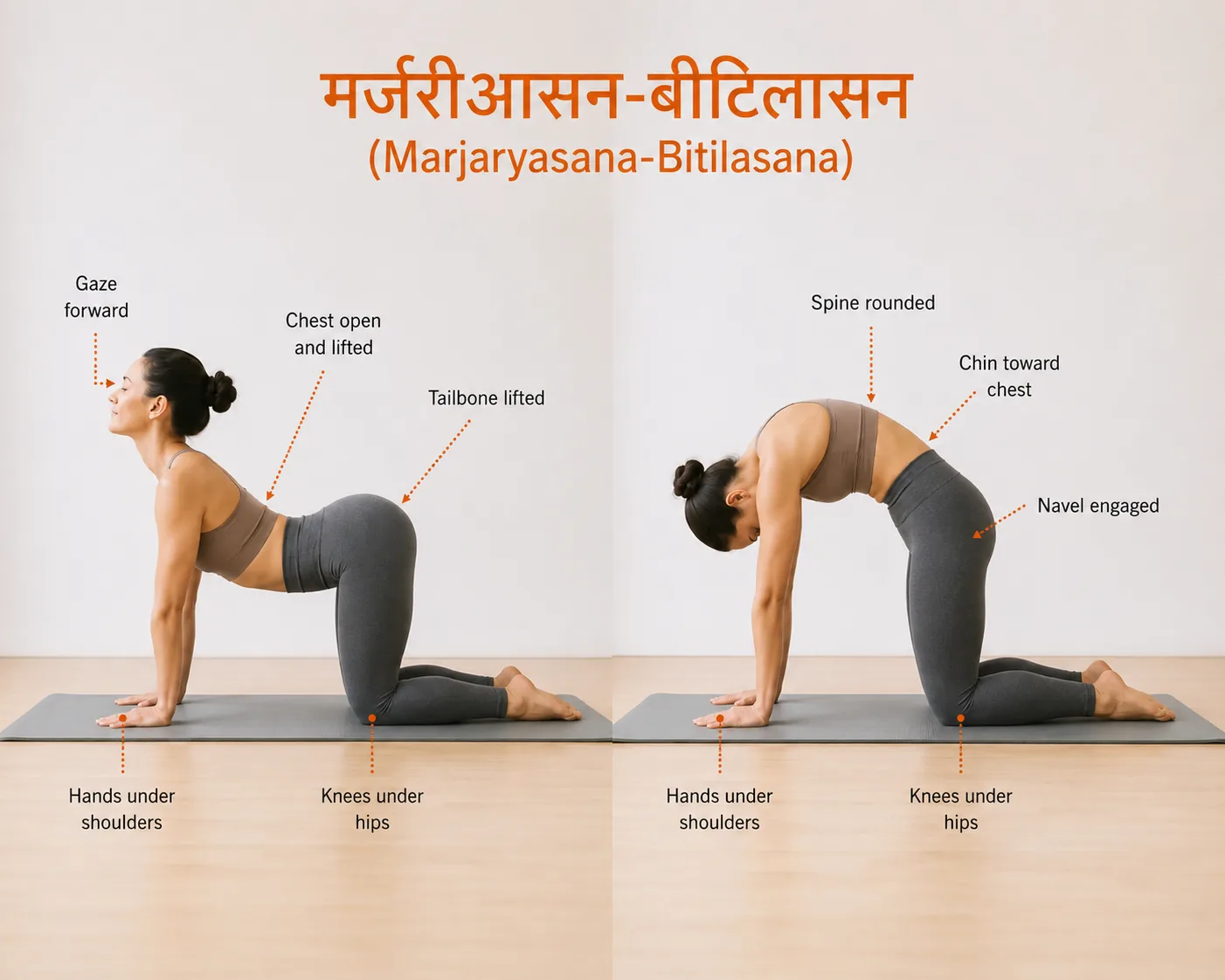
Cat-Cow remains one of the best yoga poses for lower back pain because it encourages gentle spinal movement without aggressive stretching.
Many people with back pain become fearful of movement. Cat-Cow helps rebuild confidence while restoring mobility.
How to do it:
- Begin on hands and knees.
- Place wrists under shoulders.
- Place knees under hips.
- Inhale and gently arch the back while lifting the chest.
- Exhale and round the spine toward the ceiling.
- Move slowly with the breath.
Continue for 1 to 2 minutes.
Teaching note: This is not about creating the biggest arch possible. Smooth movement matters more than range of motion.
3. Sphinx pose
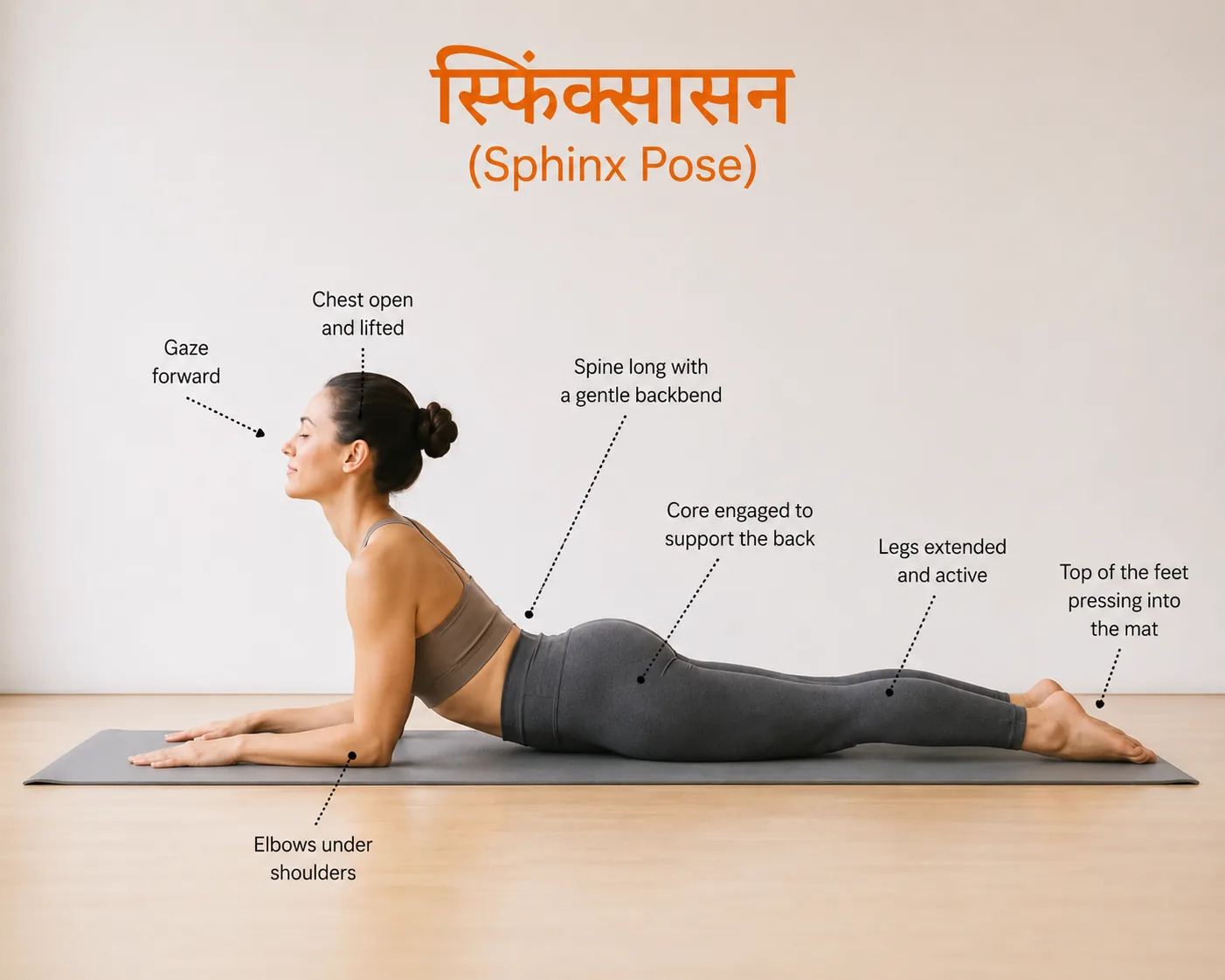
Sphinx is often a safer alternative to deeper backbends.
It creates mild extension through the lumbar spine while strengthening the muscles that support posture.
Many physical therapists include some version of this movement for people who spend large portions of the day sitting.
How to do it:
- Lie on your stomach.
- Place your elbows beneath your shoulders.
- Press your forearms into the floor.
- Lift your chest gently.
- Relax your shoulders away from your ears.
Hold for 30 seconds to 90 seconds.
Avoid this pose if extension consistently worsens your symptoms.
4. Supine knee-to-chest stretch
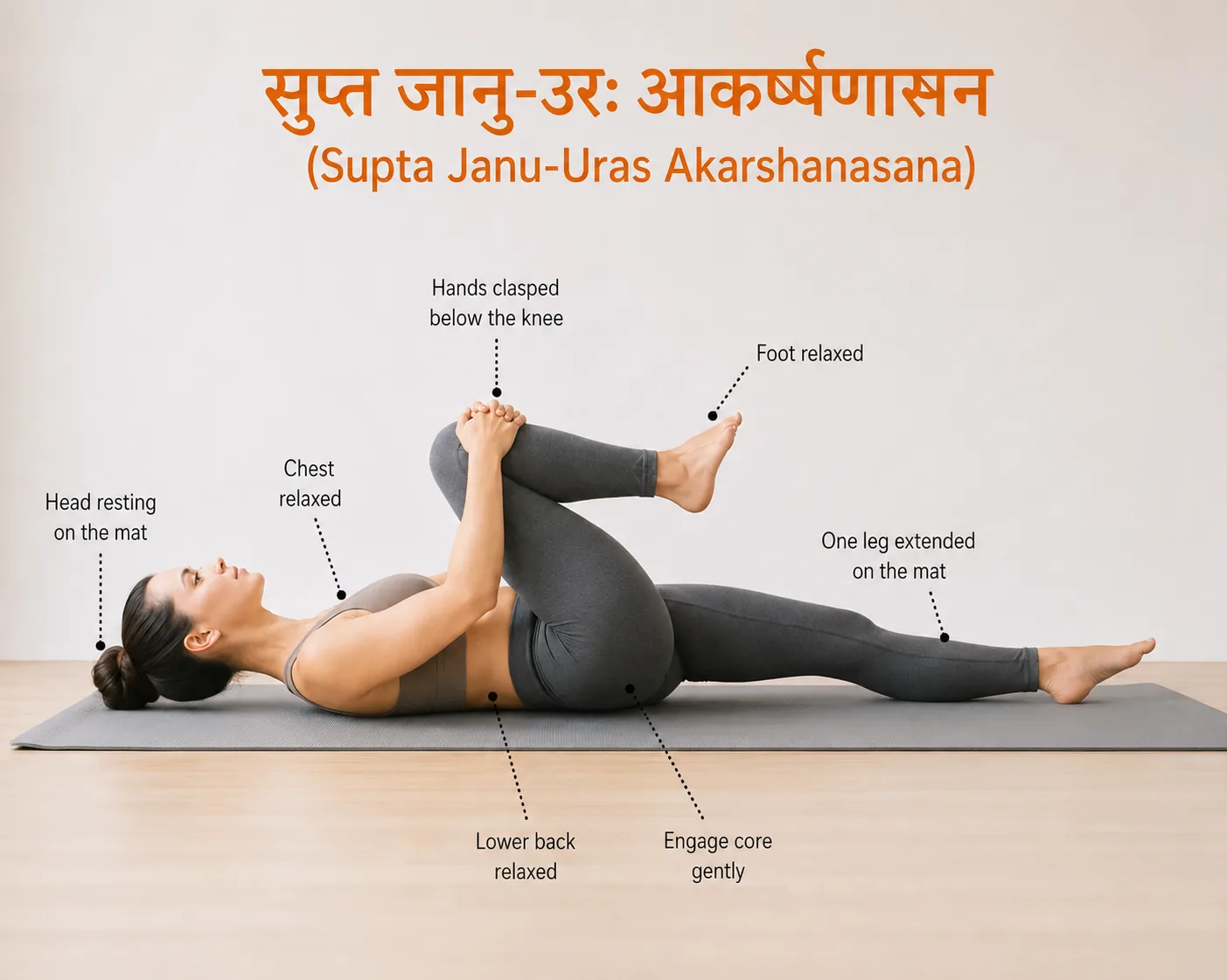
This simple movement remains one of the fastest ways to reduce feelings of compression in the lower back.
It can feel particularly helpful after long periods of sitting.
How to do it:
- Lie on your back.
- Draw one knee toward your chest.
- Hold behind the thigh or over the shin.
- Keep the opposite leg bent or extended.
- Breathe slowly.
Hold 30 to 60 seconds per side.
Then bring both knees into the chest and gently rock side to side.
5. Reclined spinal twist
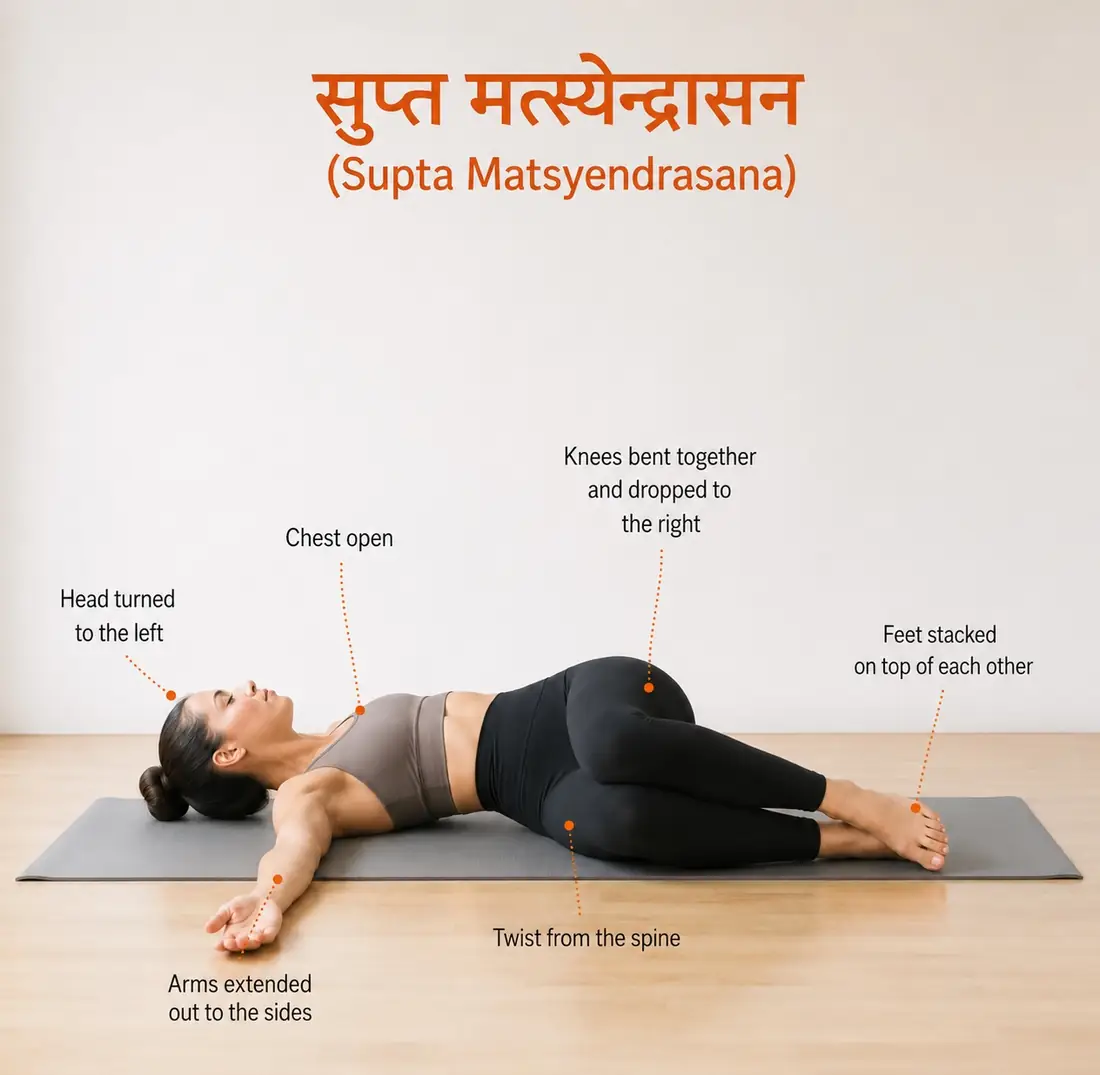
Twists can feel incredibly relieving when done gently.
The key word is gently.
Many people force twists too aggressively, especially when searching for a satisfying “crack” in the spine.
Less is usually more.
How to do it:
- Lie on your back.
- Bring your knees toward your chest.
- Drop both knees to one side.
- Extend your arms into a T shape.
- Turn your gaze in the opposite direction if comfortable.
Hold for 30 to 60 seconds each side.
If twisting aggravates symptoms, skip this pose.
What is Pose for a Cause?
Pose for a Cause is a YOGI TIMES initiative that celebrates yoga teachers through the poses they know and love best.
Each featured teacher receives a dedicated YOGI TIMES feature, exposure across our social channels, visibility to more than 22,000 newsletter subscribers and readers, and a backlink to their website, studio, retreat, or teacher training.
Most importantly, 10% of every participation supports a yoga-aligned charity.
Meet Featured Teachers6. Bridge pose (Setu Bandhasana)
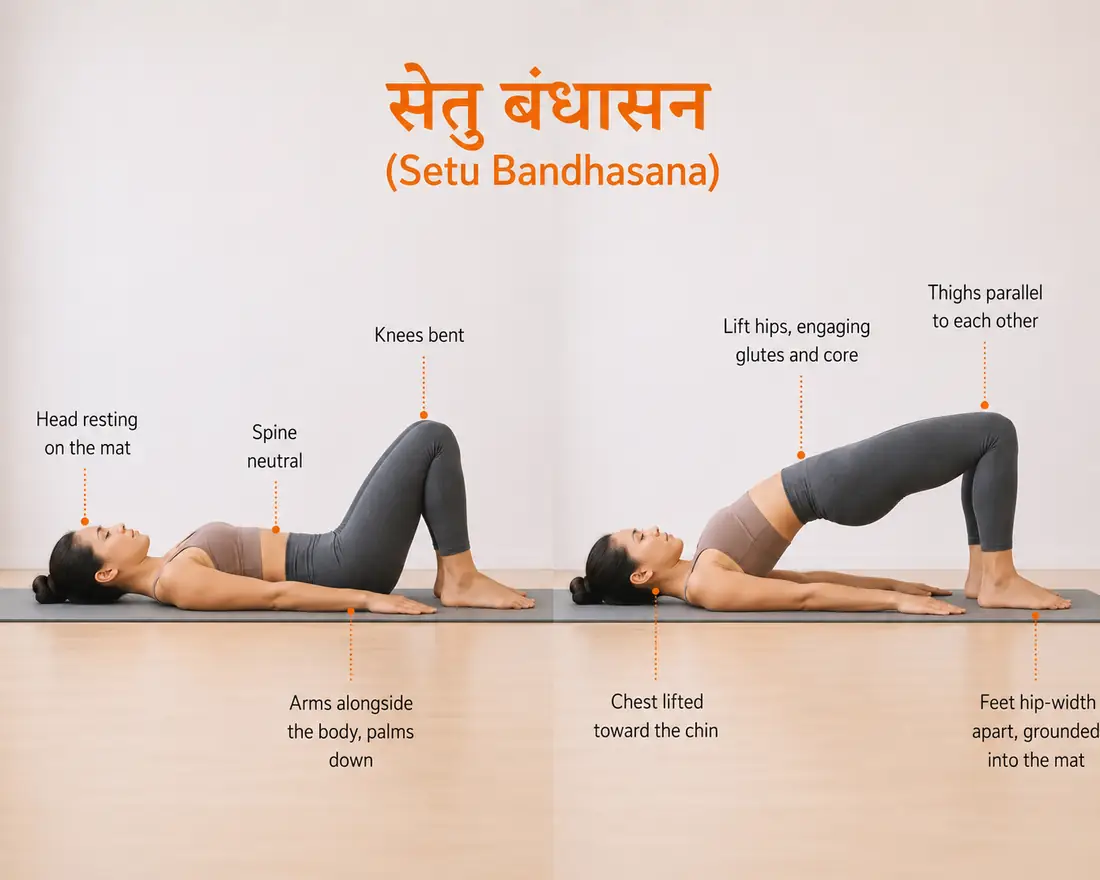
This pose deserves more attention than it typically receives.
While many yoga articles focus almost entirely on stretching, Bridge helps strengthen the glutes, hamstrings, and posterior chain.
Weakness often contributes to back discomfort just as much as tightness.
How to do it:
- Lie on your back.
- Bend your knees.
- Place your feet hip-width apart.
- Press into your feet.
- Lift your hips toward the ceiling.
- Keep your neck relaxed.
Hold for 20 to 45 seconds.
Repeat two or three times.
Teaching note: You should feel the work primarily in your glutes, not your lower back.
7. Bird – Dog
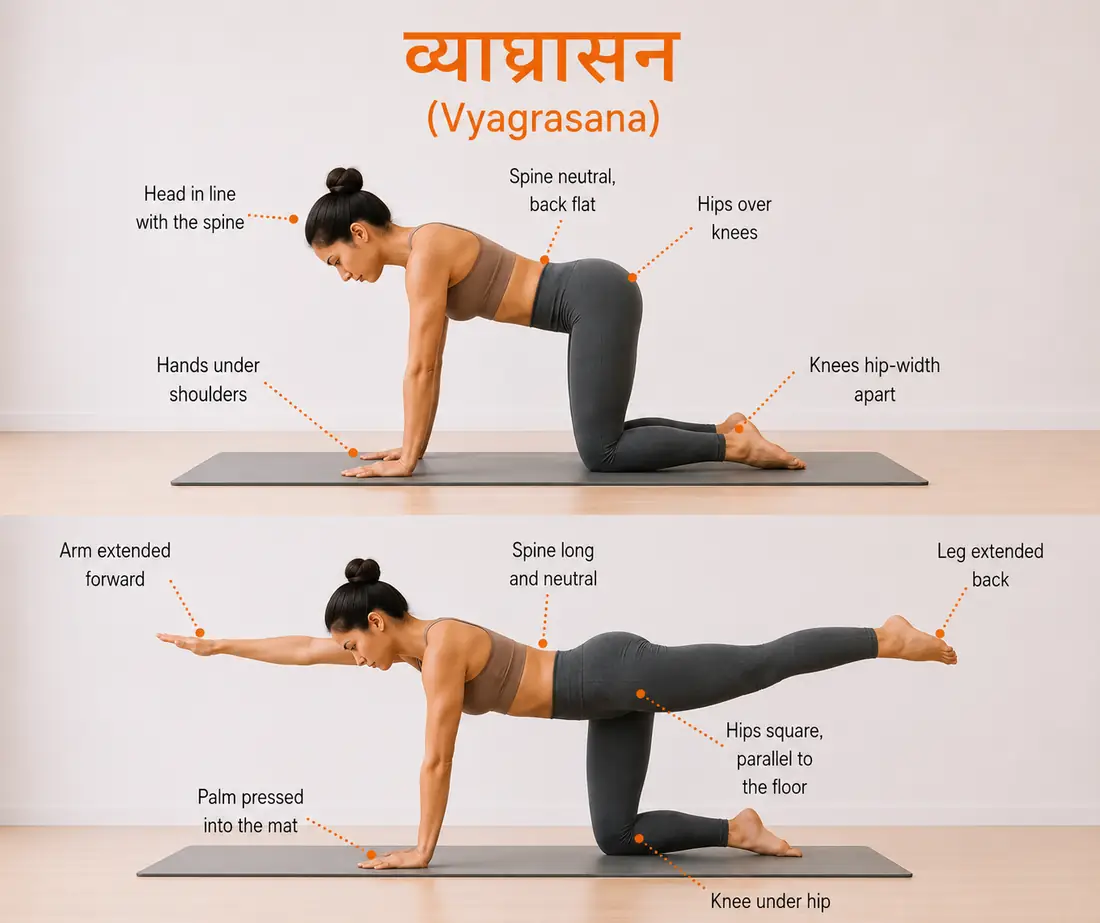
Technically borrowed from rehabilitation and core training, Bird Dog has become a favorite recommendation among yoga therapists and movement specialists.
It builds stability without placing excessive stress on the spine.
How to do it:
- Begin on hands and knees.
- Extend your right arm forward.
- Extend your left leg behind you.
- Keep your hips level.
- Return slowly.
- Switch sides.
Perform 8 to 10 repetitions per side.
This is one of the best exercises for people who feel unstable or vulnerable through the lower back.
8. Low lunge
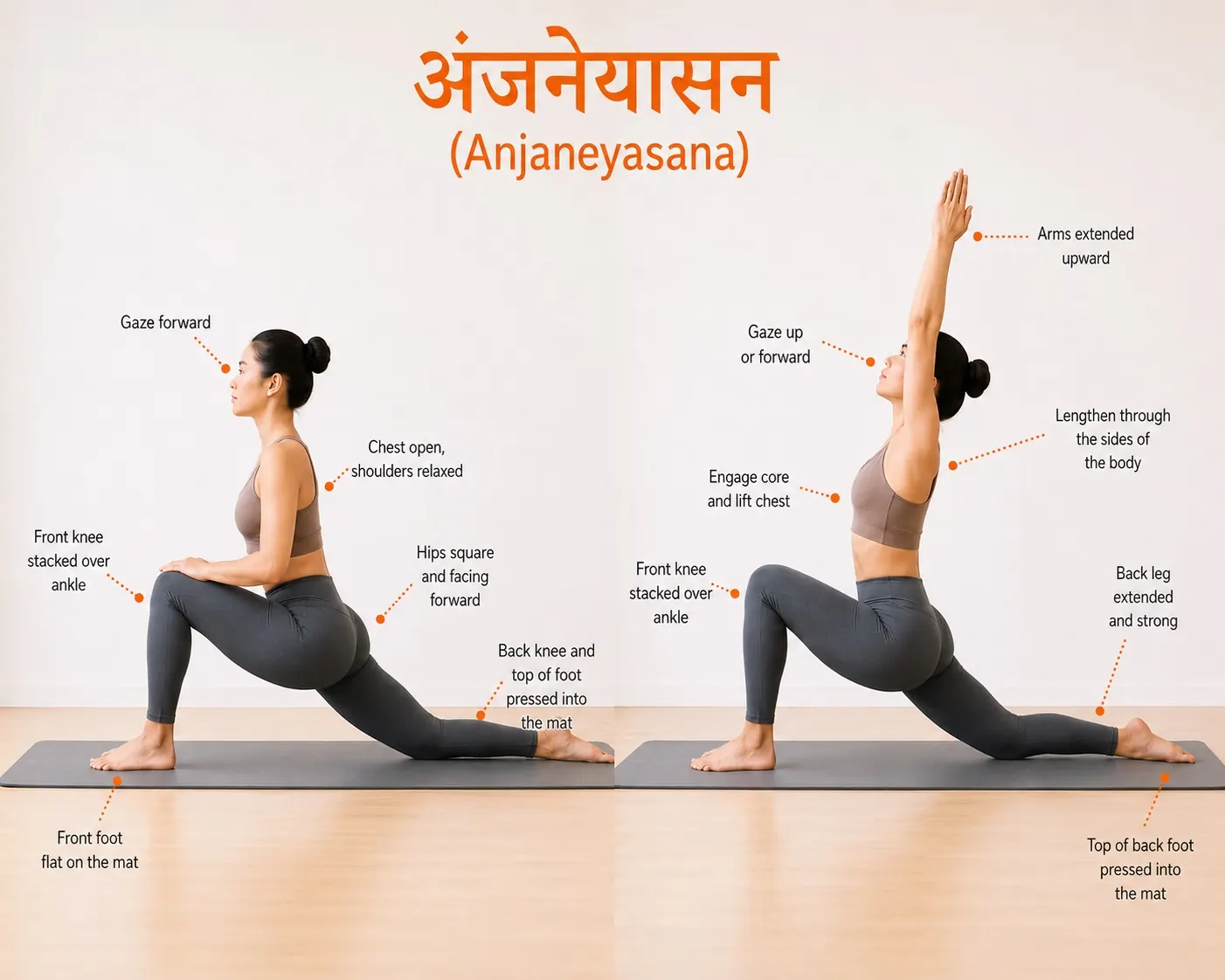
Tight hip flexors are often part of the lower back pain equation.
Low lunge directly addresses that issue.
How to do it:
- Step one foot forward.
- Lower the opposite knee to the floor.
- Gently shift forward.
- Keep your torso upright.
- Feel the stretch along the front of the hip.
Hold for 30 to 60 seconds.
Repeat on the opposite side.
Teaching note: Most people need this stretch more than another hamstring stretch.
9. Downward-facing dog
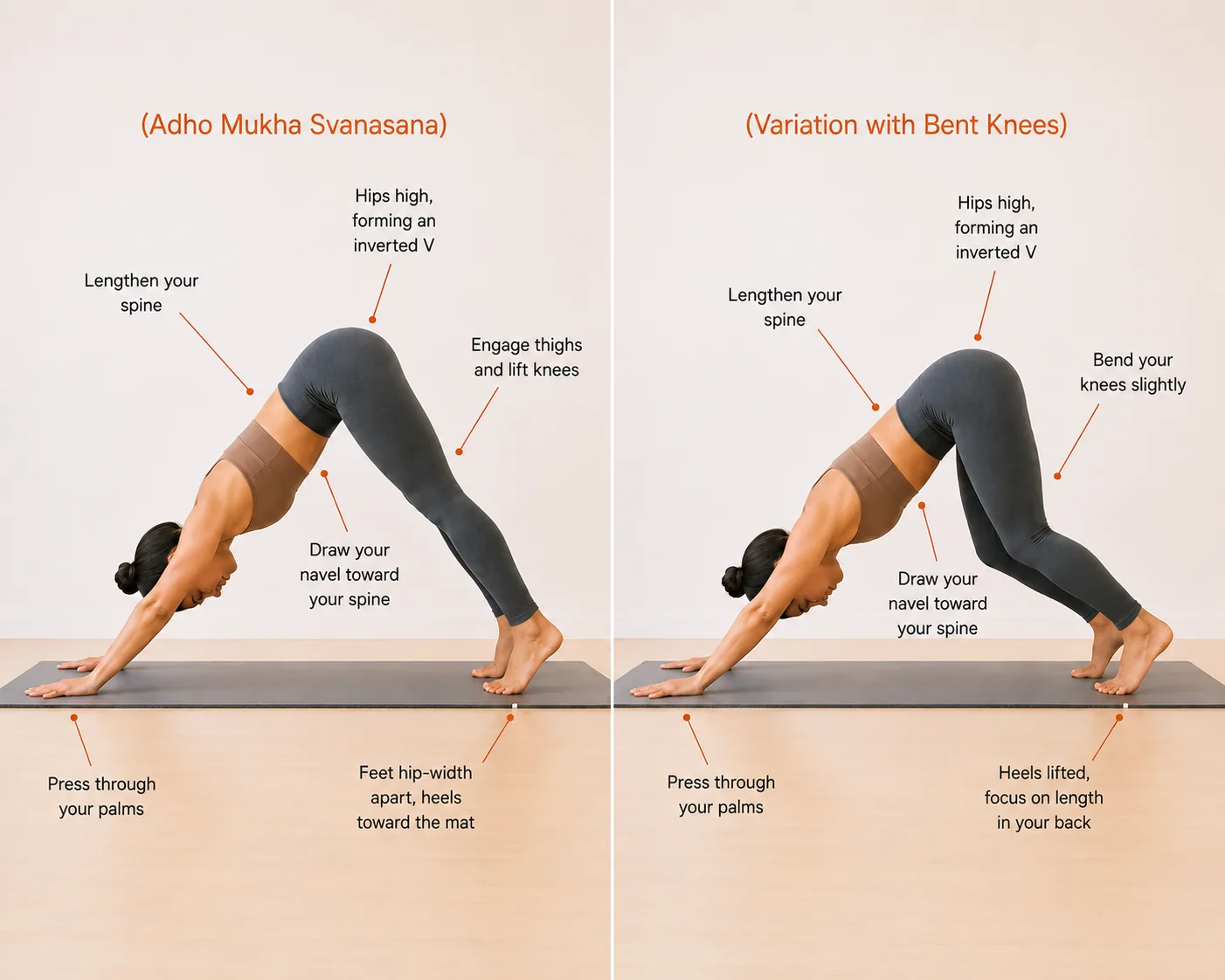
Downward Dog appears in almost every article on yoga for back pain.
Sometimes appropriately.
Sometimes not.
For people with sufficient shoulder mobility and reasonably flexible hamstrings, it can create a wonderful decompressive feeling throughout the spine.
For very tight beginners, however, it can become frustrating.
How to do it:
- Start on hands and knees.
- Lift your hips upward.
- Create an inverted V shape.
- Keep a slight bend in your knees if needed.
- Lengthen through the spine.
Hold for 30 to 60 seconds.
Bending the knees is not cheating.
In many cases, it is better alignment.
10. Thread the needle
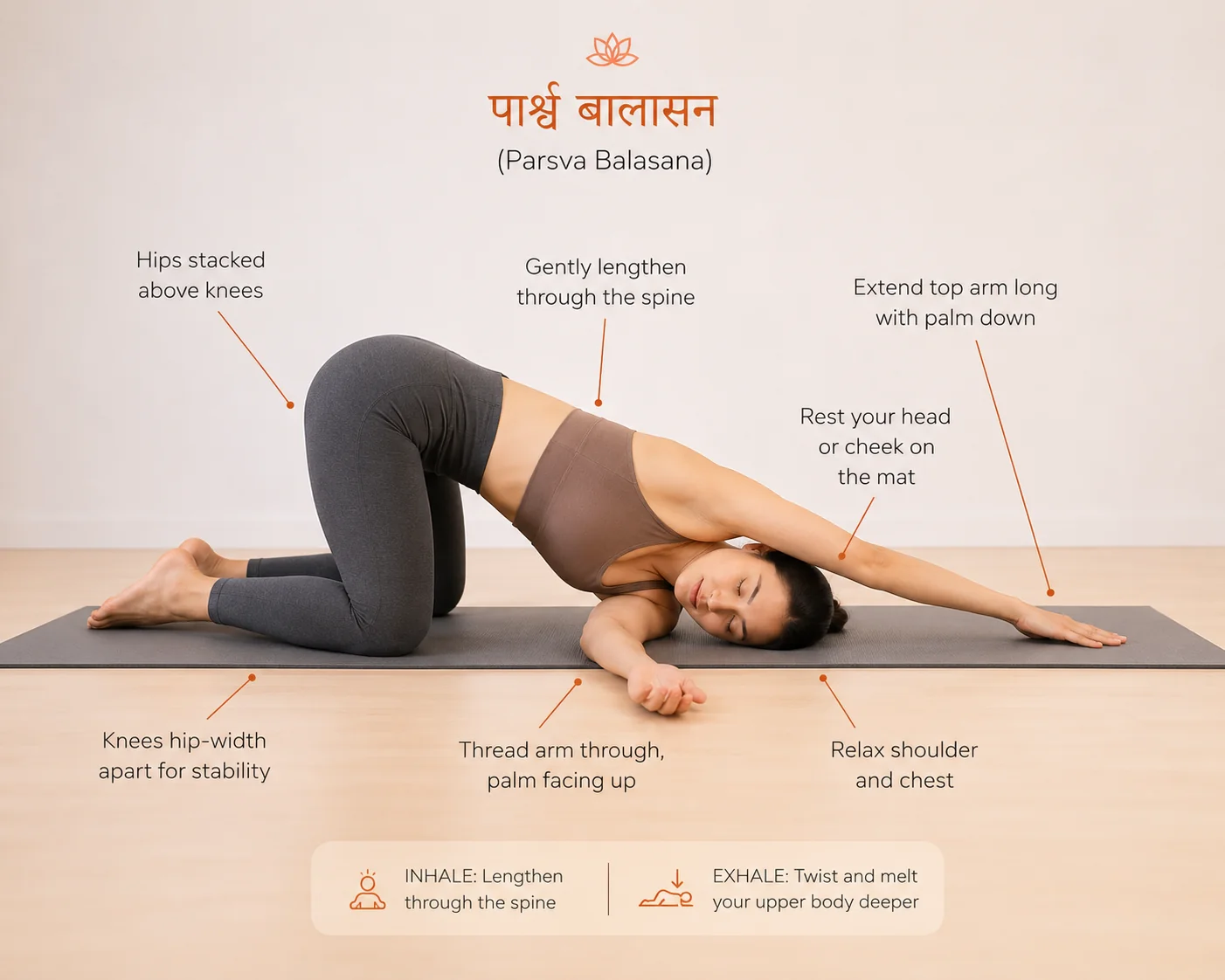
This gentle rotational movement targets the upper back and shoulders.
While it does not directly stretch the lower back, improving thoracic mobility often reduces unnecessary strain on the lumbar spine.
How to do it:
- Start on all fours.
- Slide one arm underneath the body.
- Rest the shoulder on the floor.
- Keep the hips stable.
- Breathe deeply.
Hold for 30 to 60 seconds per side.
11. Happy baby pose
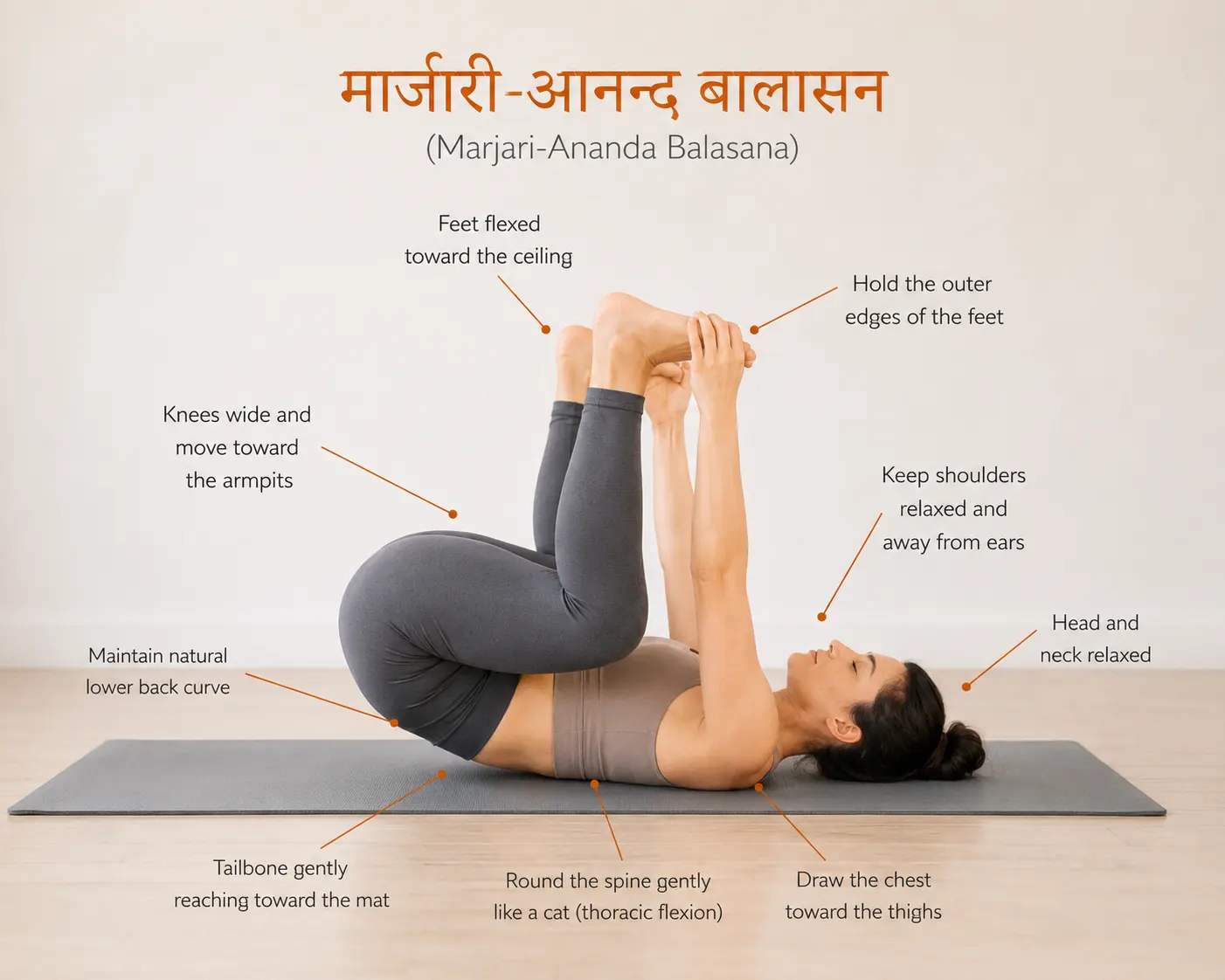
Despite the playful name, this pose can be surprisingly effective for releasing tension around the hips and lower back.
Many practitioners describe it as one of the most naturally relieving poses in yoga.
How to do it:
- Lie on your back.
- Bend your knees toward your chest.
- Hold the outsides of your feet.
- Gently draw your knees toward the floor.
Hold for 30 to 90 seconds.
Rocking gently side to side can feel particularly soothing.
12. Legs-up-the-wall pose (Viparita Karani)
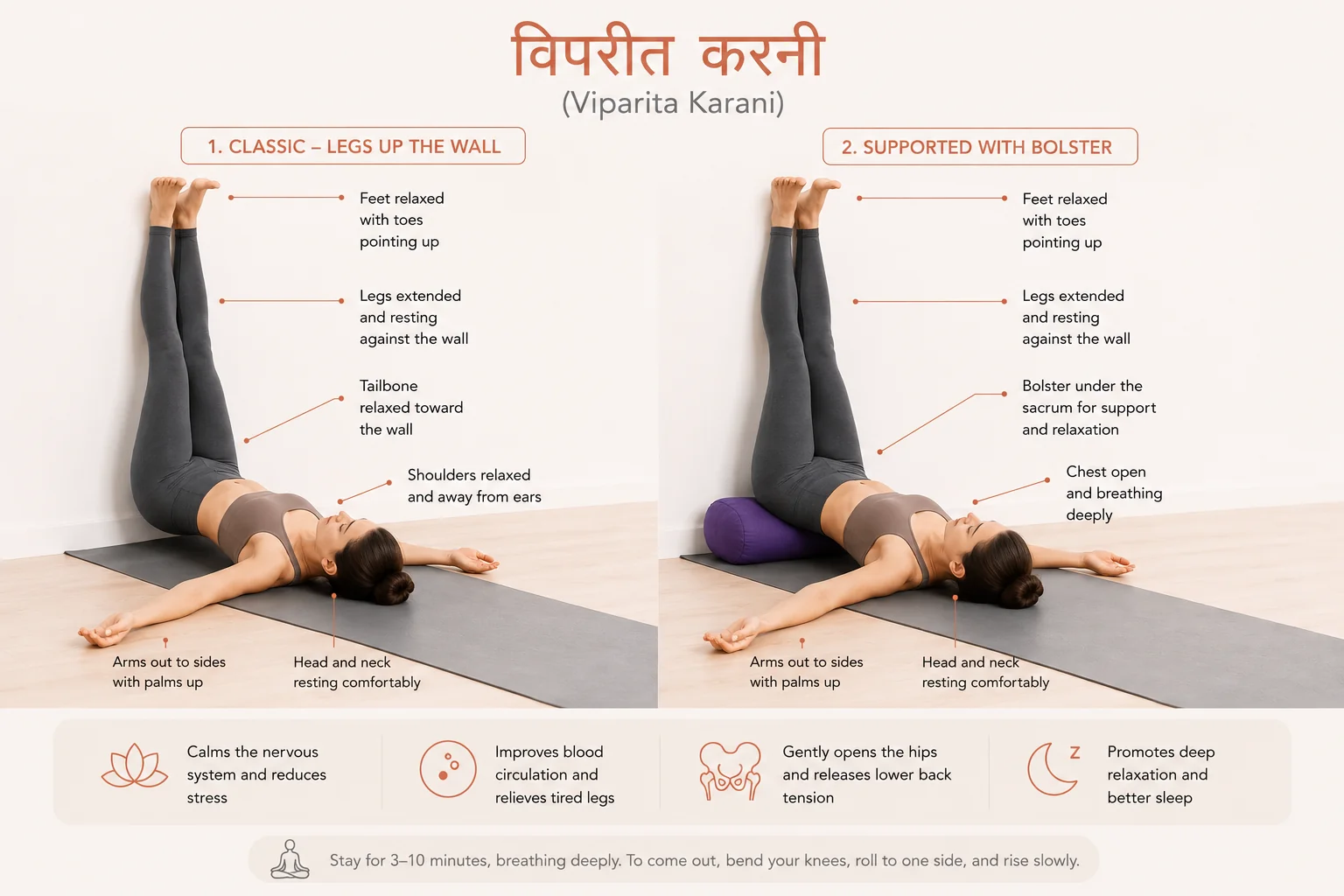
This is the pose many people do not realize they need.
After a stressful day, Legs-Up-the-Wall can help reduce overall muscular tension and encourage relaxation.
While it is not a direct lower back stretch, many people notice their back feels better afterward.
How to do it:
- Sit next to a wall.
- Swing your legs upward.
- Lie back comfortably.
- Allow your arms to rest at your sides.
Stay for 5 to 10 minutes.
This is often the pose we recommend last because it helps the nervous system settle after the more active stretches.
Which poses help different types of back pain?
Not all back pain responds to the same movements.
For stiffness from sitting:
- Child’s Pose
- Cat-Cow
- Low lunge
- Bridge Pose
For tight hips contributing to back discomfort:
- Low lunge
- Happy Baby
- Reclined twist
For general spinal mobility:
- Cat-Cow
- Thread the Needle
- Reclined twist
For strengthening support muscles:
- Bridge Pose
- Bird Dog
For stress-related muscular tension:
- Child’s Pose
- Legs-Up-the-Wall
- Gentle breathing practices
A simple 10-minute yoga routine for back pain
If you’re overwhelmed by choices, start here:
- Cat-Cow : 1 minute
- Child’s Pose : 1 minute
- Low lunge : 1 minute each side
- Bridge Pose : 30 seconds x 3
- Supine twist : 1 minute each side
- Legs-Up-the-Wall : 3 minutes
Simple.
Repeat consistently for two weeks before deciding whether it is helping.
Many people change routines too quickly to notice meaningful progress.
Yoga for sciatica, herniated discs, and chronic lower back pain
One of the biggest mistakes I see in articles about yoga for back pain is treating all back pain as if it were the same thing.
A stiff lower back after sitting at a desk all day is very different from nerve pain shooting down your leg. Likewise, a tight hip flexor issue requires a different approach than a herniated disc.
This is why the question should never be:
“What is the best yoga pose for back pain?”
The better question is:
“What is causing my back pain?”
If you have sciatica
Sciatica occurs when the sciatic nerve becomes irritated or compressed, often creating symptoms that travel from the lower back into the buttock, leg, or foot.
Many people assume they need aggressive stretching. In reality, that can sometimes make symptoms worse.
Poses that are often well tolerated include:
- Child’s Pose
- Cat-Cow
- Sphinx Pose
- Gentle Bridge Pose
- Legs-Up-the-Wall
Move slowly and pay attention to how symptoms respond during the following 24 hours.
If a pose causes tingling, burning, numbness, or increased leg pain, stop and reassess.
If you have a herniated disc
A herniated disc can create pain, stiffness, weakness, numbness, or radiating symptoms.
There is no universal yoga sequence for disc injuries because disc bulges occur in different directions and affect people differently.
Many physical therapists and spine specialists often begin with gentle extension-based movements such as:
- Sphinx Pose
- Cobra Pose
- Supported standing backbends
However, some people respond better to neutral spine positions and stabilization exercises.
The key is symptom response.
If symptoms move further down the leg, that is usually not a good sign.
If symptoms gradually centralize toward the lower back, many clinicians consider that a positive response.
If you suspect a disc injury, consult a qualified healthcare professional before beginning a yoga practice.
If your back pain comes from sitting too much
This is probably the most common category we encounter.
Hours spent sitting can contribute to:
- Tight hip flexors
- Tight hamstrings
- Weak glutes
- Reduced spinal mobility
- Poor posture habits
For this group, the biggest improvements often come from:
- Low Lunge
- Cat-Cow
- Bridge Pose
- Bird Dog
- Child’s Pose
Interestingly, the solution is usually not more stretching alone.
Many people need a combination of mobility and strengthening.
If stress is contributing to your pain
Back pain is not always purely mechanical.
Stress, poor sleep, anxiety, and nervous system overload can increase muscle tension and pain sensitivity.
This does not mean the pain is “in your head.”
It means the nervous system influences how pain is experienced.
For these situations, restorative poses often provide more relief than intense stretching.
Consider:
- Legs-Up-the-Wall
- Child’s Pose
- Gentle Supine Twist
- Breath-focused relaxation
Many students are surprised to discover that the pose helping them most is often the least physically demanding one.
Common mistakes people make when doing yoga for back pain
Treating stretching as the entire solution
Tight muscles are only part of the picture.
Weak glutes, poor movement patterns, reduced spinal stability, and prolonged sitting habits often contribute just as much.
The goal is not maximum flexibility.
The goal is better function.
Pushing into pain
Yoga should not feel like a battle.
A mild stretch sensation is usually acceptable.
Sharp pain, nerve symptoms, numbness, tingling, or increasing discomfort are not.
Pain is information.
Listen to it.
Moving too aggressively
Many people try to force mobility before creating stability.
This often happens in forward folds, twists, and deep backbends.
Slow movement almost always wins.
Ignoring the hips
The lower back frequently compensates for restricted hips.
When the hips do not move well, the lumbar spine often moves more than it should.
This is one reason Low Lunge, Happy Baby, and Figure Four variations can be so valuable.
Expecting immediate results
Some people experience relief after a single session.
Others require weeks of consistent practice.
Yoga is not usually a quick fix.
Its value comes from gradually changing movement quality, strength, flexibility, posture awareness, and stress response over time.
Could your favorite pose help someone else?
Many yoga teachers have one pose that changed the way they move, teach, heal, or practice. Through Pose for a Cause, that pose can become a permanent educational feature on YOGI TIMES while helping support charitable causes.
- Permanent feature on YOGI TIMES
- Exposure to 500,000+ social media followers
- Visibility to 22,000+ newsletter subscribers and readers
- Backlink to your website, studio, retreat, or teacher training
- 10% donated to a yoga-aligned charity
- Only one featured teacher per pose
Frequently asked questions
Can yoga help lower back pain?
Research suggests yoga may help reduce pain and improve function in some people with chronic lower back pain. Results vary depending on the cause of the pain and the type of yoga practiced.
What are the best yoga poses for lower back pain?
There is no single best pose for everyone. Child’s Pose, Cat-Cow, Sphinx Pose, Bridge Pose, and Low Lunge are among the most commonly recommended starting points.
Should I do yoga every day for back pain?
Gentle yoga can often be practiced daily. Consistency is usually more beneficial than occasional long sessions.
Is yoga safe for sciatica?
Many people with sciatica benefit from gentle yoga, but some poses may aggravate symptoms. Stop any movement that increases nerve pain, tingling, numbness, or radiating discomfort.
Can yoga help a herniated disc?
In some cases, yoga can help improve mobility, reduce stiffness, and support recovery. However, disc injuries vary significantly, and guidance from a healthcare professional is recommended.
How long before yoga helps back pain?
Some people notice improvements within days. For chronic issues, meaningful changes often occur after several weeks of consistent practice.
Can yoga make back pain worse?
Yes. Certain poses can aggravate some types of back pain, particularly when performed with poor technique or when a person has a herniated disc, acute injury, or active sciatica. The goal is not to push through pain. If a pose increases symptoms during or after practice, stop and consult a qualified healthcare professional.
Final thoughts
The best yoga poses for back pain are not necessarily the most advanced poses or the deepest stretches.
They are the movements that help you breathe more comfortably, move more freely, and build confidence in your body again.
For many people, that starts with a surprisingly simple combination: Cat-Cow, Child’s Pose, Low Lunge, Bridge Pose, and a few minutes of Legs-Up-the-Wall.
Start there.
Move slowly.
Pay attention to how your body responds.
And remember that lasting relief rarely comes from one perfect pose. It usually comes from small, consistent practices repeated over time.

Free Wellness E-Book
Find Your Zen!
Your Free Guide
To Wellness
Download Your Free Guide & Receive Weekly Inspirations From The Lifestyle Of a Modern Yogi!