Galungan in Bali 2026: a sacred festival of good vs evil, through our eyes

After living in Bali for the past 17 years, my family and I have learned to move with the island’s rhythms. And one celebration that never fails to stir something deep in us is Galungan, a sacred Balinese Hindu festival that honors the triumph of dharma (good) over adharma (evil).
In 2026, Galungan will be celebrated twice:
- March 25 (Galungan) and April 4 (Kuningan)
- October 21 (Galungan) and October 31 (Kuningan)
If you happen to be in Bali during either cycle, I can say from experience: witnessing Galungan will shift the way you see the island, and possibly yourself.
What Is Galungan?
Galungan is one of Bali’s most revered religious holidays, occurring every 210 days according to the Balinese Pawukon calendar. It marks the return of ancestral spirits to the earthly realm and celebrates the eternal battle, and balance, between good and evil.
During this time, families invite their ancestors home with prayers, offerings, and rituals that have been passed down for generations. The 10-day festival ends with Kuningan, when the spirits return to their realm after being honored by their descendants.
As someone who has been blessed to be part of this cycle year after year, I can tell you, it’s not just a ceremony. It’s a soul reset.
For more info on Bali’s best spots for the modern yogi
| STAY | SPA | PLAY | EAT | SHOP | YOGA |
Download our ULTIMATE BALI GUIDE for free
The Streets Come Alive with Penjor
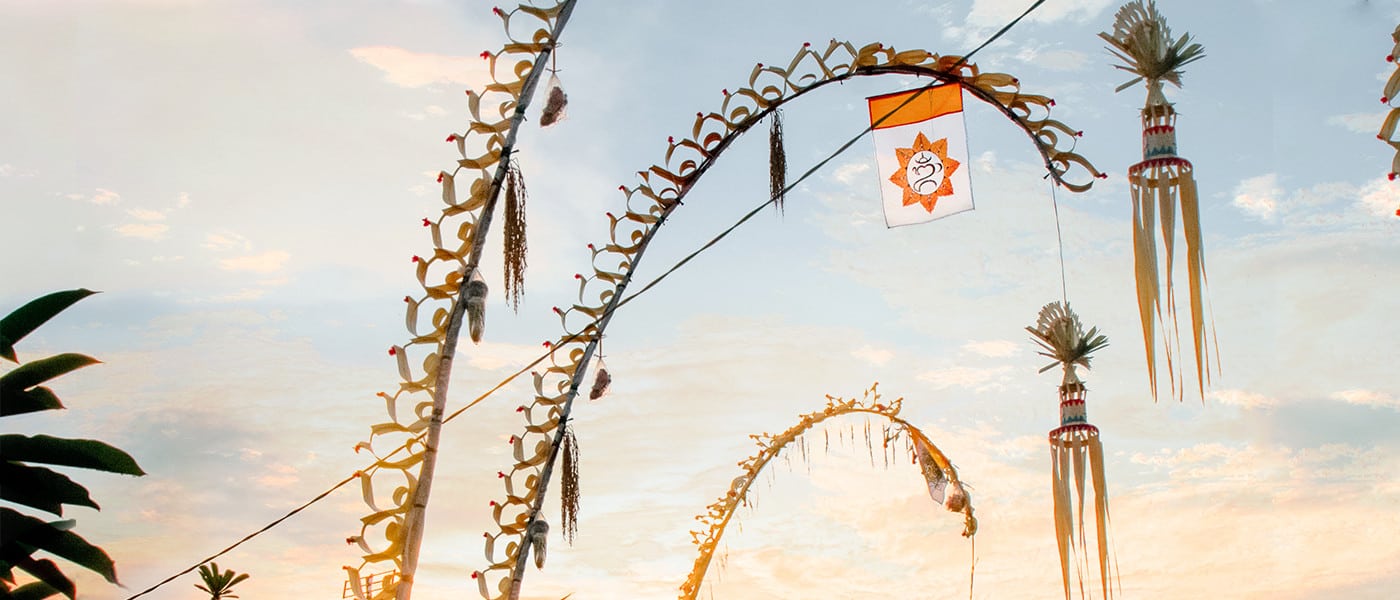
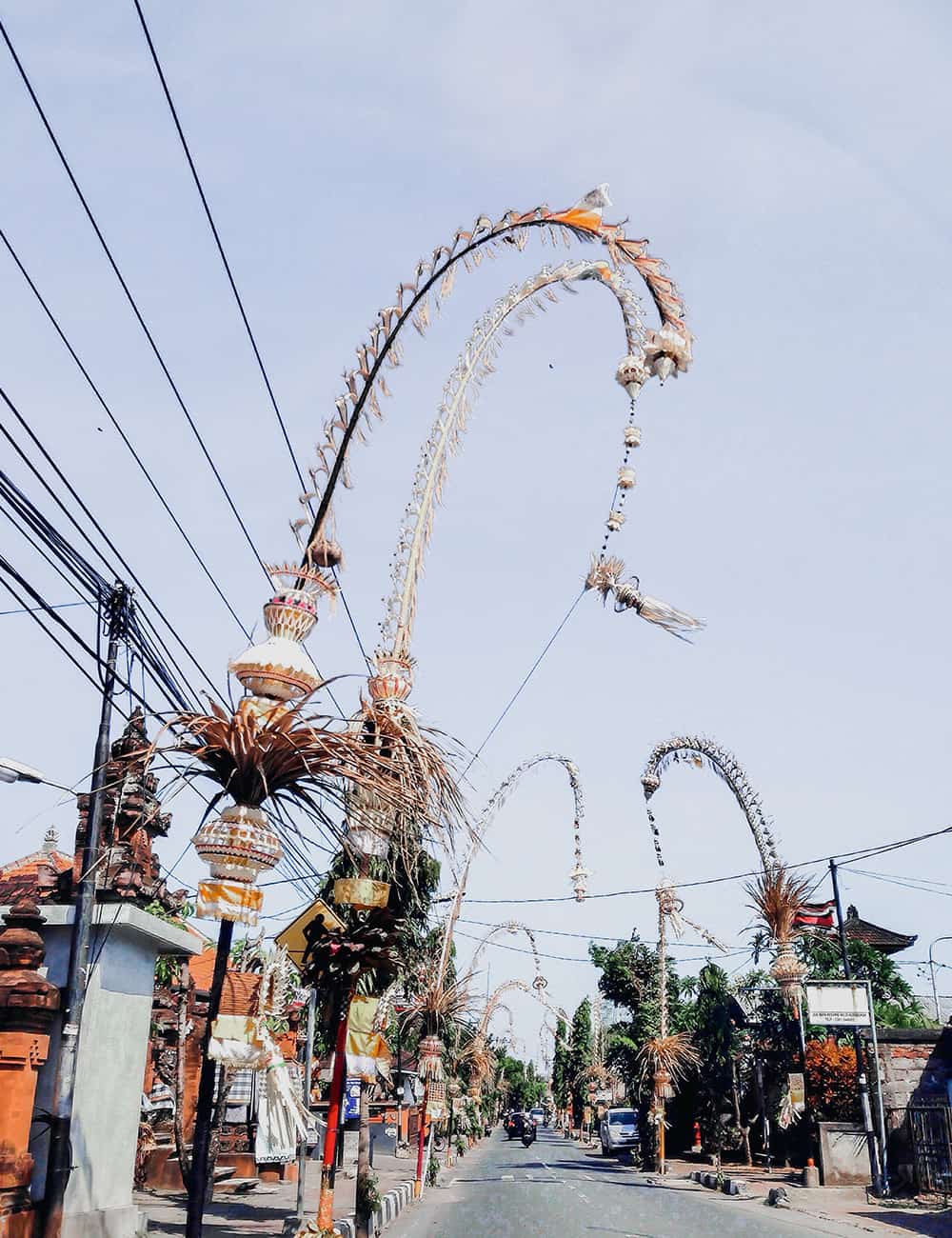
The first visible sign that Galungan is near is the appearance of penjor, towering bamboo poles curved at the top and adorned with coconut leaves, fruits, rice, and symbolic ornaments.
They line village roads and city streets alike, swaying in the breeze like prayer flags. We’ve made our own for years now, usually decorating it with our local banjar (neighborhood community). It’s one of those simple rituals that helps us feel grounded in Balinese culture.
Each penjor is an offering, a symbol of gratitude to the gods and a reminder of balance between the spiritual and earthly worlds.
Preparing for Galungan: Community, Food, and Family
Three days before Galungan, the preparation begins.
- Penyekeban: Families begin ripening bananas for offerings.
- Penyajahan: Traditional cakes like jaja are made, the smell of palm sugar and coconut fills the air.
- Penampahan: The most intense day. Offerings are finalized, and special dishes like lawar and babi guling (roast pork) are prepared. Some households still make small animal sacrifices as part of cleansing rituals.
In our village: Pererenan, these days are filled with laughter, visits between neighbors, and non-stop activity in the kitchens. It’s a time when everyone, young and old, pitches in.
Galungan Morning: A Sacred Silence and Beautiful Noise
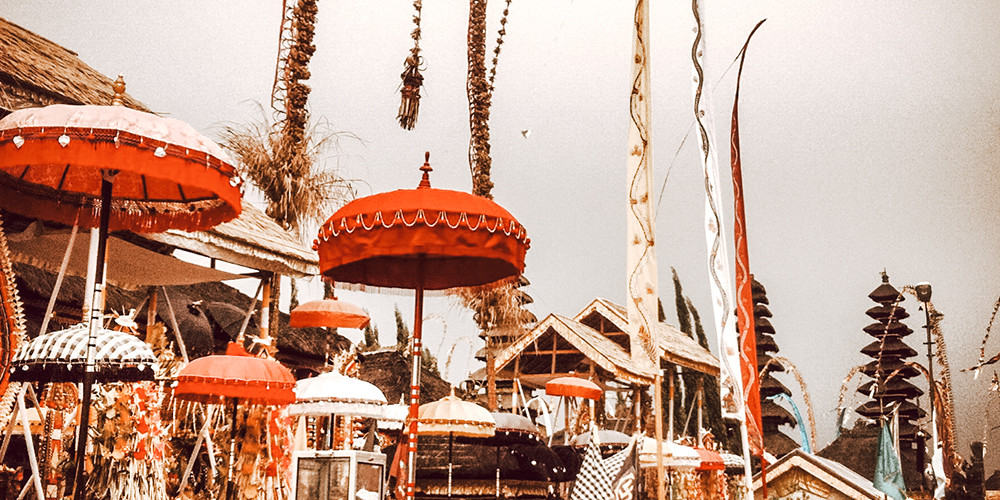
On the morning of Galungan, Bali slows to a sacred pace. Dressed in traditional attire, families begin the day with prayers at their home temples.
I’ve stood beside neighbors, dressed in a white kebaya and sarong, placing canang sari offerings at our home altar and roadside shrine. The scent of burning incense mingles with morning dew, and the island feels hushed, yet charged with spiritual energy.
This isn’t a performance for tourists. It’s personal, private, and full of heart.
After rituals, families gather for a celebratory meal. The plates are simple, banana leaves filled with urab, satay, and rice, but eaten together on the floor, they feel rich with meaning.
Sacred traditions: The Barong dances
In the evenings, Barong dance performances begin to appear, not just in tourist venues but in villages, homes, and temple courtyards.
The Barong, representing good, moves through the streets to dispel bad spirits, accompanied by dancers, musicians, and children in traditional dress.
After 17 years, I still get goosebumps watching the Barong visit our neighborhood. It’s more than myth, it’s a living spirit woven into the community. Children follow, giggling and a little frightened, as the Gamelan drums echo into the night.
Why Galungan still moves us, even after all these years
It’s easy to think of Galungan as a festival of rituals, but what continues to resonate for us is the message of balance.
The Balinese worldview doesn’t deny darkness. It acknowledges it. And it teaches that only through ceremony, gratitude, and intention can we keep things in harmony.
Living here has taught us that life isn’t about eliminating chaos. It’s about holding space for both light and shadow, and choosing, again and again, to walk with dharma.
Kuningan: the farewell of the ancestors
Ten days after Galungan, Kuningan quietly arrives. Families offer yellow rice (nasi kuning), coconut-leaf shields called tamiang, and prayers of gratitude as the ancestral spirits return to the heavens.
The tone is more reflective, more inward. If Galungan is a spiritual homecoming, Kuningan is a graceful goodbye.
We always take the day slow, spending it in silence or prayer. There’s something profoundly beautiful about ending the cycle not with celebration, but with stillness.
Tips for visitors during Galungan in 2026
If you’re visiting Bali during Galungan or Kuningan in 2026, here’s how to respectfully experience the magic:
- Dress modestly: A sarong and sash are a must if you plan to visit a temple.
- Step around offerings: You’ll see them on sidewalks, doorways, and even on scooters.
- Ask before taking photos, especially during ceremonies.
- Embrace the slowness: Public transport, local warungs, and shops may close. Plan accordingly.
- Avoid loud or disruptive activities, particularly in local areas or temple zones.
And most of all: watch with humility. You’re not just seeing a ritual, you’re witnessing a culture in motion, alive and sacred.
Want to learn more about Balinese ceremonies?
If you’re curious about Bali’s deeper traditions, we recommend exploring:
- Nyepi, the Balinese Day of Silence
- Kuningan, the final day of the Galungan cycle
- The meaning of Penjor and their symbolism
- The mystical power of the Barong dance
Final thoughts
Seventeen years in Bali, and Galungan still feels new every time. It reminds us why we chose to live here, not just for the beaches or the views, but for the values. For the way faith is lived, not preached.
Galungan teaches that goodness is a daily choice. That ancestors walk beside us. And that balance isn’t something to chase, it’s something to honor.
If you’re here in Bali in 2026, pause for a moment. Look up at the penjor swaying in the wind. Listen to the distant Gamelan. And remember: this island doesn’t just celebrate spirituality, it breathes it.

Free Wellness E-Book
Find Your Zen!
Your Free Guide
To Wellness
Download Your Free Guide & Receive Weekly Inspirations From The Lifestyle Of a Modern Yogi!