Pose for a Cause: how yoga teachers can build trust and lasting visibility

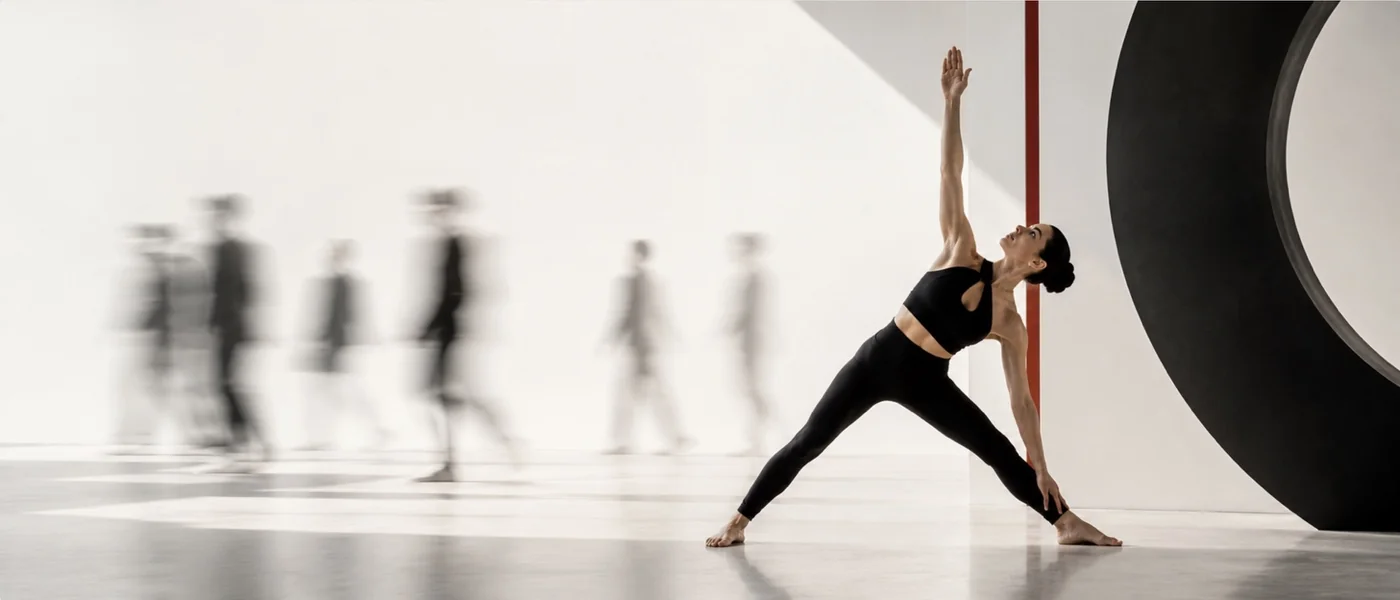
Some of the most knowledgeable yoga teachers are also the hardest to find.
They may have spent years studying anatomy, philosophy, alignment, sequencing, and the subtle ways a pose changes from one body to another. Their students know the value of their teaching. Their local community may know it too.
Online, however, much of that knowledge remains almost invisible.
A few photographs on Instagram cannot fully express what someone has learned through thousands of hours of practice and teaching. Class schedules disappear. Social posts are quickly replaced by newer ones. A thoughtful explanation shared during a workshop may never reach anyone outside the room.
That gap between genuine expertise and public visibility is one of the reasons YOGI TIMES created Pose for a Cause which actually really started in Los Angeles and Santa Monica back in 2004…yes !
Pose for a Cause is a curated editorial initiative that gives one yoga teacher the opportunity to become the featured voice and representative of one yoga pose within the growing YOGI TIMES pose library.
The teacher’s knowledge, story, biography, images, teaching observations, and professional links are developed into an evergreen editorial feature. A portion of every participation fee is also donated to a yoga-aligned charitable cause.
It is not intended to replace a teacher’s website, social media, newsletter, or local relationships. It offers something different: a professionally edited, third-party piece of content that can continue representing the teacher long after a social post has disappeared.
At a glance
What is Pose for a Cause?
A YOGI TIMES editorial initiative featuring one yoga teacher as the voice and representative of one yoga pose.
What does the teacher contribute?
Teaching insights, alignment guidance, modifications, personal experience, photographs, biography, links, and optional video.
What does YOGI TIMES provide?
Professional editing, page design, publication, relevant backlinks, internal links, promotional support, and official recognition.
Is it a directory listing?
No. Each page is a curated editorial feature integrated into the YOGI TIMES yoga pose library.
Who is it for?
New teachers building credibility, experienced teachers preserving their knowledge, and yoga schools seeking greater visibility for their graduates.
Why “for a Cause”?
A portion of each participation fee supports a yoga-aligned charitable organization.
Does it guarantee rankings or bookings?
No. It creates an additional pathway to credibility, discovery, referral traffic, and professional visibility, but no ethical publication can guarantee search positions, followers, or commercial results.
Editorial disclosure: Pose for a Cause is a paid editorial participation initiative created by YOGI TIMES. Participating teachers contribute a fee, part of which supports a yoga-aligned cause. Every feature is professionally edited and must meet YOGI TIMES editorial standards.
Great teaching does not automatically create visibility
Over the last twenty years at YOGI TIMES, we’ve met extraordinary teachers whose classes were full every weekend, yet they were almost impossible to find online. Meanwhile, teachers with far less experience sometimes appeared everywhere simply because they had learned how to publish consistently.
Yoga teachers are often told that they need to “put themselves out there.”
Usually, this means posting more photographs, making more videos, growing an Instagram following, or learning to promote classes without appearing too promotional.
Those tools can help. They can also become exhausting.
Teaching yoga and marketing yoga require very different forms of energy. One asks for presence, observation, patience, and care. The other can feel like a constant demand to perform publicly, follow trends, and compete for attention.
This creates a difficult situation for many teachers.
A teacher can be genuinely gifted and still struggle to explain what makes their work distinctive. A newly qualified teacher may have the knowledge to help students but little independent evidence that establishes trust. A senior teacher may possess decades of experience but have almost no searchable digital record of it.
The internet does not automatically reward the most experienced person. It can only surface the people and information it can understand, access, and connect to a reader’s question.
Professional visibility begins by making real experience easier to see.
Yoga Alliance similarly encourages registered teachers to use their public profiles to present their teaching experience and current offerings to students and prospective employers.
A profile is useful. A website is useful. Social media can be useful.
But each serves a different purpose.
Visibility is not the same as popularity
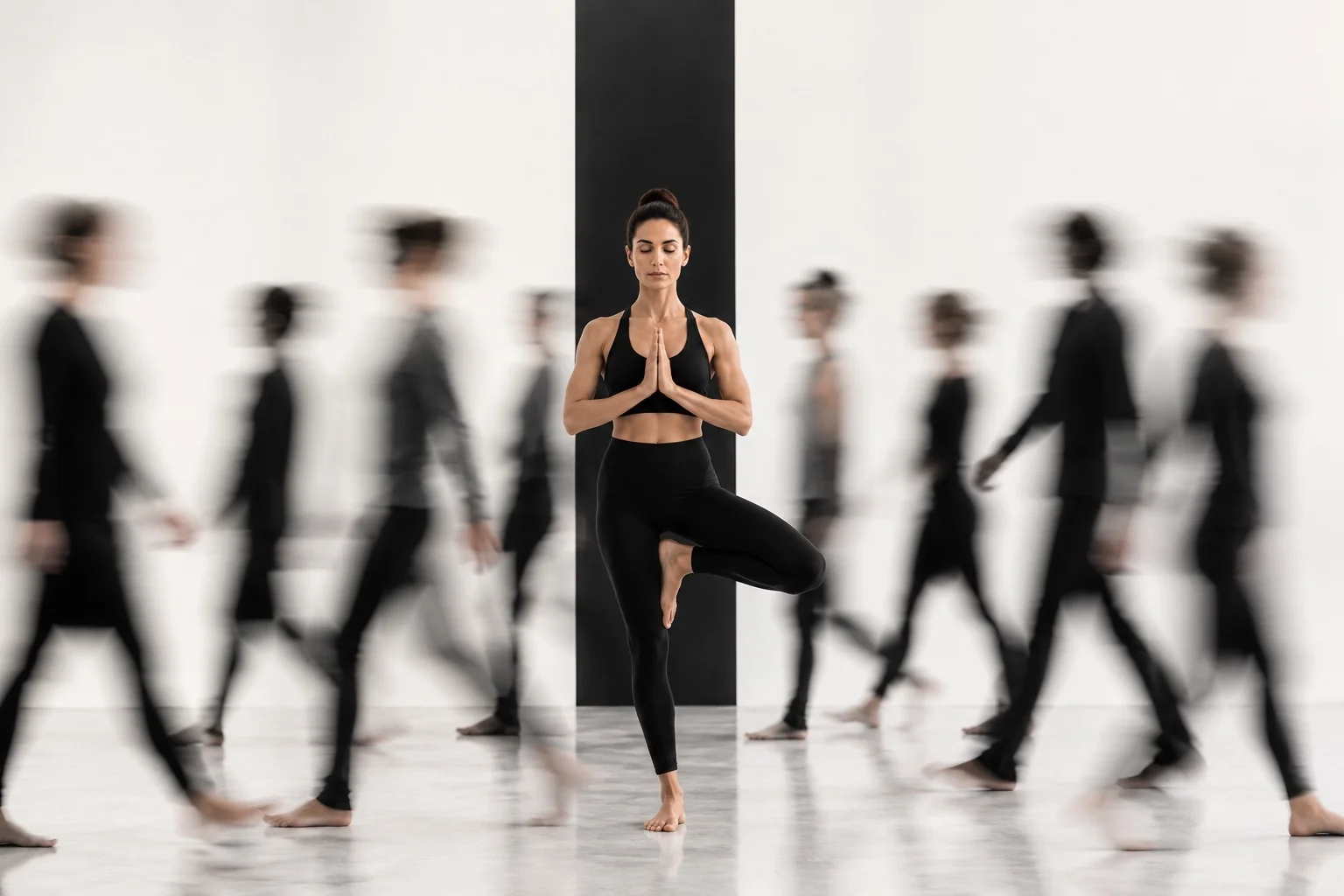
A yoga teacher does not need hundreds of thousands of followers to build a respected career.
Popularity measures attention.
Professional visibility means that the right people can find enough credible information to understand:
- who you are
- what you teach
- whom you help
- how you approach the practice
- what experience supports your work
- where they can learn from you
These are not the same thing.
It helps to think about visibility in three forms.
Rented visibility
Social media belongs in this category.
Instagram, Facebook, TikTok, YouTube, and other platforms can introduce a teacher to new people quickly. They encourage conversation and allow students to experience someone’s personality before attending a class.
But the teacher does not own the platform.
Algorithms change. Reach fluctuates. Accounts can be restricted. A post that required hours to create may receive attention for only a few days.
Rented visibility can be valuable. It is simply fragile.
Owned visibility
A teacher’s website, newsletter, course pages, booking system, biography, and media archive are owned visibility.
These assets give prospective students somewhere stable to learn more.
A strong website does not need to be elaborate. It needs to answer practical questions clearly:
- What kind of yoga do you teach?
- Where do you teach it?
- What is your experience?
- Can someone book a class, retreat, workshop, or training?
- What makes your approach relevant to the person reading?
Owned visibility gives every other marketing activity somewhere meaningful to lead.
Earned and editorial visibility
This includes interviews, podcast appearances, professional citations, expert commentary, guest contributions, media profiles, and features published by established organizations.
Editorial visibility matters because the context is provided by someone other than the teacher.
There is a difference between writing “I am an expert in hip mobility” on your own website and being invited to explain Pigeon Pose, its modifications, and the lessons you have learned from teaching it.
The second does not automatically prove that every claim is correct. It does, however, place the teacher’s expertise inside an independent editorial setting.
Pose for a Cause was created in this third space while also supporting a teacher’s owned visibility through links to their website, classes, retreats, trainings, booking page, or professional profile.
What makes a yoga teacher trustworthy online?
Trust is not created by one badge, qualification, article, or testimonial.
It forms through the consistency of many small signals.
A clear teaching perspective
“I teach yoga” is accurate, but broad.
A reader understands far more when a teacher can explain that they specialize in:
- yoga for runners
- restorative practice
- prenatal yoga
- yoga for healthy aging
- strength and mobility
- back-care yoga
- nervous-system regulation
- traditional philosophy
- trauma-aware teaching
- alignment-based practice
- a particular lineage or method
Clarity does not limit a teacher. It helps the right students recognize them.
A teacher may offer many styles while still having a particular area of lived experience that deserves greater visibility.
Evidence of real experience
Trust becomes stronger when a teacher can show how they arrived at their perspective.
This may include:
- teacher training and continuing education
- years of teaching
- lineage or mentorship
- thoughtful student testimonials
- professional photographs
- teaching videos
- workshops and retreats
- clear safety considerations
- realistic modifications
- personal experience with injury, aging, pregnancy, sport, or recovery
- observations gained from working with different bodies
The most persuasive proof is often not a grand claim. It is a precise teaching observation that could only come from paying attention.
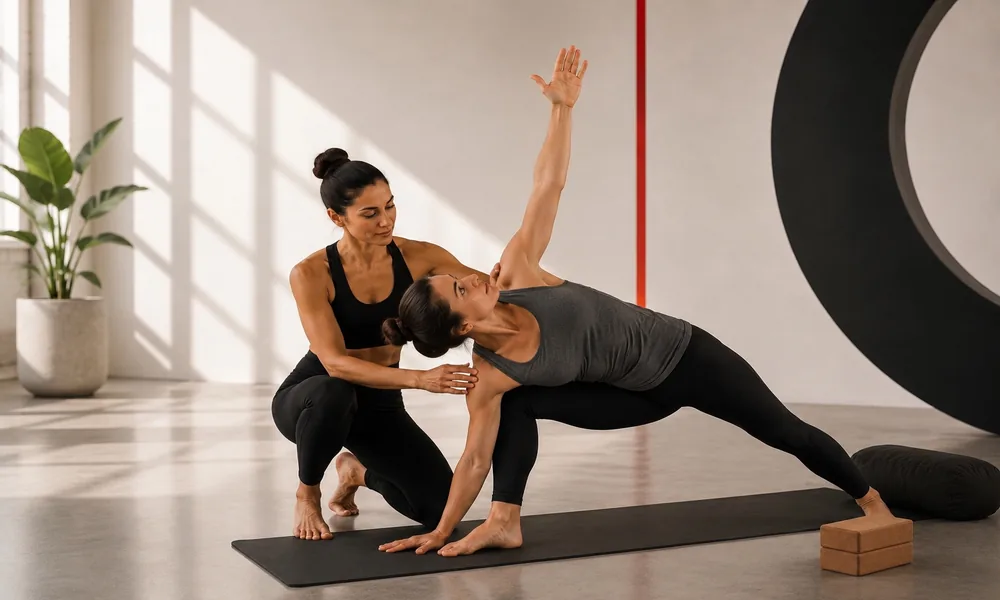
For example:
Many students believe their arms are preventing them from entering Firefly Pose, when the greater limitation may be hamstring mobility and the ability to create compression through the hips.
That sentence reveals more than “I am an experienced yoga teacher.”
It shows how the teacher thinks.
Independent professional context
A teacher’s own website should naturally present their work positively.
Independent editorial recognition adds another layer.
This can include:
- a profile in a respected publication
- a quoted contribution to an educational article
- a podcast interview
- a guest workshop
- recognition from a training school
- a feature focused on a particular area of expertise
- a relevant backlink from an established yoga resource
No individual feature should be treated as proof of universal authority.
Collectively, however, these references create a visible professional history.
How yoga teachers can gain editorial visibility
Teachers sometimes assume that media coverage is reserved for people with enormous audiences.
It is not.
Editors are usually looking for something more useful than follower counts. They need credible people who can contribute a distinctive perspective, answer a real reader question, and communicate clearly.
Opportunities may include:
- providing expert commentary
- writing a thoughtful guest article
- being interviewed on a specialist podcast
- contributing to a pose, anatomy, or sequencing guide
- sharing a personal teaching story
- offering informed commentary on a current yoga topic
- helping a publication explain a difficult concept accurately
- collaborating with a yoga school, retreat center, or professional organization
The best way to become more visible is not to repeatedly ask, “How can I promote myself?”
A better question is:
What do I understand deeply enough to make genuinely useful for someone else?
That change in focus matters.
It shifts marketing away from self-promotion and toward contribution.
What publications look for in a yoga teacher
Every publication has its own editorial standards, but strong contributors usually share a few qualities.
They have a clear professional biography.
They can explain their training and experience without exaggeration.
They bring something specific to the subject.
They understand that an article is written for readers, not merely to advertise a class.
They are willing to clarify claims, consider safety, and acknowledge that different bodies may require different approaches.
They can provide high-quality photographs and a professional destination worth linking to.
Most importantly, they have something to say beyond the information already available on hundreds of similar pages.
Google’s current guidance for both traditional and AI-assisted search emphasizes the same underlying principle: useful, original, expert-led content should offer value beyond common or interchangeable information. There is no separate trick that replaces clear, people-first editorial work.
Why relevant backlinks still matter
The word “backlink” can make a thoughtful yoga article suddenly sound like a technical marketing document.
In practice, a backlink is simply a clickable path from one website to another.
A relevant editorial link can:
- help readers discover a teacher’s website
- send referral visitors directly to classes or offerings
- help search engines find and understand the linked page
- connect a teacher with a particular yoga subject
- support a broader professional media profile
- remain accessible longer than a temporary social post
Google explains that links help it discover pages and understand relevance, and recommends descriptive anchor text that helps both readers and search systems understand the destination.
A relevant link from an established yoga article may therefore be useful.
It is not magic.
What a backlink cannot do
A backlink cannot:
- guarantee a first-page Google position
- repair a confusing or unfinished website
- replace a clear professional offering
- promise immediate class bookings
- manufacture genuine teaching experience
- create authority overnight
Backlinks work best when they lead to something worth discovering.
A teacher should think carefully about the destination. Is the most useful link the homepage? A retreat page? A teacher training? A booking page? A specialized course? An Instagram profile?
The answer depends on what the teacher wants an interested reader to do next.
Create something that can outlive the algorithm
Social media is excellent for distributing ideas.
It is not always the best place to preserve them.
A detailed explanation of one pose may represent years of experience. Yet when it is shared only as a short post, it can disappear beneath newer content within days.
Evergreen authority assets last longer.
These may include:
- a complete pose guide
- an anatomy explanation
- a specialized sequence
- a teaching case study
- a personal philosophy
- an interview
- a recorded workshop
- a modification guide
- an article addressing common mistakes
- an editorial feature
- a professional biography page
For AI-assisted discovery, this becomes even more relevant. Search and AI systems cannot retrieve a teacher’s knowledge unless that knowledge exists in a clear, public, well-organized form.
This does not mean writing for machines.
It means not allowing valuable teaching knowledge to vanish.
Introducing Pose for a Cause
Pose for a Cause is a YOGI TIMES editorial initiative built around a simple idea:
One pose. One teacher. One lasting contribution
Each participating yoga teacher is associated with one yoga pose in the YOGI TIMES yoga library.
The teacher does not merely submit a photograph and biography.
They contribute their genuine relationship with the pose:
- how they teach it
- what students frequently misunderstand
- which alignment cues they return to
- how the pose can be modified
- who may need to approach it cautiously
- what it has taught them
- how their own practice has changed over time
- why the pose matters beyond its physical shape
YOGI TIMES then develops this material into a professionally written, edited, designed, and interconnected editorial feature.
The result is intended to be useful to readers first.
It also provides the teacher with an enduring professional asset that can be shared with students, studios, retreat organizers, training schools, partners, and potential clients.
How a Pose for a Cause feature works
1. A teacher selects or is matched with a pose
Every teacher has poses they return to repeatedly.
Sometimes the connection comes through physical aptitude. More often, it comes through difficulty, injury, recovery, teaching experience, or a lesson that took years to understand.
That relationship is more interesting than perfection.
The strongest representative for a pose is not necessarily the person who can create the most dramatic photograph. It is the person who can help another practitioner understand it more clearly.
2. The teacher shares their perspective
Depending on the feature, the teacher may contribute:
- benefits
- alignment principles
- common mistakes
- modifications
- contraindications
- teacher cues
- personal observations
- philosophy
- preparatory poses
- sequencing ideas
- photographs
- video
- professional biography
- links to classes, courses, retreats, trainings, or booking pages
This information gives the page a human point of view rather than reducing the pose to a generic definition.
3. YOGI TIMES develops the editorial feature
The YOGI TIMES team organizes and edits the material for clarity, usefulness, and consistency with the wider pose library.
The teacher’s voice remains central, but the page must also work for someone who may be completely new to the pose.
The feature may include:
- editorial development
- on-page structure
- professional layout
- image optimization
- internal linking
- biography and credentials
- relevant professional links
- reader-focused FAQs
- search-friendly headings
- clear explanations for AI-assisted retrieval
4. The feature is published and promoted
Participating teachers receive an editorial page designed to remain relevant over time.
Depending on the participation arrangement, exposure may also include:
- promotion to the YOGI TIMES social community
- newsletter visibility
- links from related yoga content
- an official YOGI TIMES recognition badge
- promotional assets that the teacher or school can reuse
YOGI TIMES currently reaches more than 500,000 people across its social community and over 22,000 newsletter subscribers.
No promotion guarantees a particular number of clicks, students, followers, or bookings. It creates an additional opportunity to be discovered by people already interested in yoga.
5. The feature contributes to a cause
A portion of each participation fee is donated to a yoga-aligned charitable organization.
This is not an incidental addition to the project.
Yoga has always extended beyond individual advancement. Pose for a Cause connects professional visibility with a wider contribution, allowing each completed feature to support both a teacher and a cause aligned with the values of the yoga community.
What participating teachers receive
The value of a Pose for a Cause feature is not one isolated benefit. It is the way several elements work together.
Editorial credibility
The teacher receives a professionally developed feature inside an independent international yoga and wellness publication founded in 2001.
The page places the teacher’s experience within an editorial context rather than presenting it only through self-promotion.
Discoverability
The feature can include relevant links to:
- the teacher’s website
- classes
- workshops
- retreat pages
- yoga teacher trainings
- online courses
- booking pages
- Instagram or another professional profile
The page is also connected to related poses and educational material within the wider YOGI TIMES content ecosystem.
Audience reach
The feature introduces the teacher to readers who may never encounter their local classes or social media.
Someone researching Pigeon Pose, Warrior III, Tree Pose, or another asana may discover the teacher through their knowledge rather than through an advertisement.
That is a very different first impression.
Reusable professional recognition
The teacher can reference the feature in:
- an email signature
- a website media page
- a studio biography
- retreat and workshop proposals
- a press kit
- social profiles
- newsletters
- partnership presentations
- teacher training applications
An official “Featured on YOGI TIMES” recognition badge gives the teacher a simple visual way to reference the collaboration.
The badge should always link back to the actual feature so visitors can see the substance behind the recognition.
Why one teacher per pose matters
A pose does not have only one story.
Pigeon Pose may represent ease for one teacher and years of frustration for another.
Warrior III may be understood as a lesson in balance, athletic performance, concentration, rehabilitation, or learning to accept instability.
Child’s Pose can be restorative for one person and physically or emotionally uncomfortable for someone else.
Teachers interpret poses through their own bodies, students, training, culture, lineage, injuries, age, and years of observation.
That is why Pose for a Cause features one teacher per pose rather than presenting hundreds of interchangeable profiles.
The goal is not to declare one teacher the world’s ultimate authority on that asana.
It is to give one informed human perspective enough room to become useful.
Over time, these distinct voices create something richer than a standardized pose encyclopedia. They build a record of how yoga is actually experienced and taught.
How new yoga teachers can benefit
A newly qualified teacher faces a particular challenge.
Certification confirms that training has been completed. It does not automatically explain what kind of teacher someone is becoming.
New teachers often need:
- a professional biography
- independent editorial context
- an example of their teaching voice
- a meaningful feature to share with studios
- a relevant link to their website or offerings
- something more substantial than a new Instagram account
- a reason for prospective students to remember them
A well-developed pose feature can help establish that first layer of professional identity.
It does not replace teaching experience. It gives emerging experience a clear and credible place to begin.
How experienced teachers can benefit
Senior teachers may have the opposite problem.
They possess the experience, but much of it has never been documented.
Their most valuable insights may live only in classes, handwritten training manuals, or conversations with students. A teacher may have spent twenty years refining one modification but never published an explanation of it.
For experienced teachers, Pose for a Cause can become a form of preservation.
It offers:
- renewed international visibility
- a permanent expression of their teaching perspective
- links to advanced offerings
- an introduction to a new generation of students
- recognition of knowledge accumulated over time
- a contribution to a larger educational library
The page is not simply about acquiring attention.
It can become part of a teaching legacy.
How yoga schools can support their graduates
Yoga teacher training schools invest significant time and care in their students.
After graduation, however, many new teachers are left with the same difficult question:
How do I begin?
Schools can use Pose for a Cause as one way to support graduate visibility.
A participating school may:
- introduce the initiative to its alumni community
- nominate suitable teachers
- be recognized as part of the teacher’s training history
- receive a relevant backlink when editorially appropriate
- use prepared promotional materials
- receive one complimentary Pose for a Cause feature for every five secured through its community
This should not be viewed merely as a referral arrangement.
It can become an alumni-development tool that helps graduates move from completing a qualification to articulating a professional teaching identity.
What Pose for a Cause does not promise
Trust requires clear limits.
Pose for a Cause does not guarantee:
- a specific Google ranking
- inclusion in AI-generated answers
- a fixed number of website visits
- new followers
- retreat bookings
- class registrations
- commercial success
- automatic acceptance
- complete control over unedited promotional claims
Search visibility depends on many factors, including the teacher’s website, the competitiveness of the topic, technical quality, relevance, internal and external links, and how readers respond over time.
A credible editorial feature can strengthen the teacher’s professional foundation.
It cannot build the entire business alone.
A more human way to market a yoga practice
Many teachers are uncomfortable with marketing because they associate it with persuasion, performance, or self-importance.
It does not have to feel that way.
At its best, marketing simply makes useful work easier to find.
A sustainable visibility strategy might include:
- Becoming clear about what you teach and why.
- Creating a professional online home.
- Publishing or contributing genuinely helpful material.
- Maintaining relationships with students and peers.
- Earning relevant third-party recognition.
- Building links that lead somewhere useful.
- Continuing to teach well.
Pose for a Cause belongs inside that broader picture.
It is not the only way to build credibility as a yoga teacher. It is one carefully designed route for turning lived teaching knowledge into something public, searchable, useful, and connected to a wider community.
For practical guidance on websites, newsletters, social media, keyword research, and online classes, readers can continue with our existing actionable yoga marketing tips for teachers. This article focuses specifically on editorial visibility and professional recognition.
Is Pose for a Cause right for every yoga teacher?
No.
It may be a good fit for a teacher who:
- has a meaningful relationship with a particular pose
- can offer original teaching observations
- values professional editing
- wants long-term editorial visibility
- has a useful website, class, retreat, training, or booking destination
- supports the charitable component
- is comfortable being publicly associated with the feature
- understands that editorial participation is not a ranking guarantee
It may not be the right fit for someone seeking:
- an instant influx of followers
- a disguised advertisement
- guaranteed sales
- unedited promotional copy
- recognition without substantive contribution
- control over every editorial decision
- a short-term campaign rather than an evergreen resource
The project works best when the teacher wants to contribute something useful, not simply occupy a page.
The long-term vision
YOGI TIMES is building a comprehensive editorial yoga pose library shaped by real teachers from around the world.
The long-term vision includes hundreds of poses and hundreds of distinct voices.
Each page will remain connected to a larger educational system of:
- pose types
- anatomical areas
- benefits
- modifications
- levels
- preparatory poses
- counterposes
- sequencing
- philosophy
- teaching insight
The library is professionally curated rather than assembled through unrestricted user submissions.
As it grows, readers will not encounter only pose instructions.
They will meet the people who teach those poses, the experiences that shaped them, and the insights they want to pass on.
HOW POSE FOR A CAUSE WORKS
From teaching knowledge to lasting visibility
Pose for a Cause turns a teacher’s lived experience into a useful, professionally edited resource that can continue reaching readers over time.
Years of practice, observation, and experience with real students.
Alignment cues, modifications, philosophy, stories, and practical insight.
Frequently asked questions
How can a new yoga teacher build credibility?
Begin with a clear biography, an accessible website or professional profile, evidence of training, thoughtful teaching content, real student feedback, and a specific explanation of whom you help. Independent features, guest contributions, and relevant professional links can add further context, but they should support genuine experience rather than replace it.
How can yoga teachers promote themselves without relying entirely on social media?
Build a combination of owned and earned visibility. Maintain a website and email list, contribute useful evergreen content, develop relationships with studios and schools, appear on podcasts or in publications, and create clear links to your classes and offerings. Social media can distribute this work without becoming the only place it exists.
What is Pose for a Cause?
Pose for a Cause is a paid, curated YOGI TIMES editorial initiative in which one yoga teacher becomes the featured voice and representative of one yoga pose. The resulting page includes the teacher’s insights, story, biography, professional links, and promotional support. A portion of the participation fee supports a yoga-aligned cause.
Is Pose for a Cause a yoga teacher directory?
No. It is an editorial project rather than an open directory. Each feature is professionally developed, reviewed, and integrated into the YOGI TIMES yoga pose library.
Are backlinks useful for yoga teachers?
A relevant backlink can help readers and search engines discover a teacher’s website and understand its connection to a yoga topic. It may also generate referral traffic. It cannot guarantee rankings, students, or sales.
Can experienced yoga teachers participate?
Yes. The initiative is designed for both emerging and established teachers. Experienced teachers may use the feature to preserve years of teaching knowledge, reach a new audience, and create an enduring representation of their work.
Can yoga schools take part?
Yes. Schools can introduce the project to graduates, receive relevant recognition, and access a complimentary pose feature after every five secured through their community, according to the current participation terms.
Does participating guarantee better Google rankings?
No. No legitimate publication can guarantee a ranking. A well-developed feature may support discoverability, referral traffic, professional credibility, and relevant linking, but search performance depends on many factors.
Could one pose tell part of your teaching story?
A yoga teacher’s work is built one class, one student, and often one pose at a time.
Pose for a Cause offers an opportunity to preserve part of that work inside a growing international yoga library while reaching readers beyond the walls of a studio.
For some teachers, it may become their first substantial editorial feature.
For others, it may document knowledge developed over decades.
For every participating teacher, it is an invitation to contribute something useful, receive meaningful professional recognition, and support a cause aligned with the wider yoga community.
Explore Pose for a Cause and discover the available poses, editorial process, teacher benefits, and charitable component.


Free Wellness E-Book
Find Your Zen!
Your Free Guide
To Wellness
Download Your Free Guide & Receive Weekly Inspirations From The Lifestyle Of a Modern Yogi!