I practiced hot yoga every day for one week. Here’s what I learned.


When I signed up for my first hot yoga class, I wasn’t trying to transform my body or prove anything to myself. I was simply curious.
I’d heard people describe hot yoga as everything from life-changing to unbearable. Some friends swore by the intense heat and the deep sense of calm they felt afterward. Others warned me I’d spend the entire class wondering how anyone could willingly exercise in a room that felt like a sauna.
If I’m honest, I expected to hate it.
The idea of practicing yoga in high heat surrounded by people dripping with sweat sounded far outside my comfort zone. I imagined struggling to breathe, slipping on my mat, and quietly planning my escape before the class was over.
Instead, something unexpected happened.
My first class was challenging, awkward, and humbling—but it also left me curious enough to come back the next day. That curiosity turned into a personal experiment: what would happen if I practiced hot yoga every day for an entire week?
I wasn’t measuring calories, chasing weight loss, or hoping for dramatic before-and-after photos. I simply wanted to observe how my body, my energy, and my mindset responded to seven consecutive days of practice.
Some lessons were exactly what I expected.
Others surprised me completely.
If you’re wondering whether practicing hot yoga every day is worth trying, here’s an honest account of what happened—from the mistakes I made during my first class to the habits I plan to keep long after this experiment ended.
Hot yoga had already created a memorable chapter in our lives long before this seven-day experiment. Years ago, one person’s growing enthusiasm for Bikram Yoga became so intense that it nearly caused more tension than transformation in our relationship. We can laugh about it now, but the experience taught us something real about enthusiasm, obsession, and the importance of balance.
→ Read our story: How Bikram Yoga Nearly Broke Us Up

At a glance
Challenge: Practice hot yoga every day for one week
Goal: Discover how daily hot yoga affects energy, mood, flexibility, and overall wellbeing.
Duration: 7 consecutive days
Experience level: Beginner to hot yoga (previous yoga experience, but new to practicing in a heated room)
Biggest challenge: Staying properly hydrated and adapting to the heat.
Biggest surprise: The mental benefits were far greater than the physical ones.
Would I do it again? Yes—but with more preparation, better hydration, and greater respect for recovery.
What changed most: I became more aware of how much a single hour of intentional movement could influence the rest of my day.
Who should read this? Anyone curious about trying hot yoga, wondering whether daily practice is realistic, or looking for an honest first-hand experience rather than marketing claims.
Why I decided to try hot yoga for seven days
Like many people, I’d built an opinion about hot yoga before ever stepping into a heated studio.
I imagined it would be overwhelmingly hot, physically exhausting, and perhaps even a little intimidating. I wasn’t sure whether I would enjoy practicing in a room filled with humidity or whether I would spend the entire class counting the minutes until it ended. If you’ve ever felt the same way, you’re certainly not alone.
But curiosity eventually won.
Rather than relying on other people’s opinions, I wanted to experience it for myself. Instead of judging hot yoga after a single class, I decided to commit to seven consecutive days and simply pay attention to what happened.
I wasn’t expecting dramatic physical changes in a week. My goal was much simpler: to observe how daily hot yoga affected my energy levels, concentration, recovery, sleep, mood, and overall sense of wellbeing.
I also wanted to discover whether the heat itself offered any real advantages or whether it was simply part of the experience.
Looking back, some of my assumptions turned out to be true. Others couldn’t have been more wrong.
The week taught me far more than how to practice yoga in a warm room. It changed the way I think about consistency, preparation, hydration, and listening to my body.
With that mindset, I walked into my first class—equal parts curious, nervous, and completely unprepared.
Day 1: My expectations melted faster than I did

Walking into the studio, I immediately felt like the only person who didn’t know what they were doing.
Everyone else seemed completely at ease. They arrived with large water bottles, towels draped over their mats, and the quiet confidence of people who had done this many times before. Meanwhile, I had forgotten one of the most important pieces of equipment: a towel.
That mistake became obvious very quickly.
As the class progressed, sweat covered my mat until it felt more like a Slip ‘N Slide than a yoga mat. Every Downward Dog and standing pose became an exercise in staying upright rather than refining my alignment. I couldn’t help laughing at myself. If there was one way to learn the importance of bringing a towel, this was it.
The surprise wasn’t the heat.
It was that I actually enjoyed it.
Rather than feeling trapped in an unbearably hot room, I found myself becoming absorbed in the practice. The outside world disappeared for an hour. There were no emails to answer, no phone to check, no endless mental to-do list. My only job was to breathe, move, and stay present.
Leaving the studio, I felt proud simply for finishing my first class.
Unfortunately, I made another beginner’s mistake.
I hadn’t hydrated nearly enough before or after class.
A few hours later, a pounding migraine arrived that lasted for the rest of the evening. It was an unpleasant reminder that practicing hot yoga isn’t just about what happens inside the studio. Preparing your body before class and replacing lost fluids afterward are just as important as the practice itself.
What I learned: Hot yoga wasn’t nearly as intimidating as I expected—but hydration is non-negotiable. A towel, plenty of water, and a little preparation can completely change the experience.
Day 2: Preparation changed everything
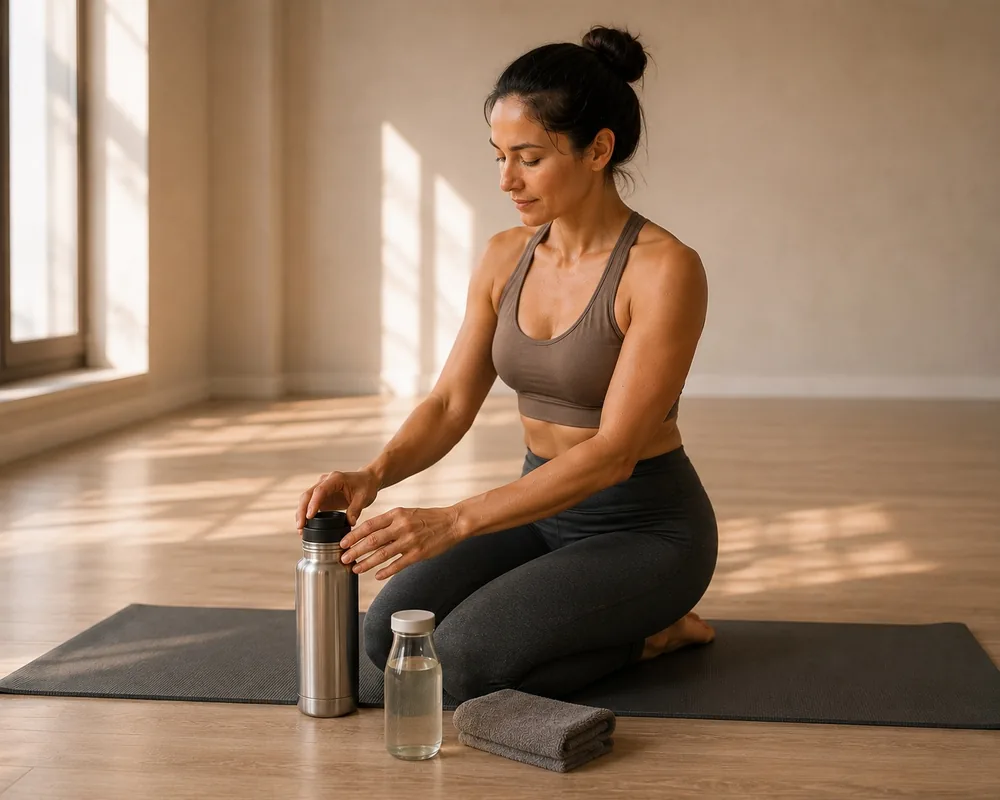
Determined not to repeat the mistakes from my first class, I approached Day 2 very differently.
I started hydrating well before leaving for the studio, skipped my usual coffee, packed a large towel, and brought a much bigger water bottle. It sounds obvious now, but those small changes completely transformed the experience.
Instead of worrying about slipping on my mat or wondering whether I was going to get another headache, I was able to focus on the practice itself.
For the first time, I began to appreciate what people enjoy about hot yoga.
The warmth made my body feel more supple, transitions between poses felt smoother, and I noticed myself settling into the rhythm of my breath instead of constantly thinking about the temperature.
When class ended, I wasn’t exhausted.
I felt refreshed.
That surprised me.
At home, I continued drinking water and added a glass of coconut water to replace some of the electrolytes I’d lost through sweating. Whether it was better hydration, better preparation, or simply feeling more relaxed during class, I finished the day without the migraine that had followed my first session.
More importantly, I found myself looking forward to returning the next day instead of wondering whether I should take a break.
That shift in mindset felt like the first real sign that this experiment might become more than a one-week challenge.
What I learned: Hot yoga became far more enjoyable once I stopped reacting to the heat and started preparing for it. Good hydration, proper equipment, and realistic expectations made a bigger difference than flexibility or fitness.
Day 3: I realized every class is different
By the third day, I thought I had figured hot yoga out.
I’d survived the heat, learned the importance of hydration, and finally remembered to bring everything I needed. I walked into class feeling noticeably more confident than I had on Day 1.
Then the practice reminded me how quickly confidence can become expectation.
For reasons I couldn’t quite explain, balancing felt much harder that day. Poses that had seemed steady the day before suddenly felt wobbly. My concentration drifted, and I found myself becoming frustrated every time I had to put my raised foot back on the floor.
It would have been easy to assume I was doing something wrong.
Instead, I began noticing something that experienced yoga teachers often mention: every practice is different.
Some days your body feels light and responsive. Other days it feels heavy, distracted, or simply tired. Progress isn’t a straight line, and yoga has a way of reminding you of that when you least expect it.
Rather than chasing the version of myself from yesterday’s class, I focused on the practice I had in front of me. Ironically, once I stopped judging every wobble, balancing became easier.
After class, my recovery routine had already become a habit: water, coconut water, a nourishing meal, and a quiet evening. I still felt energized, but what stayed with me most wasn’t the physical workout—it was the reminder that consistency isn’t about having perfect days. It’s about continuing to show up, even when things don’t go as planned.
What I learned: Improvement doesn’t happen in a straight line. Some days you’ll feel stronger, while others will test your patience. Learning to accept those fluctuations without judging yourself may be one of yoga’s most valuable lessons.
Day 4: The practice started feeling familiar

By the fourth day, something had shifted.
The heat no longer felt like the biggest obstacle. Instead of spending the first ten minutes adjusting to the room, my body seemed to accept the environment much more quickly. My hydration routine had become almost automatic, and I noticed I arrived at class feeling prepared rather than apprehensive.
One unexpected change was how my afternoons felt.
Normally, by late afternoon my energy begins to dip, and a 6:00 p.m. workout would sound more like an obligation than something I’d look forward to. Yet throughout this week, I found myself anticipating class. Rather than draining my energy, the practice seemed to give some of it back.
Balance also began to feel more natural.
I paid closer attention to my drishti—the steady gaze yogis use to help cultivate focus—and I was surprised by how much difference such a small adjustment made. Instead of chasing perfect stillness, I concentrated on breathing evenly and returning my attention to a single point whenever my mind wandered. The wobbles didn’t disappear completely, but they no longer felt like failures.
Another small surprise appeared in the mirror.
My skin looked healthier.
Was it the yoga? The increased circulation? Drinking far more water than usual? I honestly can’t say. Most likely it was a combination of all three. Whatever the reason, I felt better—not because I looked different, but because I was beginning to take better care of myself throughout the day instead of only during class.
That realization stayed with me long after I rolled up my mat.
Hot yoga wasn’t simply becoming an hour of exercise. It was quietly influencing the choices I made before and after class, from how much water I drank to how present I felt during the rest of my evening.
What I learned: By the fourth day, the biggest changes weren’t happening during class—they were happening outside the studio. Better preparation, improved hydration, and a growing sense of routine were beginning to influence the rest of my day as much as the practice itself.
Day 5: The biggest changes weren’t physical
By the fifth day, I stopped paying attention to how much I was sweating or whether I could hold a pose a little longer.
My focus had shifted somewhere else.
Physically, I didn’t notice any dramatic transformation. My body hadn’t suddenly become stronger or more flexible overnight, and my clothes didn’t fit differently. If I’d started this experiment expecting obvious external changes after only five days, I probably would have been disappointed.
Instead, the most noticeable changes were happening internally.
The constant mental chatter that so many of us carry around—the quiet voice that critiques our appearance, questions our choices, or reminds us of everything we haven’t accomplished—seemed a little quieter. It hadn’t disappeared, but it no longer dominated my attention.
I also realized I was handling everyday stress differently.
Normally, small frustrations can accumulate throughout the day without me even noticing. This week, they seemed to lose some of their intensity. It wasn’t that life had become less stressful. Rather, I felt more capable of responding instead of reacting.
Looking back, I don’t think the heat itself created that shift.
More likely, it was the combination of moving my body, breathing intentionally, disconnecting from distractions for an hour, and repeating that routine every day. Consistency has a way of creating space in the mind, and I was beginning to experience that firsthand.
It reminded me that some of yoga’s most meaningful benefits are difficult to measure. They don’t show up in progress photos or fitness trackers. They show up in how you feel when you leave the studio—and how you carry that feeling into the rest of your day.
What I learned: After five days, the greatest benefit wasn’t physical. It was realizing that a consistent yoga practice can gently quiet the mind, reduce everyday stress, and create a greater sense of presence long after class has ended.
Day 6: The practice began influencing the rest of my life
By the sixth day, hot yoga had quietly become part of my routine.
What surprised me wasn’t that I looked forward to class—it was how the hour I spent on the mat was beginning to influence the other twenty-three hours of my day.
Without consciously trying, I found myself making different choices.
I drank water before I felt thirsty. I reached for meals that left me feeling energized instead of sluggish. I paid more attention to how much sleep I was getting because I noticed how strongly it affected my practice the following day.
None of these changes felt forced.
They simply seemed like the natural extension of taking better care of myself.
That realization shifted my perspective on what yoga actually is.
Before this experiment, I mostly thought of yoga as something you do for an hour. By the sixth day, I was beginning to understand why so many long-time practitioners describe it as a practice rather than a workout.
The benefits weren’t confined to the studio.
They quietly followed me home.
I was more patient, more present, and generally more aware of how my daily habits affected the way I felt. The heat, the movement, and the breathing had become only one part of the experience. The bigger lesson was how quickly one positive habit could encourage others.
Looking back, I don’t think practicing hot yoga magically transformed my lifestyle in six days.
What it did do was create enough momentum to make healthier choices feel easier. Sometimes that’s all we need—a small shift that makes the next good decision a little more likely.
What I learned: Hot yoga didn’t change my life in a week, but it did change my momentum. One healthy habit naturally encouraged several others, reminding me that wellbeing is often built through small, consistent choices rather than dramatic transformations.
Day 7: I stopped thinking about the challenge
When I signed up for this experiment, seven consecutive days sounded ambitious.
By the final class, something interesting had happened.
I had stopped counting.
Instead of thinking, “I have one more class to finish,” I found myself simply looking forward to stepping onto the mat one last time. What had started as a personal challenge had quietly become part of my daily rhythm.
That surprised me more than anything else.
Like many people, I’d often told myself I was too busy to practice yoga regularly. Yet somehow, during this week, I had found an hour every day. The time hadn’t magically appeared. I had simply decided it was important enough to protect.
That realization stayed with me long after class ended.
I also noticed something else.
The greatest benefit of the week wasn’t becoming better at yoga. It wasn’t sweating more, holding poses longer, or becoming noticeably stronger.
It was remembering how good it feels to intentionally pause.
For one hour each day, I wasn’t answering emails, scrolling through my phone, or thinking about everything waiting for me afterward. I was simply present. In a world that constantly competes for our attention, that alone felt surprisingly restorative.
Will I continue practicing hot yoga seven days a week?
Probably not.
For my own body and schedule, I think a more balanced routine of two or three classes each week, combined with other styles of yoga and regular movement, feels more sustainable over the long term.
Over the years, I’ve also discovered that no single style of yoga has all the answers. Heated classes offer one experience, while slower Hatha sessions, restorative practices, and more dynamic approaches like Power Yoga each teach something different. One teacher who has had a lasting influence on my own practice is Bryan Kest. His emphasis on breath, awareness, and intelligent movement shaped the way I think about yoga long before this hot yoga experiment. If you’re exploring different styles beyond the heated studio, his classes are well worth experiencing.
→ Read our in-depth review of Bryan Kest’s online yoga platform.
But this experiment changed something much more important than my weekly schedule.
It reminded me that self-care doesn’t have to be elaborate or perfect. Sometimes it simply means consistently making time for something that helps you feel more connected to yourself.
Looking back, that’s the lesson I’ll remember long after the sweat has dried.
What I learned: The biggest transformation wasn’t physical—it was realizing that making time for yourself is often easier than we imagine. Once the habit was established, showing up became the easiest part. The real challenge had simply been taking the first step.
What surprised me most after seven days of hot yoga
When I started this experiment, I expected the biggest changes to be physical.
I imagined I’d become noticeably more flexible, stronger, or perhaps even lose a little weight after spending seven consecutive days in a heated yoga studio.
None of those things became the story.
Instead, the most meaningful changes were much quieter.
I became more aware of my body. I noticed how much hydration affected my energy, how my breathing influenced my concentration, and how showing up consistently mattered far more than having a “perfect” practice. I also discovered that my relationship with discomfort had changed. Rather than immediately resisting the heat or becoming frustrated when I lost my balance, I gradually learned to stay curious and respond more calmly.
That lesson reached beyond yoga.
I found myself reacting with a little more patience during everyday situations. Small inconveniences felt less overwhelming, and I carried a greater sense of calm into the rest of my day.
Another surprise was realizing that hot yoga wasn’t really about the heat.
The heated room certainly made the practice more demanding, but it wasn’t the reason I kept coming back. What drew me back was the uninterrupted hour of movement, breath, and focus. The heat simply amplified the experience—it didn’t create it.
Finally, I realized there isn’t one “correct” way to experience hot yoga.
Some people are drawn to the physical challenge. Others enjoy the meditative quality of moving in a warm room. Some simply love the feeling of leaving class refreshed and mentally clear. My experience won’t be identical to yours, and that’s part of what makes yoga such a personal practice.
Looking back, the week wasn’t really about completing a seven-day challenge.
It was about discovering what happens when you consistently make time to care for yourself.
Key takeaway: The greatest benefits of hot yoga weren’t the ones I expected. The physical practice mattered, but the biggest changes came from consistency, presence, and learning to pay closer attention to what my body was telling me.
Is practicing hot yoga every day a good idea?
The short answer is: it depends.
After completing seven consecutive days, I can understand why some people enjoy practicing hot yoga almost daily. It creates structure, encourages consistency, and can leave you feeling physically and mentally refreshed. At the same time, I also realized that more isn’t always better.
For beginners, practicing hot yoga every day may simply be too much.
The combination of heat, physical effort, and significant fluid loss places additional demands on the body. Without adequate hydration, nutrition, sleep, and recovery, daily classes can quickly become exhausting rather than energizing.
For experienced practitioners, the answer is often more nuanced. Some people thrive with several hot yoga sessions each week, while others prefer alternating heated classes with gentler yoga styles, strength training, walking, or complete rest days. The right frequency depends on your overall activity level, health, and how your body responds to the practice.
Looking back at my own week, I don’t think practicing seven days in a row was the secret to feeling better. The real benefit came from showing up consistently and paying attention to what my body needed each day. There were moments when I practiced with energy and confidence, and others when slowing down was the wiser choice.
If I were starting again, I probably wouldn’t recommend seven consecutive days as the goal.
Instead, I’d suggest beginning with two or three classes per week. Give yourself time to adapt to the heat, learn how your body responds, and develop a reliable hydration routine. Once that foundation is in place, you can always increase the frequency if it feels right.
One lesson became very clear during this experiment: consistency matters more than intensity. A sustainable practice you’ll enjoy for months or years is far more valuable than pushing yourself through a week you’ll never want to repeat.
My recommendation: If you’re curious about hot yoga, start gradually. Let your body—not your ambition—decide how often you practice. The goal isn’t to survive the heat; it’s to build a practice that supports your wellbeing over the long term.
What the research says about hot yoga
While my experience was entirely personal, I was curious to see how it compared with what researchers have found about practicing yoga in a heated environment.
Although research on hot yoga is still relatively limited, several studies suggest that practicing yoga in a heated room may offer many of the same benefits as traditional yoga, including improvements in balance, flexibility, muscular endurance, and perceived stress. The heat itself doesn’t necessarily make yoga “better,” but it can change how the body responds during practice.
One of the most noticeable differences is perspiration.
Many people associate sweating with detoxification, but sweat’s primary role is regulating body temperature. That means proper hydration before, during, and after class is essential, particularly if you’re practicing regularly or exercising intensely in a heated environment.
The heat may also create the feeling of increased flexibility. While warmer muscles generally move more comfortably through a range of motion, that doesn’t mean it’s wise to force deeper stretches. Flexibility still develops gradually, and pushing beyond your current limits simply because your body feels warmer can increase the risk of overstretching.
Research also suggests that yoga—including hot yoga—may help reduce perceived stress and improve overall wellbeing for many practitioners. It’s difficult to separate the effects of the heat from the effects of mindful movement, breathing, and taking uninterrupted time away from daily distractions. My own experience reflected that distinction. The greatest benefits I noticed weren’t related to sweating more—they came from consistently slowing down, breathing deeply, and giving my mind a chance to settle.
Like any form of exercise, hot yoga isn’t universally appropriate. People with cardiovascular conditions, heat intolerance, uncontrolled high blood pressure, or certain medical conditions should speak with a healthcare professional before participating in heated classes.
My week of practice didn’t prove that hot yoga is better than other forms of yoga.
What it did reinforce is something researchers have observed for years: regular movement, mindful breathing, and consistent practice are often more important than chasing the newest fitness trend or the most intense workout.
What I took away: The science doesn’t suggest that hot yoga is a miracle practice—and neither does my experience. What matters most isn’t the temperature of the room, but finding a style of yoga that encourages you to return to your mat consistently.
What I’d do differently if I started again
Looking back, there isn’t much I’d change about the decision to try hot yoga. I learned far more than I expected in just seven days. That said, there are a few things I wish I’d known before walking into my first class.
I’d start hydrating the day before
My biggest mistake wasn’t during the class—it happened before I even arrived.
After my first session, I developed a headache that I later realized was largely the result of poor hydration. Drinking plenty of water an hour before class wasn’t enough. Staying well hydrated throughout the day—and even the day before—made a noticeable difference to how I felt during practice.
I’d bring more than one towel
This may sound obvious to experienced hot yoga practitioners, but I underestimated just how much I would sweat.
One towel quickly became essential for my mat, while a second small towel would have been useful for drying my hands and face during class. A slippery mat doesn’t just make balancing more difficult—it can also distract you from the practice itself.
I’d stop comparing myself to everyone else
Walking into my first class, it seemed as though everyone around me knew exactly what they were doing.
Looking back, I realize I was paying far more attention to everyone else’s practice than they were paying to mine.
Once I shifted my focus back to my own breath and movement, the entire experience became more enjoyable. Yoga isn’t a performance, and no one earns extra points for looking graceful.
I’d eat a little lighter beforehand
I quickly discovered that practicing in a heated room feels very different depending on what—and when—you eat.
For me, a light meal a couple of hours before class felt much more comfortable than arriving either completely empty or overly full. Everyone’s body is different, but experimenting with meal timing is well worth it.
I’d listen to my body instead of my expectations
Some days I felt energized.
Other days I felt tired before class had even begun.
Earlier in the week, I interpreted those differences as success or failure. By the end of the experiment, I understood they were simply part of practicing yoga.
The goal wasn’t to have seven perfect classes.
The goal was to keep showing up with curiosity, adjust when necessary, and respect what my body was telling me that day.
If I could give one piece of advice to anyone trying hot yoga for the first time, it would be this:
Prepare well.
Stay hydrated.
Leave your expectations at the studio door.
Your first class doesn’t need to be impressive—it simply needs to be the first of many.
Who should (and shouldn’t) try hot yoga?
After a week of practicing hot yoga, one thing became very clear: there isn’t a single experience that applies to everyone.
Some people thrive in a heated studio. Others discover they feel more comfortable practicing in a room at a normal temperature. Neither approach is better. The best practice is the one that allows you to move safely, breathe comfortably, and return consistently.
Hot yoga may be a good fit if you:
- Enjoy a physically challenging practice that combines strength, balance, and flexibility.
- Find that warmth helps your muscles feel less stiff.
- Appreciate the meditative focus that comes from disconnecting for an hour.
- Are looking for a structured class that encourages consistency.
- Are already comfortable exercising at a moderate to vigorous intensity.
You may want to proceed more cautiously if you:
- Are completely new to yoga and still learning the basic postures.
- Become dehydrated easily or have difficulty tolerating heat.
- Have cardiovascular disease, uncontrolled high blood pressure, or certain respiratory conditions.
- Are recovering from an illness or injury.
- Are pregnant or have been advised by your healthcare provider to avoid exercising in high temperatures.
If any of these apply to you, it doesn’t necessarily mean hot yoga is off limits. It simply means it’s worth speaking with your healthcare provider and choosing a studio and teacher who encourage students to modify poses, rest when needed, and listen to their bodies rather than pushing through discomfort.
One thing I appreciated throughout this experiment was realizing that resting during class isn’t a sign of weakness. Every experienced practitioner I spoke with emphasized the same message: taking Child’s Pose, stepping outside for a moment, or simply slowing your pace is part of practicing intelligently—not failing.
Ultimately, the temperature of the room matters far less than the quality of the teaching and your willingness to respect your own limits.
My advice: If you’re curious about hot yoga, book one class—not ten. Go in with an open mind, bring plenty of water, and allow yourself to experience it without expecting perfection. One thoughtful class will teach you far more than hours of reading ever could.
What one week of hot yoga taught me
When I began this experiment, I thought I was testing hot yoga.
In reality, hot yoga was quietly teaching me something about myself.
It reminded me how quickly we create stories about experiences we’ve never actually had. Before my first class, I’d convinced myself the heat would be unbearable, that everyone would be watching me, and that I’d spend the entire hour wishing I were somewhere else.
None of those fears turned out to matter.
What mattered was simply showing up.
Some days I felt strong. Other days I struggled to balance, my concentration wandered, or I questioned why I’d committed to practicing every day. Yet those imperfect sessions often became the ones that taught me the most.
I also came away with a new appreciation for consistency.
Not perfection.
Not intensity.
Consistency.
The physical benefits of yoga are easy to notice, but the quieter changes often take longer to recognize. Drinking more water, sleeping a little better, making healthier food choices, feeling calmer in stressful situations—none of those happened because of a single class. They emerged from repeating one small act of self-care every day.
Perhaps that’s what surprised me most.
The heat wasn’t the lesson.
Neither was the sweat.
The real lesson was discovering how much can change when we intentionally create space to slow down, breathe, and pay attention.
Would I recommend practicing hot yoga every day for a week?
As a personal experiment, absolutely.
As a permanent routine, probably not.
For me, a more balanced schedule of two or three hot yoga classes each week feels both realistic and sustainable. The goal isn’t to prove how disciplined we are by practicing every day. It’s to develop a relationship with movement that we can maintain for years rather than weeks.
Looking back, I’m grateful I said yes to something that initially made me uncomfortable.
Not because hot yoga changed my life in seven days.
But because it reminded me that some of the most worthwhile experiences begin just outside our comfort zone.
If you’ve been curious about trying hot yoga, perhaps that’s your takeaway too.
You don’t have to commit to a week.
You only have to be willing to walk through the studio door once.
Sometimes that’s where the real practice begins.
Where your practice could take you next
Spending seven consecutive days on the mat reminded me of something I’d almost forgotten: one meaningful experience often leads to another.
For some people, that simply means making yoga part of their weekly routine. For others, it becomes the beginning of a much deeper journey—one that includes traveling, practicing with inspiring teachers, or even completing a yoga teacher training.
If this week has sparked that curiosity in you, here are three experiences we’ve personally explored and highly recommend:
Dreaming of Bali? Discover our Yoga Alliance-certified Yoga Teacher Training in Bali, designed for students who want to deepen their practice while immersing themselves in one of the world’s most inspiring yoga destinations. Yoga Teacher Training in Bali
Looking for a tropical training experience? Explore our guide to the best 200-hour Yoga Teacher Training in Costa Rica, where nature, community, and personal growth come together. 200-Hour Yoga Teacher Training in Costa Rica
Not ready for a certification? Sometimes a retreat is exactly what you need. Our immersive Bali Yoga Retreat offers time to slow down, reconnect, and simply enjoy practicing without the commitment of a teacher training. Bali Yoga Retreat.
Editor’s note
This article describes one writer’s personal experience after practicing hot yoga every day for one week. Individual experiences can vary depending on fitness level, hydration, medical history, the temperature of the studio, and the style of class being taught. It should not be interpreted as medical advice or evidence that everyone will experience the same results. If you have cardiovascular disease, heat intolerance, are pregnant, or have any medical concerns, consult your healthcare provider before participating in heated exercise.
Frequently asked questions
Is hot yoga good for beginners?
Yes, but it is best to approach your first few classes with realistic expectations. The heat can make the practice feel more demanding than a traditional yoga class, so give yourself permission to rest, drink water, or modify poses when needed. If you are completely new to yoga, choose a beginner-friendly hot yoga class.
How much water should I drink before hot yoga?
There is no single amount that works for everyone. Staying well hydrated throughout the day is generally more effective than drinking a large quantity immediately before class. During my one-week challenge, consistent hydration before and after practice made a much bigger difference than trying to catch up at the last minute.
Can hot yoga help with stress?
For many people, yes. The benefit may come from the combination of mindful breathing, focused movement, and uninterrupted time away from daily distractions rather than from the heat alone. Feeling calmer and more mentally refreshed was one of the clearest changes I noticed during the week.
Can practicing hot yoga every day cause headaches?
It can, especially if you become dehydrated or lose significant electrolytes through sweating. I experienced a migraine after my first class because I had underestimated how much fluid I had lost. Better preparation and hydration made the following classes much more comfortable.
Is hot yoga better than regular yoga?
Not necessarily. Heated and non-heated yoga can both support strength, mobility, balance, and mental wellbeing. Some people enjoy the warmth because movement feels more comfortable, while others prefer practicing at a normal room temperature. The best style is usually the one you enjoy enough to practice consistently.
How long does it take to get used to hot yoga?
Everyone adapts differently. In my experience, the first three classes required the greatest adjustment. By the fourth day, the heat felt less intimidating, and I could focus more fully on breathing, movement, and alignment.
Should I eat before a hot yoga class?
A light meal or snack a few hours before class may feel more comfortable than arriving overly full or completely empty. Meal timing is personal, so notice how your body responds and avoid heavy foods immediately before practicing in a heated room.
How often should beginners practice hot yoga?
Two or three classes per week is a sensible starting point for many beginners. This allows time to adapt to the heat, establish a hydration routine, and recover between sessions. You can gradually increase the frequency if your body responds well.
Continue exploring
If there’s one thing this week reminded me, it’s that yoga isn’t defined by the temperature of the room. It’s defined by the attention we bring to the practice.
Whether you decide hot yoga is your style or simply enjoy trying something new, the most valuable practice is the one you’ll keep returning to.
If you’d like to continue exploring, here are a few YOGI TIMES guides that naturally build on this experience:
- New to yoga? Explore our beginner-friendly yoga guides to build confidence before stepping into any class.
- Curious about Power Yoga? Discover how this dynamic style compares with hot yoga and why so many practitioners enjoy its athletic approach.
- Practicing at home? Read our guide to the best online yoga classes, where we compare some of the most respected platforms for beginners and experienced practitioners alike.
- Thinking about teaching? Our comprehensive review of the best online yoga teacher trainings compares leading programs to help you choose the one that fits your goals.
- Want to improve your poses? Visit the growing YOGI TIMES Yoga Pose Directory, where you’ll find detailed guides covering alignment, benefits, modifications, anatomy, common mistakes, and sequencing for dozens of yoga postures.
One week of hot yoga won’t transform your life overnight.
But it might change the way you think about consistency, self-care, and the simple act of making time for yourself.




Download your free 7-Day Wellness Journey Guide & receive weekly inspirations for the lifestyle of a modern yogi.
🔒 Respect your privacy. Unsubscribe anytime.

Download