Yoga for climate anxiety: a 15-minute practice when the news feels heavy

From our archive interview
Our contributor Sophie Ansel interviewed Indira Naidoo, a TV news presenter and journalist. Presenting the news, she kept seeing the same root under stories of conflict: “I was looking at all the things that were causing the conflicts in the news stories I was presenting.” Most came back to food and water.
She did not stop at the worry. On a 20-square-metre balcony on the 13th floor, with no gardening background, she started growing food: “In one year I grew 70 kilos of fruit and vegetables on my balcony! I had never been a gardener.” That is the shape of this guide: let the news in, calm the body, then give the feeling one small, concrete place to go.
The UN climate conference, COP31, runs from 9 to 20 November 2026 in Antalya, Turkey. During a summit the headlines carry emissions targets, flood footage and negotiators working through the night, and many of us will read them on a phone in bed.
If that reading leaves your chest tight and your thoughts looping at 2am, the feeling has a name. Your body also has ways to come down from it, and they take about 15 minutes.
What eco-anxiety is
Eco-anxiety is worry or distress about the state of the planet and its future. The American Psychological Association’s 2017 report with ecoAmerica, Mental Health and Our Changing Climate, defines it in its glossary as “a chronic fear of environmental doom” and lists it among the slow, long-term mental health effects of climate change, next to helplessness, fear and fatalism.
Climate worry is widespread among young people. In 2021 a survey published in The Lancet Planetary Health asked 10,000 people aged 16 to 25, in ten countries, how they felt about climate change. 59% were very or extremely worried, and more than 45% said those feelings affected their daily life and functioning.
Eco-anxiety describes a reaction; it is not a diagnosis. Worry about a real, measurable threat is a sane response. Trouble starts when the worry has nowhere to go and settles into the body instead.
Why your body reacts to a threat it cannot fight
Your stress response evolved for threats in the room. A sudden noise or a car too close brings faster breathing, a quicker pulse and tense muscles, then the danger passes and the body settles. Climate news sets off the same alarm with no end point: the threat is real, global and slow, and nothing you do in the next ten minutes will remove it.
So the alarm stays half on. Climate worry tends to show up as shallow breathing high in the chest, a clenched jaw, shoulders creeping towards the ears and headlines replaying at night. Yoga cannot change the news. It can work on that physical layer: the breath, the muscles and the feeling of your weight on the ground.
For the wider science of calming the stress response, our guide to nervous system regulation sets out which techniques have real evidence behind them. The practice below borrows from it and fits it to a stretch of heavy news.
Seane Corn’s ritual: read the news, then take it to the mat
Seane Corn, the vinyasa teacher and co-founder of the Off the Mat, Into the World training for yoga activists, described her morning routine in an interview with YOGI TIMES. We know no better model for practising through bad news, because she starts with the world and then brings it to the mat.
When I wake up in the morning I watch or read the news and find out what is going on in the world… Then I get on the mat and I meditate, I put my palms together and pray and I put my energy on whatever that crisis is.
Seane Corn, in her I AM DOING IT interview with YOGI TIMES
Her routine gives the news a fixed place in the day, so it stops leaking into every hour. And the practice that follows does something with the feeling instead of trying to erase it. During COP31, try one news window a day, morning or lunchtime, 15 minutes at most, followed by the practice below. Keep the hour before bed free of headlines.
A 15-minute yoga practice for climate anxiety
The sequence moves from standing to lying down, so the body gets a little steadier at each step. You need a wall, a mat or rug, and a cushion or folded blanket. No experience is required, and every step has an easier version.
1. Mountain pose, 2 minutes
Mountain pose is the grounding step. Stand with your feet hip-width apart and let your weight spread across the heels, the base of the big toes and the base of the little toes. Soften the knees, let the arms hang and feel the floor pressing back up into your soles. Breathe out a little longer than you breathe in.
Our Tadasana (Mountain pose) guide covers the footwork in detail, including a version with your back against the wall.
2. Tree pose at a wall, 1 minute each side
Tree pose gives a racing mind one simple job: staying upright. Stand side-on to a wall with one hand on it, and place the sole of your free foot on the opposite ankle or calf, never against the knee. Fix your eyes on one still spot. A wobble is fine; it means your attention has arrived in your feet.
For alignment and modifications, see how to practise Tree pose.
3. Longer-exhale breathing, 5 minutes
Longer-exhale breathing is the centre of the practice. Sit on the cushion or a chair and breathe in through the nose for a count of 4, then out through the nose for a count of 6, which works out at about six breaths a minute. If counting makes you tense, drop the numbers and let each out-breath be slower than the in-breath.
Stanford researchers tested a close cousin of this in a study published in 2023, in which 108 adults did five minutes of breathwork or mindfulness meditation every day for a month. The exhale-focused version, called cyclic sighing (two inhales through the nose, then a long, slow exhale through the mouth), lifted mood more than meditation did and slowed the breathing rate the most.
If you already use the 4-in, 5-out breath from our yoga for anxiety guide, add one more count to the exhale.
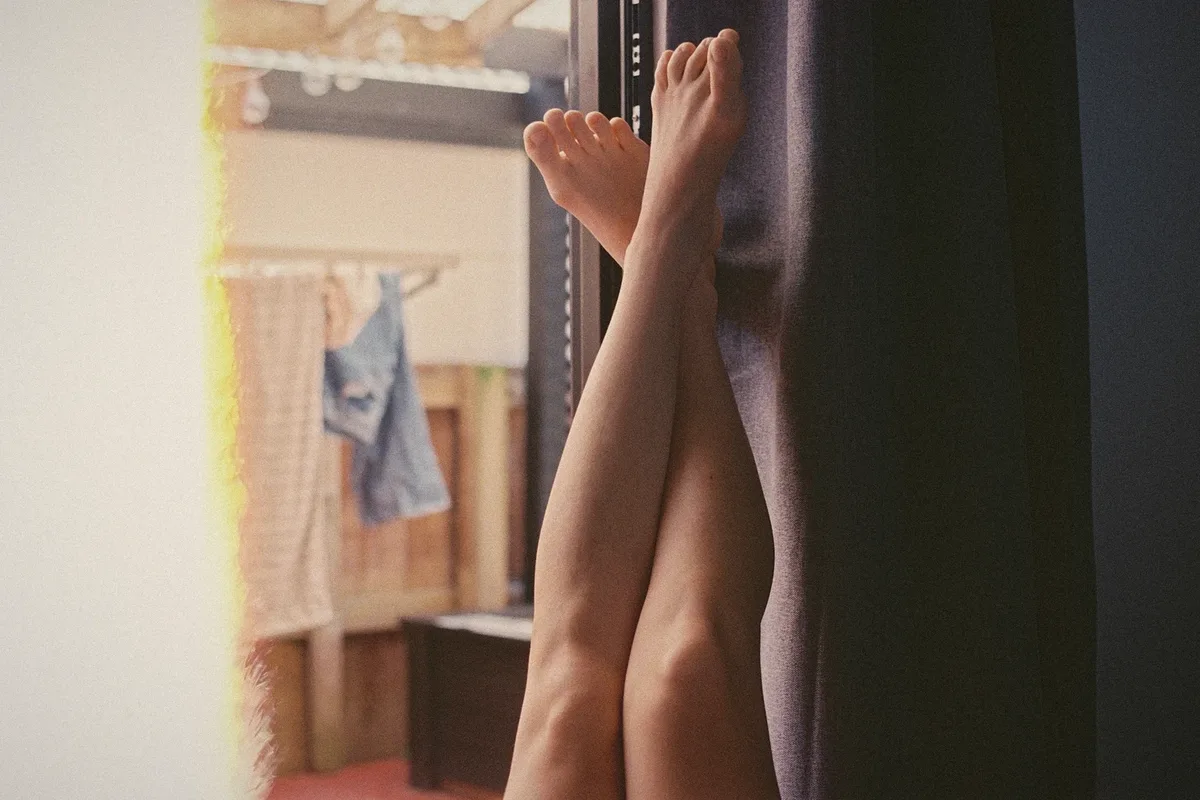
4. Legs up the wall or yoga nidra, 5 to 10 minutes
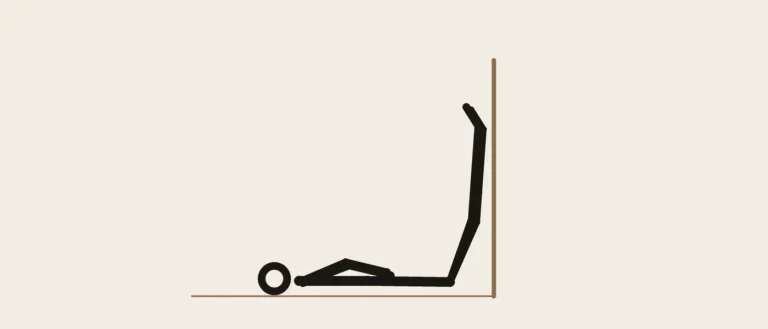
Legs up the wall finishes the practice lying down. Sit sideways next to the wall, swing your legs up as you lower your back to the floor, and rest your arms wide with the palms up. If your hamstrings complain, move your hips further from the wall, or rest your calves on a chair seat instead. Our gentle yoga guide has more restorative poses in the same spirit.
Yoga nidra is the alternative for nights when your thoughts will not settle. You lie still while a teacher’s recorded voice moves your attention slowly through the body. Our yoga nidra guide explains how the practice works and how to fit it into an evening; a ten-minute recording is enough to start.
What to skip while the headlines are loud
Fast, forceful breathwork is the technique to save for later. Styles built on rapid breathing and breath holds, such as Wim Hof or the rhythmic rounds in SOMA breathing, are designed to stir the system up, and our own SOMA guide advises anyone with severe anxiety to check with a health professional first. In a stretch of high worry, calm comes first.
Two more things to drop for now: a hot or power class late in the evening, which leaves you wired at bedtime, and checking your phone during the final rest. And if paying attention to your breath makes your heart race, which happens to some people prone to panic, practise with your eyes open and keep moving. Walk slowly around the room and feel each foot land.
From feeling to action without burning out
The Lancet survey found that young people’s distress was linked to a sense that governments were failing to respond, and more of them felt betrayed than reassured. Climate anxiety is partly about power, so a practice that only calms you down does half the job. The other half is acting on what you care about, at a pace you can keep.
Action is also where hope tends to come back. Awareness of climate change on its own can leave you anxious and stuck; a small, visible impact in the place where you are living (a community garden, a local environmental group, a habit you change at home) gives that awareness somewhere to land. Time outdoors in nature, even a walk in a park, is a simple reminder of what the worry is for.
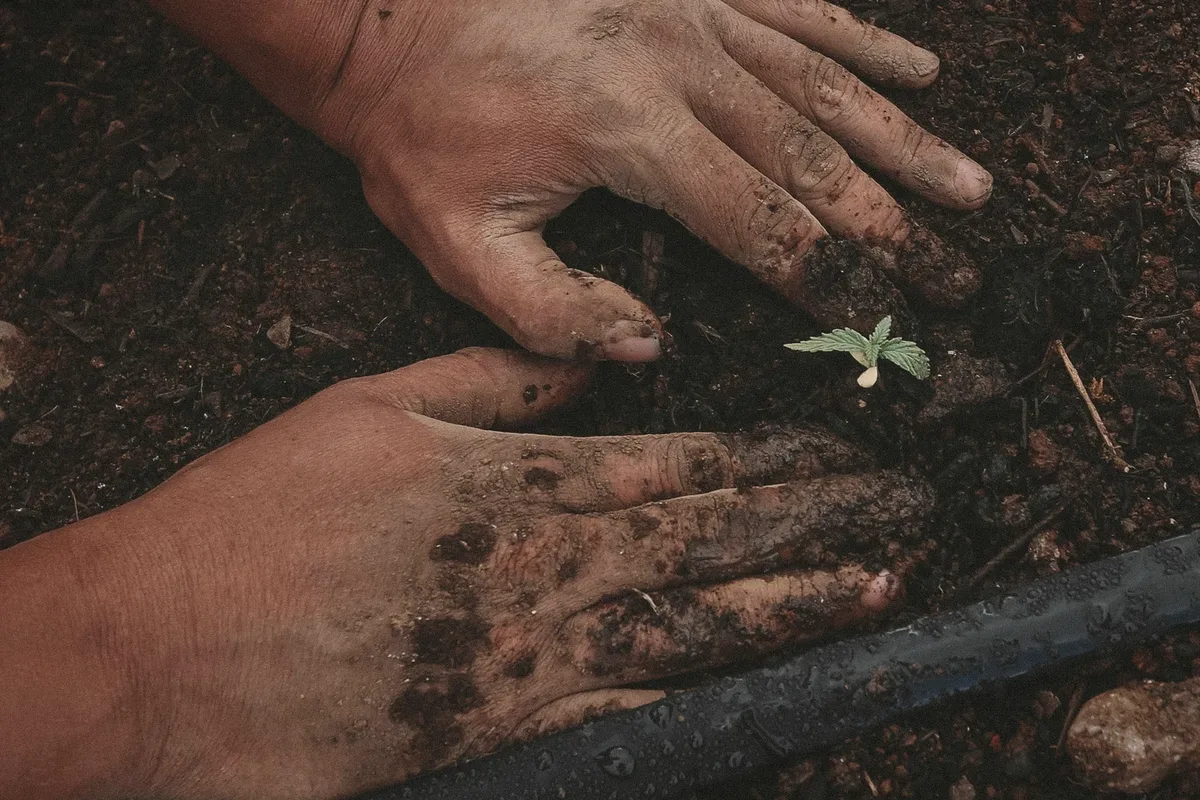
Pick one action that fits your skills, rather than ten that fit your guilt. A yoga teacher might run a donation class for a local climate group; a gardener might share seedlings with the street; someone good with words might write to an elected representative while COP31 is on. Give it a fixed slot each week, and put rest in the same diary. For smaller changes at home, our eco-friendly yoga guide is a practical place to start.
In our view, burnout in climate work comes from treating every headline as a personal emergency. Seane Corn’s own answer, in the same interview, was civic: her vision was that everyone who rolls out a yoga mat also votes, so a community of practitioners becomes a constituency. You can borrow the point without the plan. Regular practice keeps you steady enough to stay involved for years instead of weeks.
When to talk to a professional
Yoga can support you through climate worry; it is not treatment. Talk to a doctor or therapist if the worry has disrupted your sleep, work or relationships for weeks, if you are having panic attacks, or if you feel hopeless about your own future. If you live with a diagnosed anxiety disorder, use this sequence alongside your care, never in place of it.
In the US and Canada, the Climate Psychology Alliance of North America lists climate-aware therapists in its practitioner directory. If you ever think about harming yourself, call or text 988 in the US to reach the 988 Suicide and Crisis Lifeline, or contact your local emergency number elsewhere.
FAQs
Once a day while the news is heavy, ideally straight after your news window. Fifteen minutes covers the full sequence. On busy days, the five-minute breathing step on its own still counts, and five minutes a day is the dose the Stanford breathwork study used.
A short break is fine. Our suggestion is a set window instead of a total blackout: 15 minutes once a day, never in the hour before bed. The news then stops ambushing you at random moments, and you still know enough to act on what you care about.
No. Mountain pose, Tree pose at a wall, seated breathing and legs up the wall are all beginner poses, and each has an easier version: a hand on the wall in Tree, your calves on a chair seat instead of the wall. Yoga nidra needs no movement at all, only a quiet place to lie down.
References
- American Psychological Association, ecoAmerica (2017). Mental Health and Our Changing Climate: Impacts, Implications, and Guidance. ecoamerica.org (PDF)
- Hickman C et al. (2021). Climate anxiety in children and young people and their beliefs about government responses to climate change: a global survey. The Lancet Planetary Health. pubmed.ncbi.nlm.nih.gov/34895496/
- Balban MY et al. (2023). Brief structured respiration practices enhance mood and reduce physiological arousal. Cell Reports Medicine. pmc.ncbi.nlm.nih.gov/articles/PMC9873947/
- UNFCCC. UN Climate Change Conference, Antalya, November 2026 (COP31, 9 to 20 November). unfccc.int/cop31
- 988 Suicide and Crisis Lifeline. 988lifeline.org
How we fact-checked this article: in October 2026 the YOGI TIMES editorial team opened each source above and checked every figure against it: the APA definition in the report’s glossary, the survey numbers in the Lancet abstract, and the breathing study’s design in its full text. COP31’s dates and host city were checked against the UN. This article is general information, not medical advice.
Free course finder
Which online course fits you?
One question, and we send you all nine programs compared honestly, including who each one is not for.
One short email series, no spam. Unsubscribe anytime.
Free comparison
Nine online courses, compared honestly
Price, format, certificate, and the column most sites skip: who each course is not for. Read it before you pay.
One short email series, no spam. Unsubscribe anytime.

YOGI TIMES · Your privacy
A few cookies, only with your yes
We use cookies to understand what you read and to measure our own marketing. Nothing is set until you choose. Privacy policy