Kapotasana (Pigeon Pose): Benefits, alignment, and how to practice

What is Kapotasana?
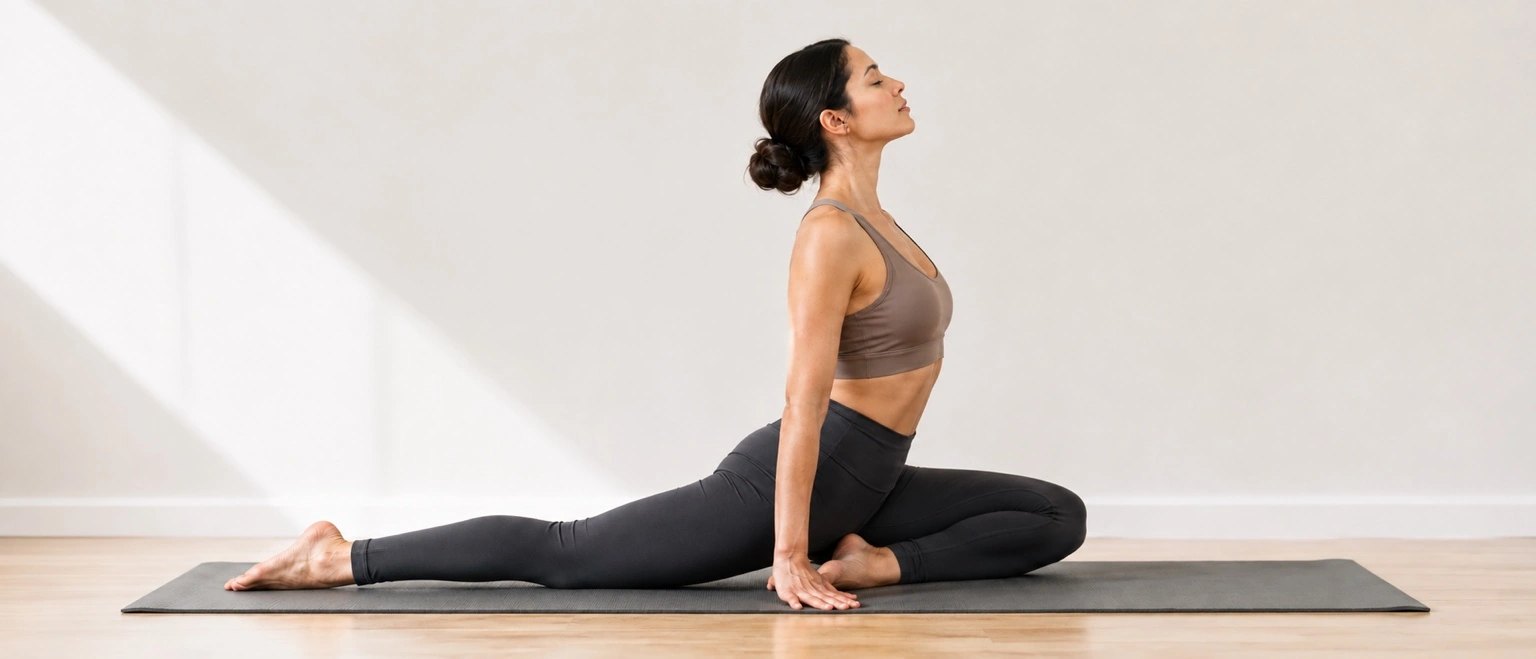
Kapotasana, often called the “Pigeon Pose” in yoga, is a deep backbend offering numerous benefits for the mind and body. This pose, named after the Sanskrit word for pigeon, is known for opening the heart chakra, improving flexibility in the upper spine and back muscles, and providing a deep stretch for the hip flexors.
In class, this is one of the poses students approach with the most hesitation, and rightly so. It asks a lot of the shoulders, spine, and hip flexors all at once. The version that actually serves most practitioners isn’t the deepest one, it’s the one held with an open chest and a supported lower back, built up gradually from gentler backbends rather than forced into on day one.
Quick answer
Kapotasana (Pigeon Pose) is a deep backbend that opens the chest, shoulders, and hip flexors while stretching the front of the body. It is an advanced pose best approached after building comfort in gentler backbends like Camel Pose.
Beyond its physical benefits, Kapotasana is a powerful tool for introspection and emotional release.
Sanskrit origins
“Kapota” in Sanskrit means “pigeon,” and “asana” means “seat” or “pose.” The name reflects the open, lifted chest of the shape, echoing the way a pigeon holds its chest out. In “King Pigeon” (Eka Pada Rajakapotasana), “eka pada” means “one leg” and “raja” means “king,” referring to the deeper, one-legged backbend variation with the back foot lifted toward the head.
Benefits of Kapotasana
Mental Well-being
Beyond its physical benefits, kapotasana also offers profound advantages for the mind, fostering a sense of balance, clarity, and tranquility:
- Stress reduction and emotional release: opening the chest and hip flexors is often where people notice they’ve been holding tension without realizing it.
- Mental clarity and focus: holding a deep backbend steadily requires real concentration, which tends to quiet mental chatter.
- Mindful breathing: the open chest position naturally encourages fuller, slower breaths.
Digestive support
The gentle compression and stretch through the abdomen in this pose is anecdotally reported by many practitioners to ease bloating and support regularity, though this isn’t something to rely on as a treatment for digestive issues. If you have a diagnosed digestive condition, check with your doctor before using yoga poses to manage it.
Hip Mobility Enhancement
With its deep stretch and engagement of the hip muscles, kapotasana stands out as a potent asana for enhancing hip joint mobility and addressing related issues:
- Counteracting Sedentary Lifestyles
- Strengthening Hip Muscles
- Relief from Hip Pain
- Improved Posture
- Enhanced Circulation
- Balancing Hip Joints
- Prevention of Future Injuries
Variations and step-by-step instructions for Kapotasana
Classic Kapotasana Pose
The Classic Kapotasana Pose, often the first variation introduced to yoga practitioners, serves as the foundation for the other variations of the pigeon pose. In this pose, one leg stretches backward while the left foot is folded in front, creating a deep stretch in the hip of the extended leg.
The upper body remains upright, allowing an open chest with the knee forward and a gentle backbend. This pose is ideal for beginners and offers a balanced stretch for the hips and inner thighs while preparing the practitioner for more profound variations.
Resting Kapotasana Pose
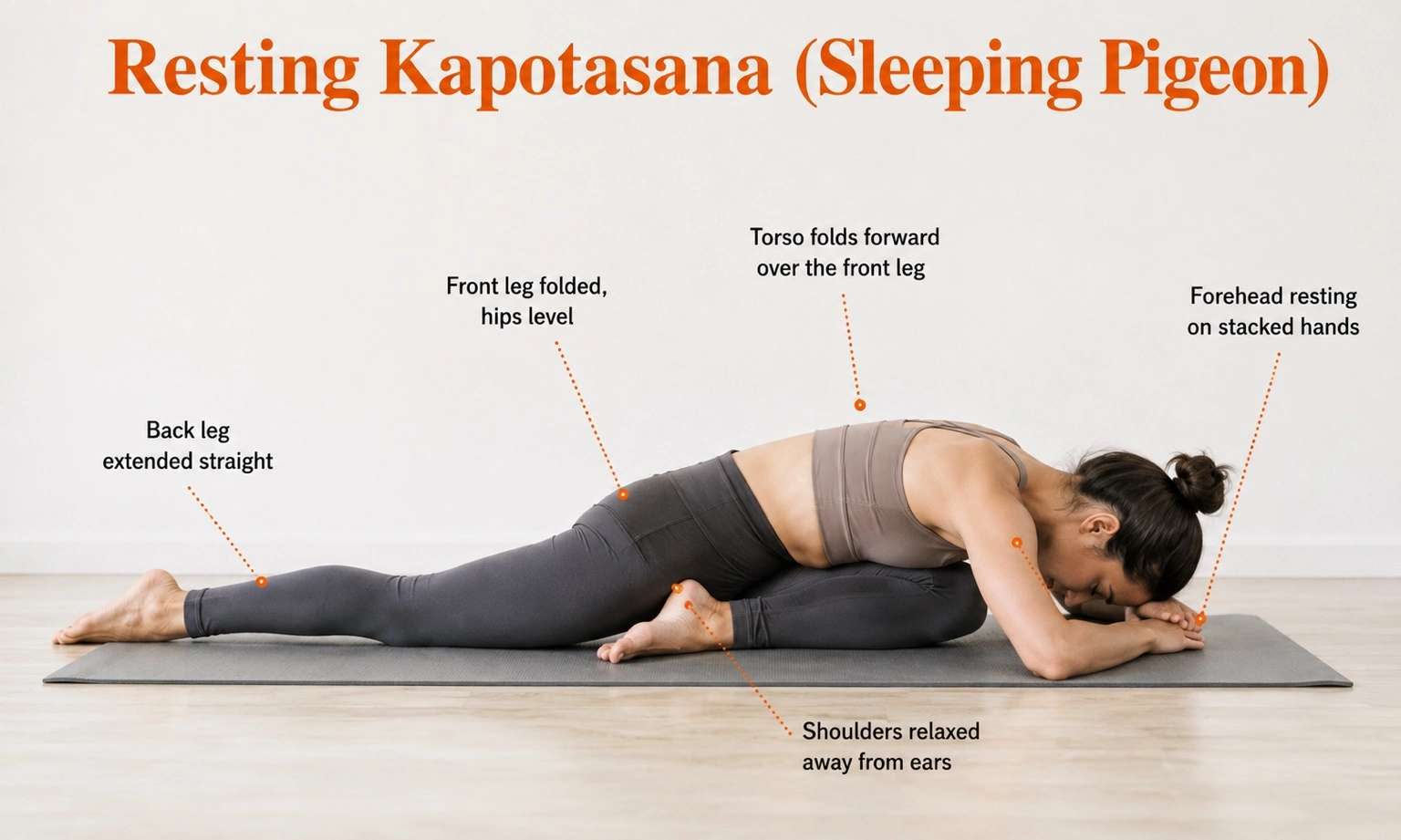
Resting Kapotasana Pose, also known as Sleeping Pigeon, is a more relaxed variation of the Classic Pigeon Pose. After getting into the essential pigeon position, the practitioner leans forward, resting their forehead or hands on the floor.
This posture variation provides a deeper stretch in the hips and the lower back, offering a sense of relaxation and release. It’s particularly beneficial for those looking to relieve tension in the lower back and hips or seeking a calming, restorative pose.
One-legged King Kapotasana
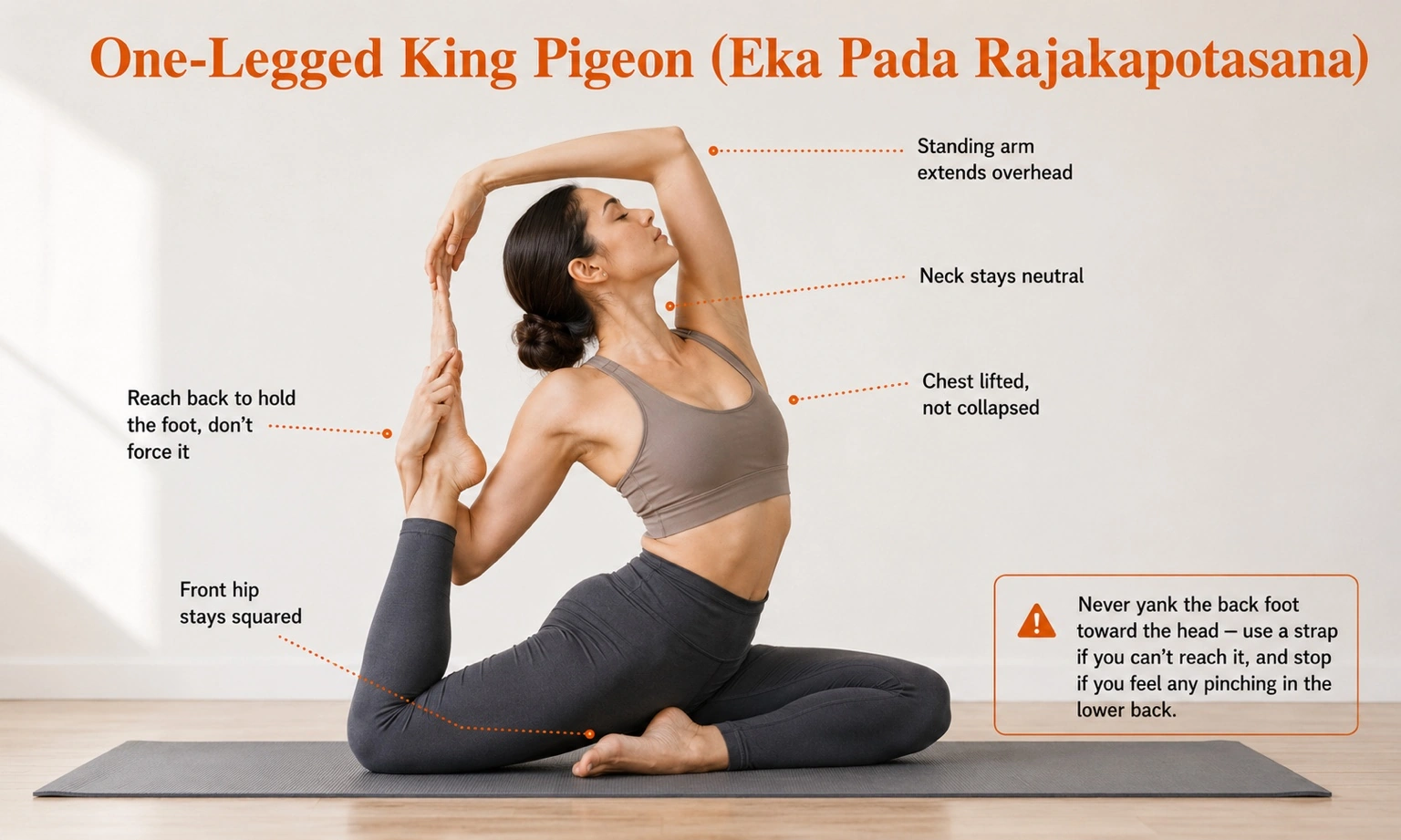
King Kapotasana Pose, or Eka Pada Rajakapotasana is a deep hip opener and backbend. It is a challenging pose that requires significant flexibility and balance. The pose is often associated with the second chakra, or Swadisthana chakra, which is associated with creativity, emotions, and sensuality.
To enter King Pigeon Pose, start in Downward Dog with your legs hip-width apart. Step your right foot forward between your hands, placing your right heel in front of your left hip. Lower your left knee to the floor, stacking it directly under your left shoulder and hip. Slide your right leg back, straightening your knee and resting the top of your right thigh on the floor.
Shift your weight forward so that your left hip is directly over your left knee. Lower your outer left backside to the floor. Position your left heel just in front of your right hip. Your left leg forward and knee can angle slightly to the left, outside the line of the hip. Look back at your right leg. It should extend straight back from your hip.
Lift your torso away from your thigh. Lengthen your lower back by pressing your tailbone down and forward. Draw your right front hip point slightly forward, toward your left heel. Reach your right arm up overhead and extend your left arm down towards your left foot. You can use a strap to help you reach your foot.
- If you are unable to reach your foot, you can use a strap around the ball of your foot.
- If you have tight hamstrings, you can place a block under your right thigh.
- If you have tight hip flexors, you can place a block under your left knee.
To come out of the pose, bend your right knee and slide your right foot forward between your hands. Step your left foot back to Downward-Facing Dog. Repeat on the other side.
Please be mindful of your alignment and modifications throughout the pose. If you experience any pain, come out of the pose immediately.
When practicing King Kapotasana Pose, it is important to make sure that the left hip is stacked directly over the left knee and that the outer edge of the right thigh is perpendicular to the floor.
Finally, remember to breathe deeply and slowly throughout the pose. King Pigeon Pose can be a challenging pose, but it is also a very rewarding one. With regular practice, you can develop the flexibility, strength, and balance needed to master this pose.
Practicing
Preparatory Poses
Before diving into the Kapotasana pose, it’s essential to warm up the body with some preparatory poses that target the key muscles and joints involved:
- Bhujangasana (Cobra Pose): This pose helps warm up the spine and open the chest, preparing the body for the deep backbend.
- Anjaneyasana (Low Lunge): This lunge variation stretches the hip flexors, especially the iliopsoas, crucial for achieving full expression.
- Balasana (Child’s Pose): A gentle pose that relaxes the lower back and hips, providing a counter-stretch to the intense backbend.
- Supta Virasana (Reclining Hero Pose): This pose stretches the quadriceps and prepares the knees for the bending required.
Step-by-step Guide
- Starting Position: Begin in a tabletop position with your hands directly under your shoulders and knees under your hips.
- Slide One Leg Back: Extend your right leg back, placing the top of your foot on the ground.
- Fold the Left Leg: Bring your left knee towards your left wrist and place your left ankle near your right wrist.
- Adjust and Align: Ensure that your right leg is straight behind you and adjust your left shin so it’s comfortable, aiming to be parallel to the front of the mat.
- Upright Torso: Lift your torso, opening your chest and drawing your shoulder blades together.
- Deepen the Pose: For those comfortable, bend the right knee and reach back with your right hand to grasp the ankle or foot.
- Hold and Breathe: Stay in the pose for a few breaths, feeling the stretch in the hips and the chest opening.
- Release and Repeat: Gently release the pose and repeat on the other side.
- One of the best follow-up poses is the cobblers pose or Baddha Konasana. Sit on your sit bones with your legs bent at the knees and the soles of your feet pressed together. Gently open your knees to the sides, pressing your feet together. Reach down towards your feet with your hands shoulder-width apart and stretch your inner thighs. Hold for 5-10 breaths.
Common mistakes and corrections
- Misaligned Hips: One of the common mistakes is allowing the hips to tilt to one side. Ensure that your hips are squared and level. A prop like a folded blanket under the hip of the bent leg can help maintain alignment.
- Overarching the Lower Back: Some practitioners might put too much pressure on the lower back instead of distributing the backbend evenly along the spine. Engage your core and lengthen your tailbone towards the floor to protect the lower back.
- Straining the Neck: In an attempt to look up or back, some might strain the neck. Keep the neck neutral or slightly extended, ensuring it’s a comfortable continuation of the spine.
- Forcing the Back Leg: Avoid moving the back foot towards the head in the King Kapotasana variation. Use a strap if needed, and respect your body’s limits.
Remember, this is a challenging pose, especially the king pigeon pose, and it’s essential to approach it with patience, listening to your body, and making adjustments as needed.
Safety and precautions
There are certain conditions and situations where practicing this pose might not be advisable:
- Recent or Chronic Back Injury
- High Blood Pressure
- Severe Hip Problems
- Pregnancy
- Neck Issues
Tips for safe practice
- Warm Up Properly: Before attempting the Kapotasana pose, ensure you’re adequately warmed up, especially the spine, hips, and shoulders.
- Listen to Your Body: It’s essential to practice with awareness and listen to your body’s signals. It’s a sign to back off if you feel any sharp pain.
- Maintain Alignment: Ensure your hips are squared and level to avoid unnecessary strain on the lower back and hips.
- Engage the Core: Activating the core muscles can support the spine and prevent overarching in the lower back.
- Seek Guidance: If you’re new to the pose, consider practicing under the guidance of a certified yoga instructor.
Conclusion
Kapotasana rewards patience more than flexibility. The students who progress fastest are usually the ones who build it up gradually through gentler backbends, rather than forcing the deepest version too soon.
Approached that way, it becomes less about how deep you can go and more about what you learn along the way, about your body’s limits, your breath, and your own pace.
In embracing Kapotasana, we not only engage in a deep backbend but also embark on a journey of self-discovery, healing, and empowerment. Whether you’re a seasoned yogi or a curious beginner, exploring Kapotasana offers a rich, multi-faceted experience, promising growth, understanding, and a deeper connection to oneself and the world around you.
References
- Iyengar BKS. Light on Yoga. HarperCollins.
- Long R. The Key Poses of Yoga. Bandha Yoga Publications.
- Cleveland Clinic. The benefits of yoga.
If you’re drawn to this kind of deep, strength-and-flexibility challenge, Scorpion Pose and Pincha Mayurasana (Forearm Stand) test similar spine and shoulder strength.
Specialize in deep backbends like Kapotasana? Claim this pose through Pose for a Cause.
FAQs
Gentler backbends like Camel Pose and Bridge Pose are the best foundation, since they build the spine and shoulder mobility Kapotasana requires without the same intensity.
It can strain the lower back if the backbend comes mainly from that area rather than being distributed through the whole spine. Building strength and mobility gradually, and working with an experienced teacher, helps keep it safe.

Download your free 7-Day Wellness Journey Guide & receive weekly inspirations for the lifestyle of a modern yogi.
🔒 Respect your privacy. Unsubscribe anytime.
Download