Is online yoga teacher training legit? 7 checks before you pay


Online yoga teacher training can be a real route to teaching, and it can also be a weak one. This guide gives you seven checks to run before you pay, using the standards Yoga Alliance publishes for the schools it registers.
Quick answer
Online yoga teacher training is legit when real teachers teach you, you practise teaching and get feedback on it, and the school is open about who runs it. Yoga Alliance registration is a useful signal, not a verdict: it means the school paid and follows Yoga Alliance’s guidance, which asks for at least 30 of the 200 hours live, an E-RYT 500 lead trainer and an assessment. Some respected teachers, such as Bryan Kest, do not register. Take every claim with a grain of salt, do your own research and trust your judgment.
Is online yoga teacher training legit? Three questions behind the word
“Legit” means three different things, and an online yoga teacher training (online YTT) can pass one and fail another. Is the certificate real? Can you register with Yoga Alliance afterwards? Will you be ready to work as a yoga instructor when you finish?
The school issues your yoga teacher certification, not Yoga Alliance. Yoga Alliance only lists you as a Registered Yoga Teacher once a registered school confirms your training, which we explain step by step in our guide to how Yoga Alliance registration works. The third question is about skill, and no directory answers it for you. Online teacher training courses can teach it well, and they can also skip it. Yoga Alliance is a private, voluntary registry, not a government body. In France, for example, yoga teaching is not regulated and there is no state diploma, so a school that advertises a “recognised” training only means a private body recognises it.

Our view is that Yoga Alliance is not the judge of what is legit. Registration means a school paid Yoga Alliance and agreed to follow its guidance, which makes it one indicator among several, and a helpful one. Bryan Kest is the example we keep coming back to: his Power Yoga online teacher training says it is not a member of any accreditation body, such as Yoga Alliance, and we still consider it a legit training from a respected teacher. So use the checks below as questions, then do your own research and go with your gut.
What graduates told us
Doubt about online training is normal. Under our review of The Peaceful Warriors’ 200-hour course, a reader wrote that they expected an online training to be surface-level and were surprised by how in-depth it was.
We did not ask anyone to write for this guide. These accounts come from reviews already on our site, each by someone who completed the course, and each one lines up with a check below.
- Cat Gavriusova took DoYogaWithMe’s online course eight years after an in-person training, to get expert feedback on their teaching and to see how online compares with the studio version. Cat writes that everything the enrolment page promised was delivered, with one warning: the live sessions are set by a school on Canada’s west coast, so check them against your time zone.
- Lauren Aguon did an in-person 200-hour in 2018 and finished My Vinyasa Practice’s online course several years later. Lauren describes moving through the modules at their own speed while still getting “real-time feedback” from fellow students and teachers.
- Tenille McCombes lists what assessment looked like at Sacred Paths: a written reflection, a recorded vinyasa sequence, a pose presentation on anatomy and a full 90-minute class video of your own design. Tenille calls the feedback the highlight of the course.
- Aline Spaziani notes that the one-to-one mentor every student had when they trained at Akasha is now part of the Premium plan only, so ask which support comes with the plan you buy. Aline also reviewed The Peaceful Warriors and chose it partly for its Yoga Alliance registration.
Registration, live time, assessment and support: those are the checks below.
What Yoga Alliance requires of an online school
Yoga Alliance lets a Registered Yoga School teach 100% online, but not 100% pre-recorded. Its published standards for schools set these minimums for a 200-hour program, and the table shows what to ask the school about each one.
| What Yoga Alliance sets | Minimum for a 200-hour yoga teacher training | What to ask the school |
|---|---|---|
| Live (synchronous) hours | At least 15% of the hours, which is 30 of 200 | How many live hours do I attend, and are they required? |
| Lead trainers | E-RYT 500 credential, teaching at least 150 of the 200 hours | Who is the lead trainer, and how many hours do they teach? |
| Subject areas | 75 hours techniques, training and practice; 30 anatomy and physiology; 30 yoga humanities; 50 professional essentials (teaching methodology and practicum) | Where is the practice teaching, and who watches it? |
| Assessment | Trainees are assessed before the certificate is issued | How am I tested, and can I fail? |
Where the 200 hours go
Yoga Alliance minimums for a Registered Yoga School 200-hour program, in hours
The standards also say schools should not graduate students simply because they finished the course. These are Yoga Alliance’s school standards as published in its 2025 PDF, checked on 27 November 2026. Look at the current version before you pay.
Online vs in-person: what actually changes
Online yoga teacher training changes how you get feedback, not what the certificate is. A registered school can run in person, online or both, and Yoga Alliance registers teachers from each. What differs is the experience of learning.
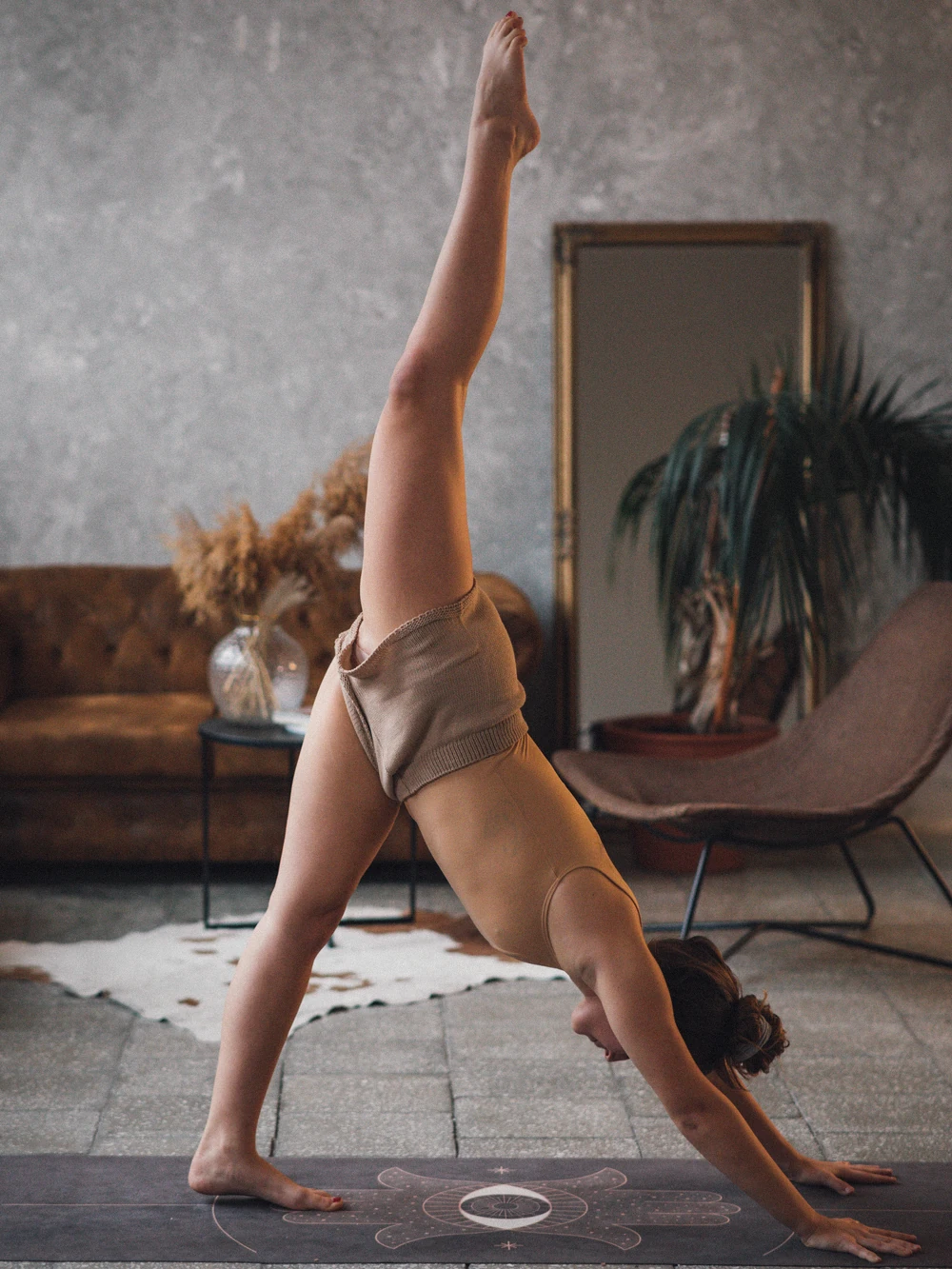
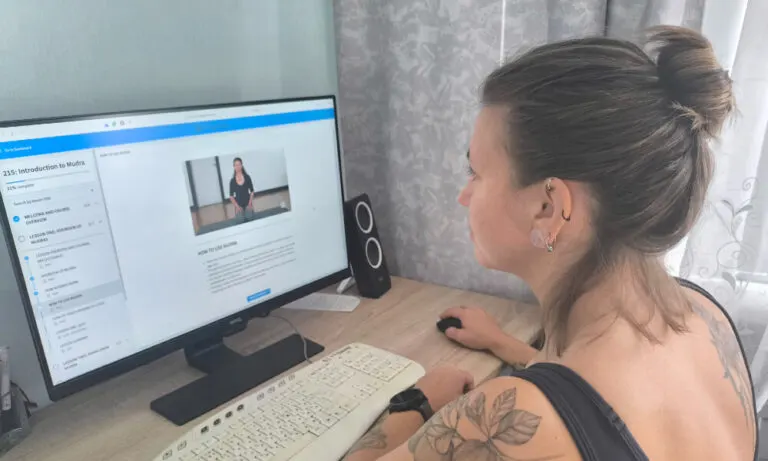
In a studio, a trainer adjusts your pose and corrects your cueing on the spot. Online, you get that feedback through live calls, recorded practice-teaching videos and written comments, so how fast and how detailed it is depends on the school. Online training suits people who need to study around work and family, and an online YTT can fit a full-time job. In-person suits people who learn best from hands-on support and a group in the room. Both can be legit, and both can be weak.
7 checks before you pay
Each check takes minutes, and a good school will answer all of them without fuss.
1. See whether the school is registered, and what that tells you
Search the school’s exact name in Yoga Alliance’s directory. If it is listed as a Registered Yoga School for the hours you want, that is a plus, and the standards above give you questions to ask. If it is not listed, ask why: some excellent teachers choose not to register, and you simply have less to go on. “Registered” on a sales page proves nothing by itself, so look it up. We check each school’s profile by hand for our comparison, because Yoga Alliance’s own pages do not load for automated tools.
2. Count the live hours
Ask how many of the 200 hours are live and whether you must attend them. In our comparison the formats range from 30 required live hours at YogaRenew to 10 required live practice sessions at Movement Wisdom, and one school lists live Zoom as optional. If live time is optional, ask how the school meets the 30-hour minimum. Ask also how long the program takes. A 200-hour course can run for a few weeks or many months, so check that the pace fits your life and leaves time to practise teaching. Our view: if we could run only one check, it would be this one.
Cat Gavriusova, who reviewed DoYogaWithMe for us, notes the school now asks self-paced students to attend at least nine live meetings before they can certify, and calls that the right call.
3. Name the lead trainer
Ask who the lead trainer is, then look that person up in the directory. For a 200-hour program the lead trainer must hold the E-RYT 500 credential and teach most of the hours. A school that will not name its lead trainer has told you something, whatever its yoga teacher training reviews say.
4. Ask how you are assessed
Ask for the assessment in writing: a practice-teaching video, a live practicum, a written exam, or all three. A program where everyone who pays also graduates is not testing anything. Ask too what support you get if you struggle, such as feedback from a trainer on your teaching, and what help you get after you finish.
5. Read ratings together with review counts
A rating means little without the number behind it. In our comparison one school shows 4.75 from 2 reviews and another 4.80 from 6,910, and three of the 13 schools show no Yoga Alliance rating at all. We show the count next to every score for that reason.
6. Check the price and the refund window
Price does not decide whether a school is legit. Our comparison runs from $390 to $2,850 and every school on it is registered, so the cheaper ones are not the weaker ones by that fact alone. Our guide to affordable online yoga teacher training lists accredited courses under $500. Ask for the refund window and what counts as starting the course, in writing, before you pay. Take simple precautions too: pay by card so you can dispute a charge, keep the sales page and your emails, and do not pay in full for a program you have not seen. Ask whether liability insurance is included too. Yoga Alliance describes insurance as a member discount, not coverage that comes with registration.
7. Try the teaching first
Look for a free lesson, a preview module or a sample live class. You are paying for how someone teaches, so watch it. Real teacher names, a working contact address and graduate stories outside the school’s own site are all easy to check. Then listen to your gut. If something feels off, take it seriously, and do your own research before you pay.
A reader asked: can I do this around a full-time job?
A reader asked us under our online YTT ranking whether anyone had balanced a full-time job with an online training, and how manageable the workload was. There is no single answer, because each school sets its own pace.
Our review of The Peaceful Warriors puts its eight-module training at roughly four hours a week, while YogaRenew requires 30 live hours in total. Ask for the weekly hours in writing, check how many live sessions are fixed in the calendar, and pick a start date you can keep.
Red flags
Walk away when you see several of these together:
- A yoga teacher certification promised in days, or no live teaching at all.
- No named lead trainer, or one you cannot find in the directory.
- No practicum and no assessment before the certificate.
- Reviews that only appear on the school’s own site.
- Countdown timers and “last place” pressure on a price that returns next week.
- Claims to “meet Yoga Alliance standards” or to be “Yoga Alliance approved” with no listing in the directory. Yoga Alliance has said some schools market their curriculum this way without being registered.
Outside the US: legit depends on where you live
Yoga Alliance is a US registry, and other countries have their own bodies and rules. Yoga Alliance says on its FAQ page that it is not affiliated with Yoga Alliance UK, Australia, Canada or Yoga Alliance Professionals, so a listing with one does not give you a listing with another. Ask a school which bodies it is registered with and what each means for teachers where you live.
Other countries add their own bodies and expectations. In France, MaFormation’s 2023 guide says yoga teaching is not regulated and there is no state diploma. France Compétences does keep a public register, the Répertoire spécifique, and a search there for “enseigner le yoga” on 27 November 2026 returned 21 certifications, each listed under the school or federation that certifies it. In Germany, the yoga teachers’ association BDYoga lists a 725-hour foundation training over two and a half years, part-time, mixing in-person, online and self-study, and a four-year 1,150-hour program, both certified by the ZPP, the German prevention testing agency. In Italy, the Federazione Italiana Yoga’s own site describes a three-year teacher training, partly online and partly in person, for students aged 21 or over who have at least three continuous years at one of its schools, and it describes yoga teaching as an unregulated professional activity.
In Germany, paid distance courses need approval from the national distance-learning authority, ZFU, unless they are hobby courses, and the ZFU’s public course search shows each approved course with its number. Check the number there, not only on the school’s page. We have not verified the rules for other countries, so ask the school and your local authority before you pay.
Will studios accept an online certificate?
We do not know, and we have not found public data on it. Yoga Alliance registration is optional, studios set their own hiring rules, and some ask for a registered teacher while others care only about how you teach in an audition class.
Our advice is to ask two or three studios where you would like to teach what they look for. Our Yoga Alliance guide says register if you plan to apply to studios, and can wait if you will only teach private students. If you are comparing online yoga teacher training programs, our guide to online yoga certification programs sets 13 schools side by side by live hours, price and Yoga Alliance status, so you can choose from facts. Two related guides cover whether it is legal to teach yoga without a certification and what yoga teacher training costs.
References
- Yoga Alliance, Standards for Registered Yoga Schools (PDF), checked 27 November 2026
- Yoga Alliance, Frequently asked questions (affiliation with other national bodies), checked 27 November 2026; re-check on the live site
- ZFU, Staatliche Zentralstelle für Fernunterricht, course search (zfu.de/lehrgangssuche), checked 27 November 2026
- MaFormation, Quelles sont les formations de yoga reconnues par l'Etat ?, 31 October 2023
- BDYoga, yoga teacher training (725 and 1,150 hours), yoga.de, checked 27 November 2026
- France compétences, Répertoire spécifique, search "enseigner le yoga", checked 27 November 2026
- Federazione Italiana Yoga, becoming a teacher and ISFIY admission pages, yogaitalia.org, checked 27 November 2026
- Yoga Alliance, statement on teacher registration from non-registered schools, to be re-checked on the live site
- Yoga Alliance, Registered Yoga Teacher application guide, checked 13 October 2026
- YOGI TIMES, comparison of 13 online yoga teacher trainings (prices and ratings as of November 2026)
FAQs
Yes in most places, because teaching yoga is not licensed in the US. Studios and insurers may ask for more, so see our guide on whether it is legal to teach yoga without a certification.
It can be. Yoga Alliance is a voluntary registry, and some respected teachers, such as Bryan Kest, do not register. Without the listing you have less to go on, so lean harder on the other checks and on your own research.
Yes. Registration sets a minimum for curriculum and faculty, and it says nothing about how good the teaching feels. We treat it as a floor, not a quality score.
Prices on our comparison run from $390 to $2,850, so see what yoga teacher training costs for what the fee covers and what hides outside it.
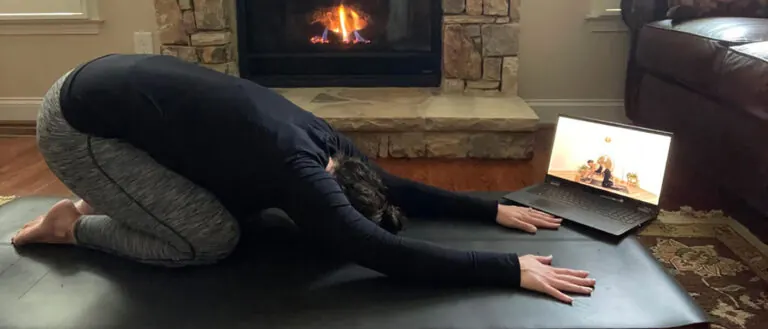
Online yoga teacher training
$100 off your 200‑hour online training
Learn to teach yoga, from home
Take Movement Wisdom’s 200-hour online yoga teacher training and save $100 with your YOGI TIMES code.
Use code YT100
Get $100 offThe code is applied when you use this button, or enter YT100 at checkout.
Free wellness e-book
Find your zen
Your free guide to wellness
Download your free 7-Day Wellness Journey Guide and receive weekly inspiration for the lifestyle of a modern yogi.
🔒 We respect your privacy. Unsubscribe anytime.

YOGI TIMES · Your privacy
A few cookies, only with your yes
We use cookies to understand what you read and to measure our own marketing. Nothing is set until you choose. Privacy policy