Bhujapidasana: The pose that taught me to trust my hands (And my fear)

The day my feet finally left the floor: A personal breakthrough
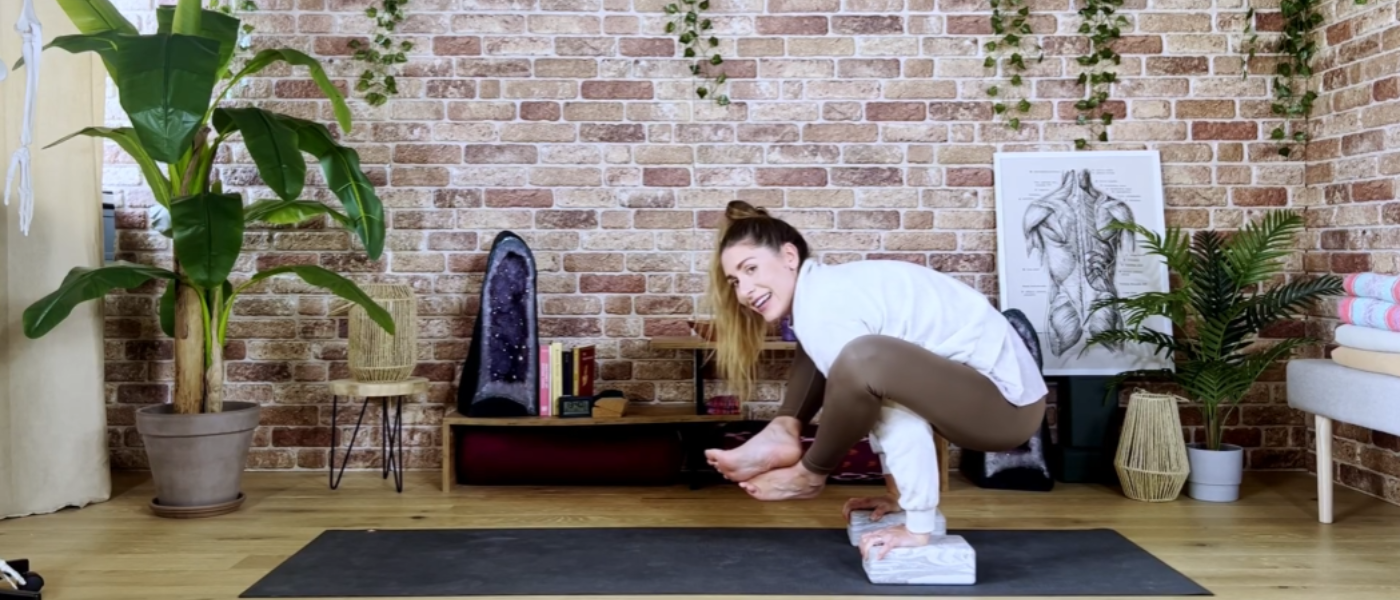
I still remember the exact moment my toes actually lifted. Not a big, dramatic lift more like a shaky, “wait am I up?” kind of hover. My hands were planted, wrists doing that quiet-but-intense burning thing, thighs clamped around my arms like they were scared to let go. And for half a second… I wasn’t on the floor anymore.
I had been circling Bhujapidasana for months. Maybe longer. I told myself I was “working up to it,” but part of me didn’t want to admit that arm balances mess with your head as much as your body. Probably more.
What surprised me most wasn’t strength it was trust. Trusting my hands to hold me. Trusting my thighs to stay put. Trusting that if I tipped a little too far forward, I wouldn’t face-plant (even though, let’s be real, I came close).
That morning, the room was quiet just breath, soft mat sounds, and early light. No audience. No pressure. And somehow, that made it more intense. It felt like fear and excitement were sharing the same breath.
That was the day Bhujapidasana stopped being “that scary arm balance” and became something else entirely: a turning point.
Bhujapidasana was one of the poses that completely reshaped how I understand strength, trust, and intelligent alignment. It’s also one of the key arm balances I break down in depth inside my Movement Wisdom 200-hour online yoga teacher training, where I teach students how to build the confidence and mechanics needed to approach poses like this safely and progressively.

What bhujapidasana actually asks of your body (Hint: It’s not just arm strength)
For a long time, I blamed my arms. “Too weak. Not arm-balance arms.” That was the story I told myself. But the deeper I worked with Bhujapidasana, the more I realized: it wasn’t about my arms at all. The real challenge lived in my hips, hamstrings and in my hesitation.
Bhujapidasana asks your body for a very specific kind of honesty:
- Deep hip flexion to bring your torso through the legs
- External hip rotation so the feet can start to move inward
- Adduction that strong inner thigh squeeze hugging the arms
- Rounded spine and neck extension if you’re exploring the forward tilt
It’s also a disguised forward fold. The shape doesn’t scream “fold” at first glance, but the action is there: spine curving, forehead reaching. And then there’s the weight shift full commitment into your hands. No safety net once the feet leave the floor.
This is where sun salutations suddenly make more sense. Every time you leaned into your palms in Downward Dog or Plank? That was rehearsal. Quiet preparation for the moment your feet might leave the earth.
Wrist warning & wisdom
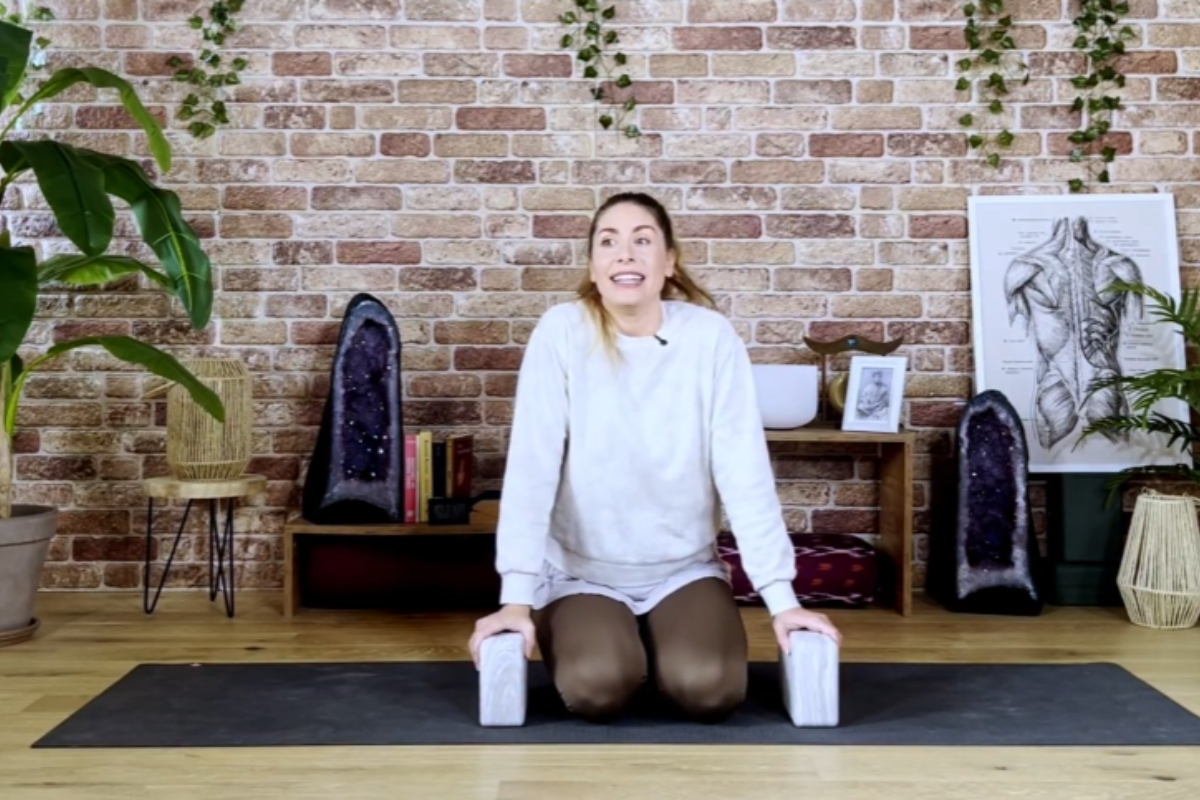
I wasn’t prepared for how loud my wrists would be. Ninety-degree bends, full body weight? Yeah they had thoughts. I used:
- Wrist wedges to reduce pressure
- Hand placement tweaks to distribute load
- Rest days when my body said “nope”
But here’s the part that stuck: Bhujapidasana doesn’t reward force. It responds to alignment. To choreography. To the quiet puzzle of squeeze + press + lean. When those three click? The lift feels… inevitable.
The poses that prepared me (Without me realizing it)
For a while, Bhujapidasana felt like it came out of nowhere. Like the Ashtanga series suddenly shouted: “Surprise! Balance on your hands now.” But when I looked back, I saw something humbling I had been training for it all along. I just didn’t know it.
Hidden prep poses that mattered
- Malasana (Yogi Squat):
This was the big one. The deep hip flexion. The torso sinking between the thighs. It’s the grounded version of Bhujapidasana same shape, just with feet still on the floor. I used to rush through Malasana. Now I linger. - Marichyasana A:
That wrapping of leg and arm? That squeeze of thigh into side body? It was quietly teaching me the importance of adduction hugging in. Back then, I thought the bind was the point. Now I know the squeeze was the prep. - Sun Salutations:
I didn’t realize I was learning to trust my hands. Every time I leaned forward into them before jumping back, I was rehearsing the language of arm balances: Hands first. Feet later.
Eventually, it hit me:
“This pose isn’t new at all. It’s everything I’ve already practiced just rearranged in a way that asks more courage from me.”
That realization softened my frustration. I wasn’t behind. I was building a foundation quietly, consistently, without even knowing it.
The five stages I kept cycling through (Over and over, honestly)
If Bhujapidasana taught me anything, it’s that progress isn’t linear it spirals. You think you’ve “graduated” a stage, and then boom: you’re back in it with more humility and (maybe) tighter hamstrings.
Here’s how the journey broke down for me again and again:
Stage 1: Entry, torso between the legs
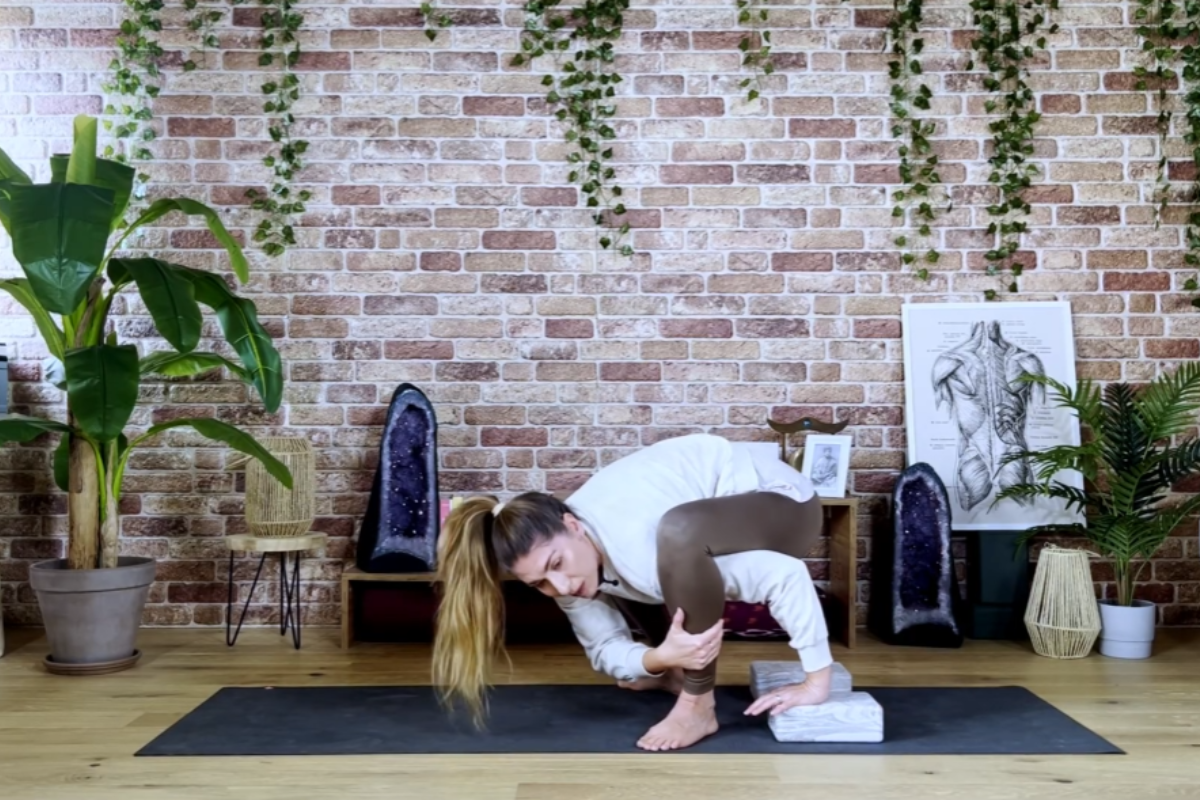
Sounds basic. It’s not. Your hamstrings, hips, and spine all need to cooperate just for your shoulders to fit through. I bent my knees and still felt wedged some days. Like my body was whispering, “This is far enough.”
Stage 2: The squeeze
Inner thighs hugging the arms. It looks simple but defines everything. Without this adduction, nothing else happens.
No squeeze, no lift. Period.
Blocks helped here. They gave me space to experiment with pressure and shape without collapsing.
Stage 3: The first lift
Not even ankle crossing yet. Just that fleeting hover. The moment my feet left the floor no matter how briefly it felt massive.
I saw that same mini-victory (and mini-defeat) on my students’ faces every time we practiced it together. It’s a collective “ugh” moment.
Stage 4: The cross
Ankles wrapping around each other midair. Suddenly, the pose clicks into place. Pattabhi Jois called this the first true stage of the asana and it really does feel like the pose introduces itself once you get here.
Stage 5: The forward tilt
This one humbled me quickly.
The instinct is to dump all your weight into your head or chin and hope that counts. But the work is in counterbalance sending the hips back as the chest leans forward. Control, not collapse.
Bonus realization: It’s okay to get stuck
Some days, I flowed through all five stages. Other days? Stuck at Stage 2. And oddly… that became okay. The pose stopped being a finish line.
It became a conversation I kept returning to with myself.
The wrists, the fear, and that quiet voice that says “Don’t fall”
Let’s talk about wrists because wow, Bhujapidasana asks a lot of them.
Some days, they felt ready. Responsive. Springy. Other days? Not even close. Sharp twinges. Compression. A firm, undeniable “not today.”
Wrist Survival Strategies That Helped:
- Wedges to reduce the 90° angle
- Blocks under hands to shift leverage
- Active hand pressing (hasta bandha) to protect the joints
- Backing off completely and working the setup instead
Learning to distinguish between productive effort and pain signals became its own form of practice.
But the physical challenge wasn’t the hardest part. The real intensity came in that moment right before lift-off when nothing had happened yet, but your brain imagined every worst-case scenario:
- Falling forward
- Smacking your face
- Looking ridiculous
- Feeling like you “don’t belong” in the pose
That internal voice? It’s persistent. And it shows up even when your body is technically ready.
Fear in disguise
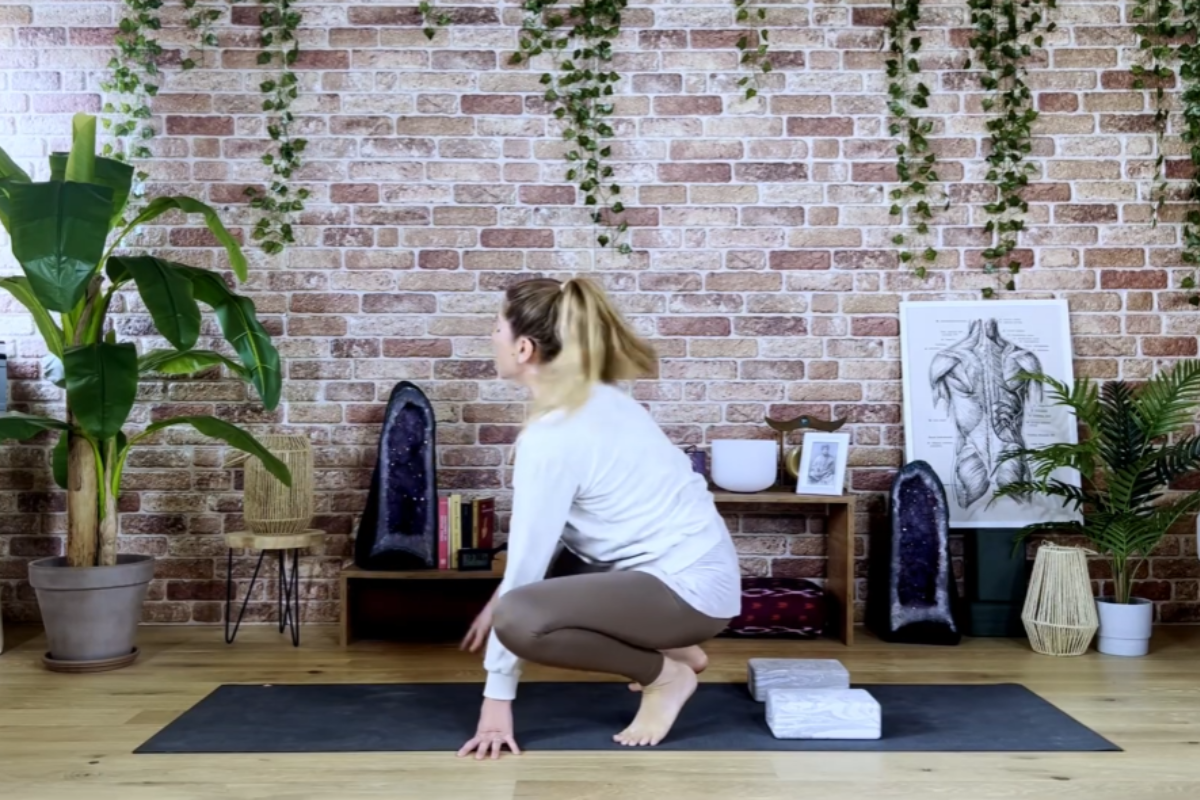
It wasn’t dramatic. It was subtle.
A flutter in the chest. A flicker of doubt. And then a choice:
Press forward or pull back?
Some days, I chose to press. Other days, I didn’t. And both choices were okay.
What I didn’t expect was how emotional that edge could be. Bhujapidasana taught me that courage isn’t one giant leap it’s a hundred quiet decisions to stay when it would be easier to back away.
This pose doesn’t just train your body.
It teaches you how to pause at the edge of fear and breathe instead of run.
Teaching bhujapidasana: Blocks, hesitation, and the first real lift
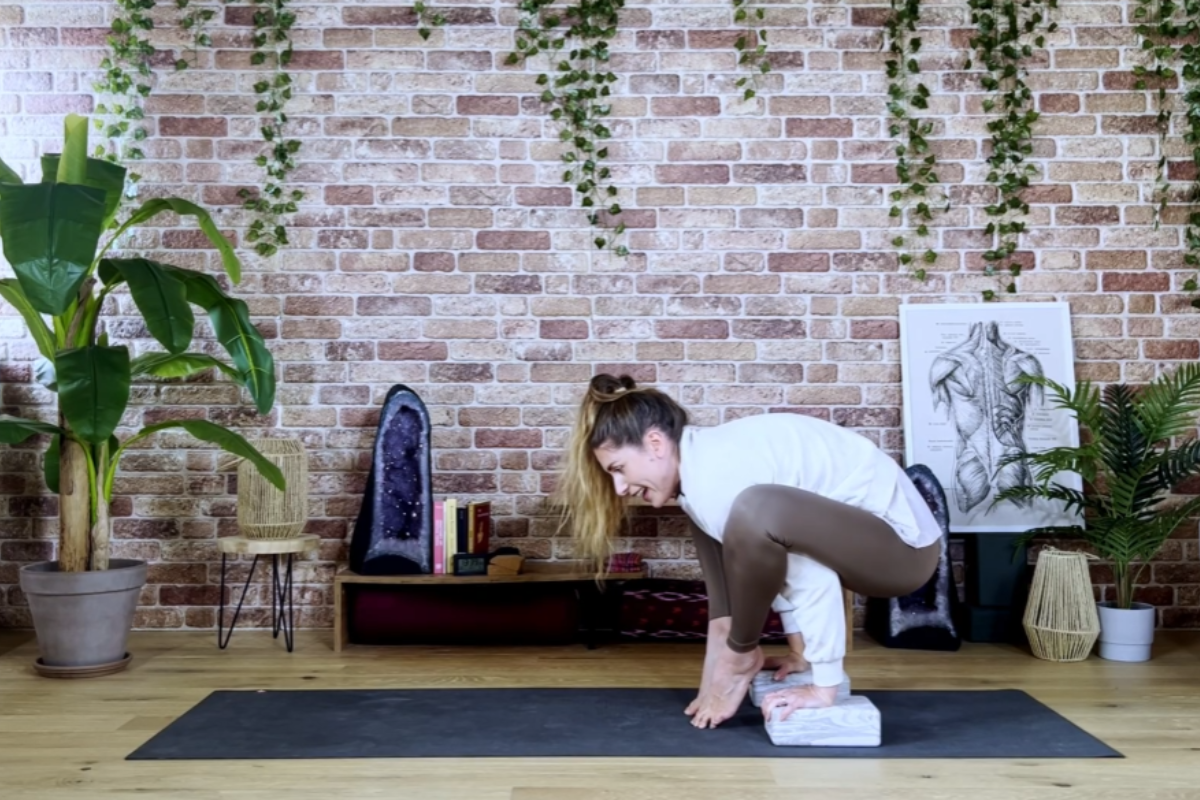
The first time I taught Bhujapidasana, I made one clear decision:
Everyone got blocks.
No heroics. No rushing. Just elevation, space, and the message that the floor wasn’t so far away. It changed everything.
This exact moment, the hesitation before lifting my feet, is something I see again and again in students inside the Movement Wisdom 200-hour YTT. Bhujapidasana isn’t just about arm strength. It’s about nervous system trust, shoulder stability, and learning how to work with fear instead of fighting it.
Why blocks aren’t “cheating” they’re smart
Bhujapidasana isn’t about forcing a lift it’s about finding the mechanics. And blocks help:
- Elevate the hands so hips can travel down and forward
- Create space for shoulder-threading
- Shift the center of gravity into a more accessible range
- Remove the fear of falling from a greater height
I’ve seen students who swore the pose “wasn’t for them” hover sometimes for the first time ever just because the floor came up to meet them.
The fear still shows up
Even with support, hesitation is real:
- Death grip on the mat
- Shoulders creeping toward the ears
- Shallow breathing
- Eyes darting around, looking for “proof” it’s okay
That’s where teaching becomes more than physical cueing. It becomes emotional space-holding.
I always remind my students, gently:
This pose is not about how high you go
It’s about how willing you are to try.
Temptation: Jumping to firefly
Some students want to straighten their legs immediately because Firefly looks flashy. But Bhujapidasana has a different medicine:
- The squeeze
- The compression
- The containment before the explosion
Skipping that? You miss the subtle strength that builds stability. Bhujapidasana teaches you how to gather before you expand.
One time, this happened…
A student once crossed their ankles, lifted beautifully… and froze. Like, completely. Suspended midair, terrified to come down.
We all just breathed together in silence an unplanned, accidental group meditation. Eventually, they laughed, bent their elbows, and landed softly.
That laugh? That was the practice, too.
The fire beneath the shake: Confidence, manipura, and the quiet shift no one talks about
Some poses change your body. Others change how you see yourself.
Bhujapidasana did both.
I used to hear that this pose lights up the Manipura Chakra the solar plexus energy center tied to willpower, confidence, and internal fire. It sounded poetic. Abstract.
But after spending time with this pose… I started to feel it.
How it showed up (In small, surprising ways)
- I hesitated less before trying something hard
- I stayed one breath longer in discomfort
- I stopped apologizing for falling out of things
None of this happened overnight. It built slowly, in the heat of effort, uncertainty, and repeated attempts.
Bhujapidasana pushed me out of my comfort zone without yelling about it. It worked through repetition, presence, and the decision to try again.
Why arm balances build more than strength
Balancing upside down, wrapped into yourself, no feet on the ground it changes your nervous system. You’re:
- Vulnerable, because you’re partially inverted
- Engaged, because your core is firing on all cylinders
- Present, because wobbling demands focus
- Calm, if you’re breathing through the shake
And somewhere in that mix, confidence begins to bloom not from ego, but from presence.
I didn’t become fearless. I became more willing.
Willing to wobble. Willing to try. Willing to be seen mess and all.
And that kind of strength? It sticks.
The days it didn’t happen (And what those days taught me instead)
Not every Bhujapidasana day is a lift-off story.
Some days… nothing moved. My squeeze was solid, my breath steady, my intention sincere and still, my feet stayed firmly grounded. Or worse, my wrists shut it down before anything even began.
What those days felt like
At first, they crushed me a little. I’d stand up from the mat feeling heavier instead of lighter. Like I had failed some invisible test.
I compared myself to:
- My past self (“Why could I do this last week?”)
- My students (“Why is she flying and I’m stuck?”)
- The version of me I thought I should be by now
That inner critic? Sneaky. It doesn’t shout it just tightens something inside.
The deeper lesson: Progress isn’t always visible
Bhujapidasana gave me confidence but it also showed me how attached I had become to measuring growth only in “lift height” or control. I forgot that patience is growth. Listening is growth.
On the days the pose didn’t happen, I ended up:
- Spending more time in Malasana
- Prioritizing wrist prep and recovery
- Teaching the pose without demonstrating it
And those days… softened me. They helped me release the pressure to “conquer” the pose.
The pose became less of a mountain to climb and more like a space I could return to without expectations.
That shift changed everything.
Would I practice this pose forever? Probably. Just not the same way every time.
If you asked me today whether Bhujapidasana is one of my favorite poses… I’d hesitate.
Not because I dislike it. But because it still asks more from me than I always feel ready to give. And somehow, that’s exactly why I keep coming back.
Why I’ll keep returning
I don’t practice this pose every day. I don’t treat it like a test. It’s more like a check-in a way to ask myself:
- Am I rushing through discomfort today?
- Am I letting fear steer my choices?
- Am I judging my effort by outcome alone?
And when I wobble because I still do I ask myself if I can stay. Even just for one more breath.
What I wish I knew at the start
If I could do it over, I’d be a little kinder to myself in the beginning.
I was so focused on “getting the pose” that I missed how much it was shaping:
- My relationship with effort
- My patience in failure
- My ability to feel fear… and still proceed
Turns out, the real work wasn’t whether I crossed my ankles.
It was whether I stayed present when I didn’t.
If you enjoy this kind of mindful, exploratory approach to challenging poses, you’ll appreciate Jess Rose’s reflections in our recent interview on Yoga Movement Wisdom.
Who this pose is for
- Curious students who like to explore edges
- Teachers who want to remember what hesitation feels like
- Yogis who are okay wobbling maybe even learning from the wobble itself
No big awakening, just real growth
Did Bhujapidasana give me a spiritual awakening? Not in the cinematic sense.
But it left me with:
- Stronger arms
- A steadier nervous system
- A surprising kind of gratitude for my wrists, my breath, my fear, and my imperfect little lift-offs
And honestly… that feels like enough.
If Bhujapidasana stirred something in you, curiosity, resistance, excitement, or fear, that’s worth listening to. These are exactly the kinds of thresholds we explore inside my teaching work. You can learn more through the Jess Rose Movement Wisdom online YTT review, which shares an honest student experience of what the training is really like from the inside.
Free Wellness E-Book
Find Your Zen!
Your Free Guide
To Wellness
Download Your Free Guide & Receive Weekly Inspirations From The Lifestyle Of a Modern Yogi!

Good explanation of how this posture works, with arms and core carrying your weight and legs wrapping around to support. Helps me understand why it’s more than “just another pose.
Honestly loved this take on Bhujapidasana. It really reminds you that it’s not about forcing the pose or being “strong enough”, but about patience, breath and figuring things out as you go
Love the no subscription part.
This feels very yoga-friendly.