Devaduuta Panna asana (fallen angel pose): Steps, benefits, variations, and preparatory poses

TL;DR
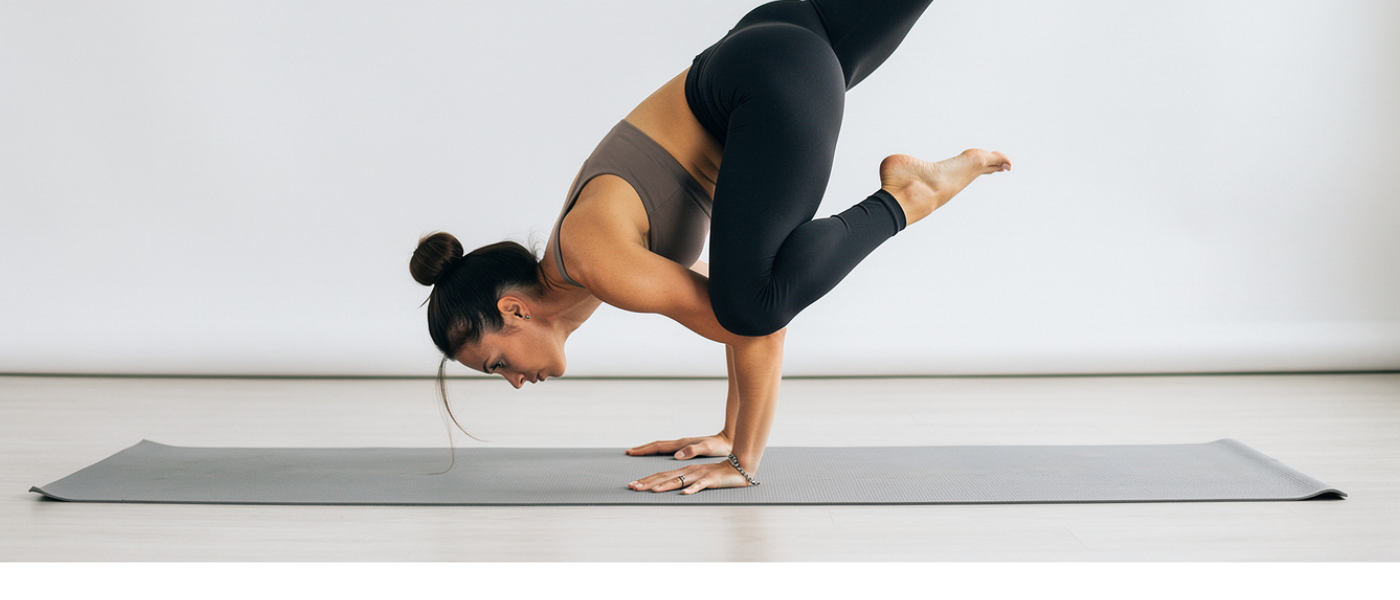
Fallen Angel Pose, or Devaduuta Panna Asana, is an advanced twisting arm balance built from Side Crow Pose. It requires shoulder stability, core control, wrist strength, and a precise forward weight shift.
The biggest mistake is treating it like a head-supported inversion. It is not. The cheek or temple may touch the floor, but the arms and core do the real work.
If Side Crow still feels unstable, work there first.
What is Devaduuta Panna asana?
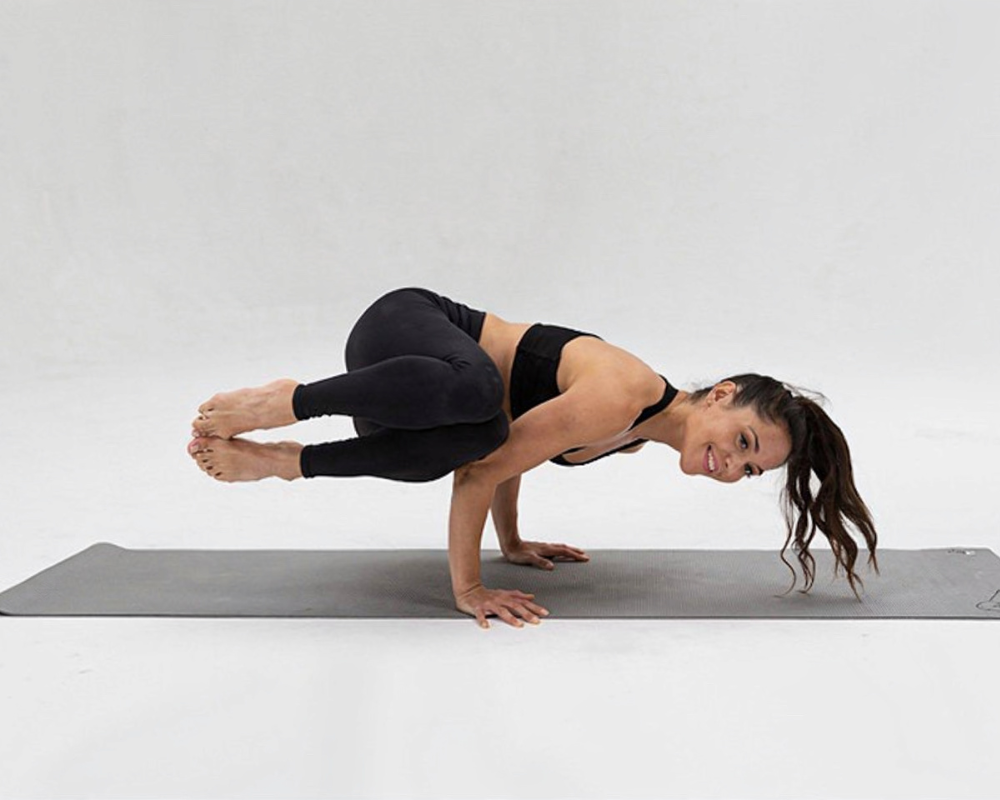
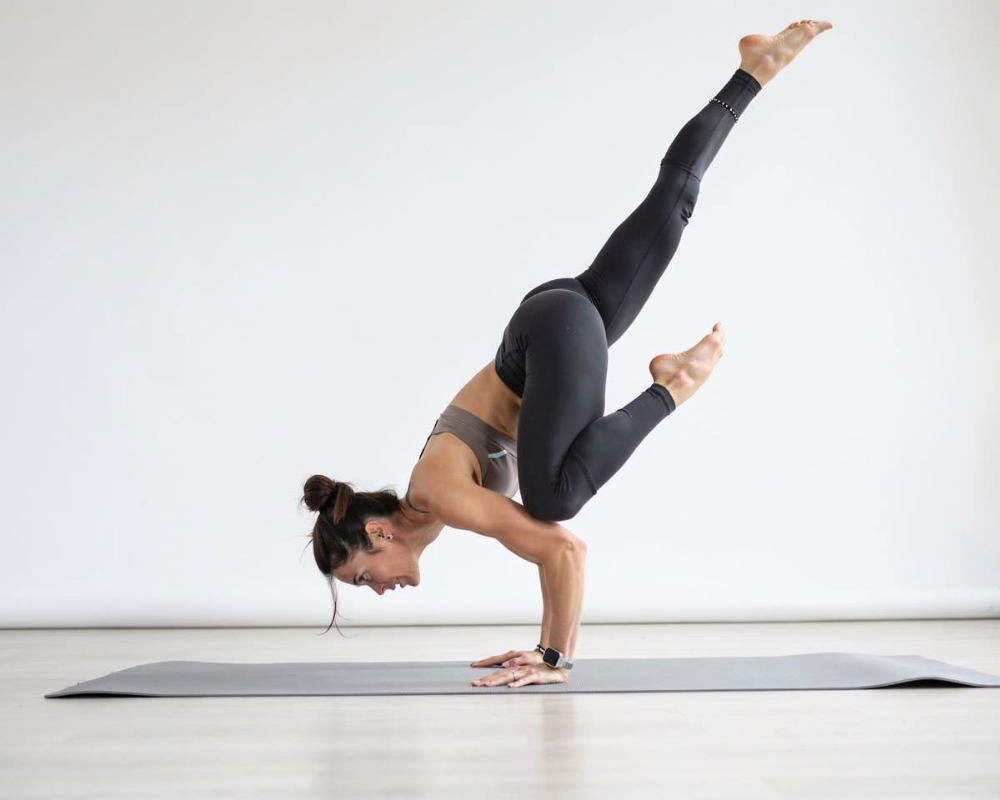
Devaduuta Panna Asana, commonly called Fallen Angel Pose, is an advanced yoga posture that evolves from Parsva Bakasana (Side Crow Pose). From a twisted arm balance, the torso lowers toward the floor while one leg lifts upward.
The Sanskrit is often interpreted as:
Devaduuta = divine messenger or angel
Panna = fallen or descending
Asana = posture
The shape explains the name. One side of the face lowers toward the mat while the legs lift, creating a wing-like form.
Despite the dramatic look, this is a technical pose. It asks for controlled rotation, shoulder stability, compression, and strong awareness of where body weight is moving.
What type of Pose is Fallen Angel?
This pose belongs to several overlapping categories:
Arm balance
Twist
Partial inversion
Core stability pose
Advanced balance posture
It is closely related to:
Parsva Bakasana (Side Crow Pose)
Bakasana (Crow Pose)
Bhujapidasana
Eka Pada Koundinyasana I
Firefly Pose
This makes it more useful inside an arm-balance progression than as a standalone “advanced pose.”
Why Fallen Angel pose feels difficult
Most practitioners assume they need more flexibility.
Usually, they do not.
The harder part is weight transfer and orientation.
Once the head lowers and the hips rotate, many students lose spatial awareness. Instead of lifting the leg vertically, they often swing it sideways or rush the transition.
In classes, the issue is usually one of these:
The shoulders collapse
The twist is too shallow
The core disengages
The student rushes before Side Crow is stable
Fear of leaning forward
That is why Side Crow matters so much. Fallen Angel is not really a separate skill. It is a more demanding expression of similar mechanics.
While yoga helps many people, some poses and movement habits can aggravate existing issues. Learn can yoga make back pain worse and how to avoid common mistakes.
Benefits of Fallen Angel pose
Strengthens wrists, arms, and shoulders
The upper body carries most of the load. This can improve shoulder resilience, arm-balance strength, and pressing awareness when practiced with control.
Builds deep core control
The core stabilizes the twist, supports the lift, and prevents the body from collapsing into momentum.
Improves balance and body awareness
This pose teaches how to stay organized while asymmetrical, rotated, and partially inverted.
That is useful beyond this shape.
Develops rotational control
Unlike passive twisting, Fallen Angel demands active spinal organization. The twist should feel lifted and stable, not forced.
Refines advanced transitions
For experienced practitioners, this pose improves confidence moving between twisting arm balances and asymmetrical inversions.
Who should practice Fallen Angel Pose?
This pose is best for practitioners who already have:
A steady Side Crow Pose
Good wrist tolerance
Shoulder stability
Core control
Comfort bearing weight in the hands
Basic inversion awareness
A practical teacher checkpoint:
If you cannot hold Side Crow for 3 to 5 calm breaths, Fallen Angel usually becomes rushed.
Who should avoid or modify it?
Skip or modify if you have:
Wrist injury
Shoulder instability
Neck sensitivity
Acute lower-back pain
Uncontrolled blood pressure issues
Recent head or cervical injury
Pregnancy
Difficulty loading the hands
If the neck feels compressed, come out immediately.
How to prepare the body
Do not enter this cold.
A strong prep sequence usually includes:
Wrist mobility
Sun Salutations
Plank Pose
Dolphin Pose
Twisted Chair
Crow Pose
Side Crow Pose
Core compression drills
A simple sequence:
Downward-Facing Dog
Plank
Dolphin
Chair Pose
Twisted Chair
Crow Pose
Side Crow
Fallen Angel
Child’s Pose
Supine Twist
This gives better shoulder and spinal preparation than jumping directly into the pose.
How to do Fallen Angel Pose step by step
Start from a low squat with the feet together. Stay on the balls of the feet and keep the knees close.
Bring the palms together at the chest. Lengthen the spine first, then twist to the right.
Hook the left upper arm outside the right thigh. Do not rush here. The twist needs to feel connected before the hands move down.
Place both palms on the floor shoulder-width apart. Spread the fingers wide and press through the base of each finger.
Bend the elbows slightly, like Chaturanga arms. Keep the elbows controlled and avoid letting them flare wide.
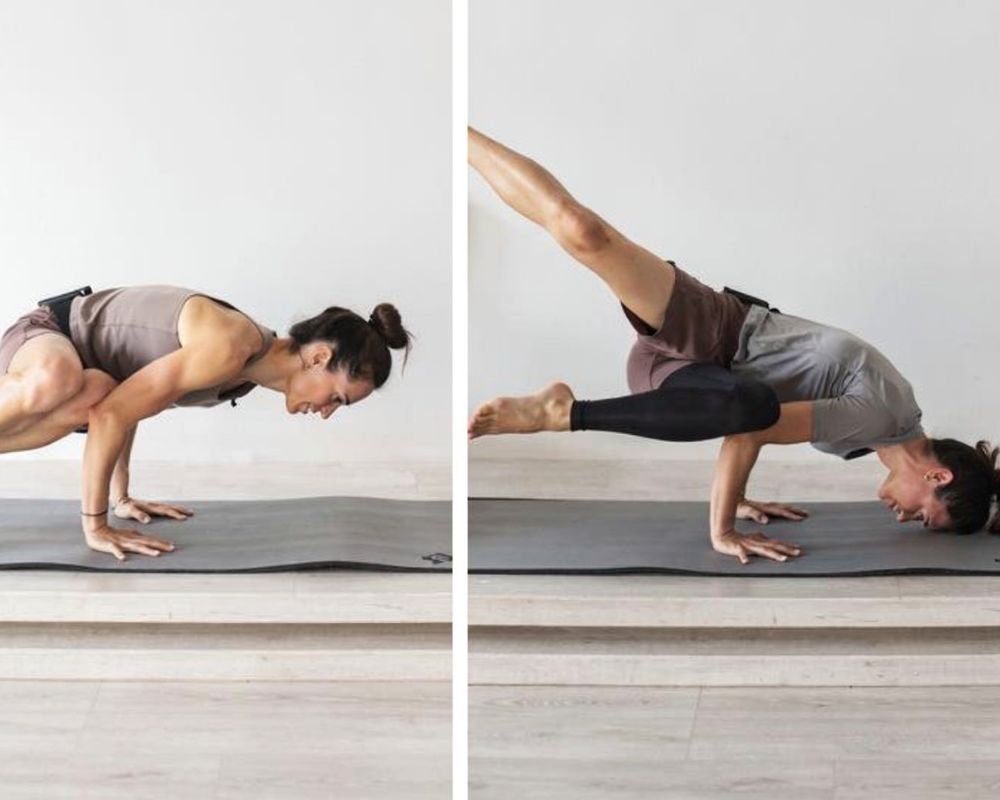
Shift your chest forward into the hands. The feet may begin to lift naturally.
Pause in Side Crow.
If Side Crow feels shaky, stay there. That is the work.
If Side Crow feels steady, turn the head toward the side of the knees and slowly lower the cheek or temple toward the mat.
Touch the floor lightly.
Keep pressing into the hands. The head is only a reference point, not the base.
From here, lift the top leg upward. Do not kick. Lift from the hip and core.
Keep the lower leg compact and active.
Hold for 1 to 3 breaths.
To exit, lower the lifted leg, return to Side Crow if possible, then bring the feet back to the floor.
Rest before repeating the second side.
Alignment tips for Fallen Angel Pose
Keep the head light
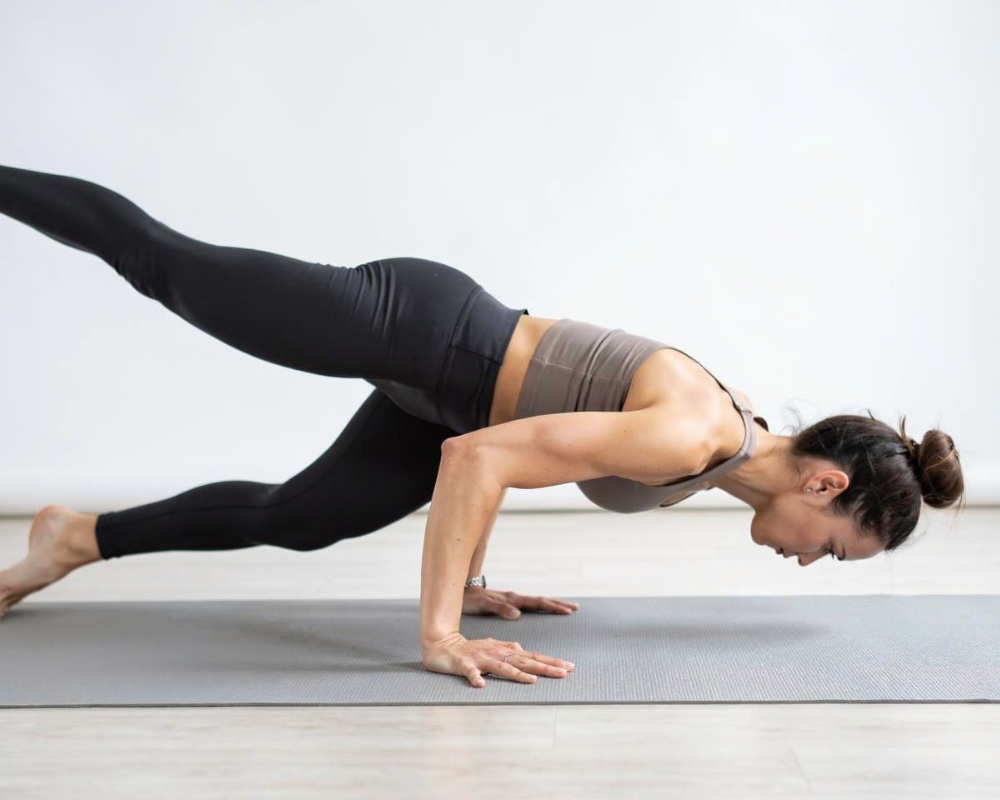
The head may touch the mat, but it should not carry your weight.
This is the safety cue that matters most.
Press the floor away
The palms stay active. Press down through both hands and lift through the shoulders.
If the shoulders collapse, the pose becomes heavy fast.
Keep the elbows organized
The elbows bend, but they should not drift outward.
Think of the elbows supporting the twist rather than spreading away from it.
Lift from the core
The leg lift should start from the center of the body.
If you throw the leg upward, the pose usually loses its line.
Rotate before extending
Many students try to extend the top leg too early.
First rotate the hips and organize the twist. Then lengthen the leg.
Common mistakes
Treating it like a headstand
Fallen Angel is not a headstand variation.
If the neck or skull carries weight, come out and rebuild the pose from Side Crow.
Forcing the twist
The twist should come from a long spine and active core.
If the lower back feels pinched, you are probably twisting too aggressively.
Kicking the leg up
Momentum makes the pose unstable.
Lift slowly and stop before the shoulders lose control.
Skipping wrist preparation
This pose loads the wrists more than it appears.
Warm them up properly.
Practicing it too early
If Crow and Side Crow are not stable yet, Fallen Angel becomes more risk than benefit.
Teacher cues that help
Press the floor away.
Keep the cheek light.
Lift from your center.
Move slower than you want to.
Stay in Side Crow until the breath is calm.
Let the top leg rise only as far as the shoulders stay stable.
Do not chase height. Keep the structure.
Modifications and progressions
Stay in Side Crow
This is the best modification.
A clean Side Crow is more valuable than a collapsed Fallen Angel.
Use a folded blanket
Place it under the cheek or temple to reduce fear and soften contact with the floor.
Keep the top leg lower
The leg does not need to reach vertical.
A lower, controlled version is better than a high, unstable one.
Practice with blocks
Blocks under the hands can create more space and help some students understand the weight shift.
Work the twist separately
Use Twisted Chair or a seated twist to build the rotational pattern before adding the arm balance.
Advanced variations of Fallen Angel Pose
Once the base pose feels steady, advanced practitioners can refine transitions rather than simply making the shape bigger.
Full leg extension
Lift the top leg with stronger upward reach while keeping the hips organized.
The leg should feel long, not thrown upward.
Side Crow to Fallen Angel transition
Move slowly from Parsva Bakasana into Fallen Angel, then return to Side Crow.
This improves control more than static holding.
Fallen Angel to Arm-Balance flow
For experienced practitioners, this pose may connect into:
Eka Pada Koundinyasana I
Firefly Pose
Flying Pigeon Pose
Pincha Mayurasana prep
Only if the shoulder base remains strong.
Preparatory poses for Fallen Angel pose
These are more important than the final pose itself.
Parsva Bakasana (Side Crow Pose)
The direct foundation.
Builds:
twisting compression
shoulder support
forward lean awareness
core stability
Bakasana (Crow Pose)
Improves wrist tolerance, arm balance confidence, and upper-body strength.
Dolphin Pose
Builds shoulder integrity and scapular control.
Plank Pose
Teaches full-body support and integrated core activation.
Twisted Chair Pose
Improves rotational control before adding load.
Bhujapidasana
Useful for compression, shoulder loading, and balance awareness.
Counter poses and follow-up poses
After Fallen Angel, decompress wrists, shoulders, spine, and hips.
Child’s pose
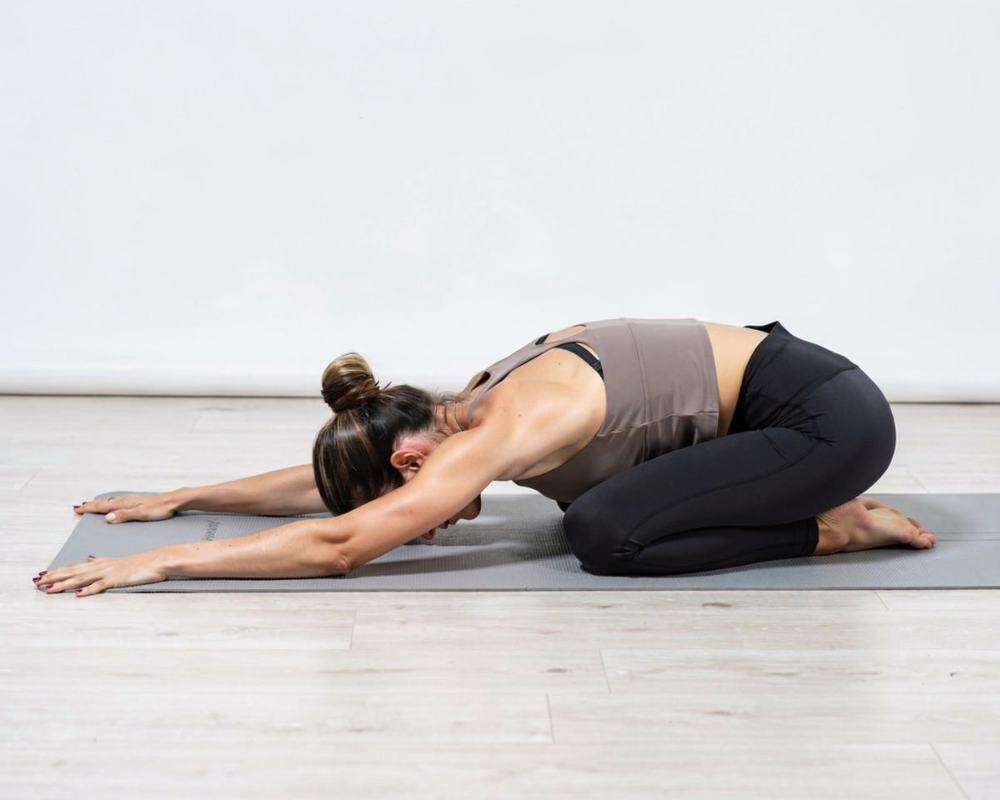
Softens shoulders and nervous system tension.
Downward-Facing Dog
Resets shoulders and lengthens the spine.
Supine twist
Releases rotational effort from the spine.
Pigeon Pose
Helpful if the hips feel compact or tight afterward.
Gentle wrist release
Often overlooked after arm-balance work.
FAQ
Is Fallen Angel pose an inversion?
Partially. The head lowers below the hips and spatial orientation changes, but the main support still comes through the arms and shoulders.
Is Fallen Angel harder than Side Crow?
Yes, for most practitioners.
It adds:
leg-lift control
greater shoulder demand
deeper balance complexity
more disorientation
Can beginners practice Fallen Angel pose?
Usually not as a first arm balance.
A stronger path is:
Crow Pose
Plank
Twisted Chair
Side Crow prep
Why do my legs swing sideways instead of upward?
Usually because the hips have not rotated enough, or the leg is being kicked instead of lifted.
In class, this is very common.
Is Fallen Angel safe for the neck?
It can be, if practiced correctly.
The cheek or temple may touch the floor, but the neck should not bear weight.
How long should I hold Fallen Angel pose?
Start with 1 to 3 breaths.
Clean mechanics matter more than long holds.
What a skeptical teacher would say
Not every advanced student needs this pose.
It is visually striking, but not automatically more useful than improving:
Side Crow
Firefly
Bhujapidasana
Flying Pigeon
If the goal is transferable arm-balance strength, simpler shapes may sometimes offer more value.
Final takeaway
Devaduuta Panna Asana is less about flexibility and more about organized mechanics.
The students who progress best usually:
build Side Crow first
move slowly
keep the head light
use the core before lifting
treat the pose as a controlled arm balance, not a dramatic inversion
That is where the pose becomes strong, safe, and clean.
Free Wellness E-Book
Find Your Zen!
Your Free Guide
To Wellness
Download Your Free Guide & Receive Weekly Inspirations From The Lifestyle Of a Modern Yogi!