Reclined Bound Angle Pose (Supta Baddha Konasana): prop the thighs, and the back lets go

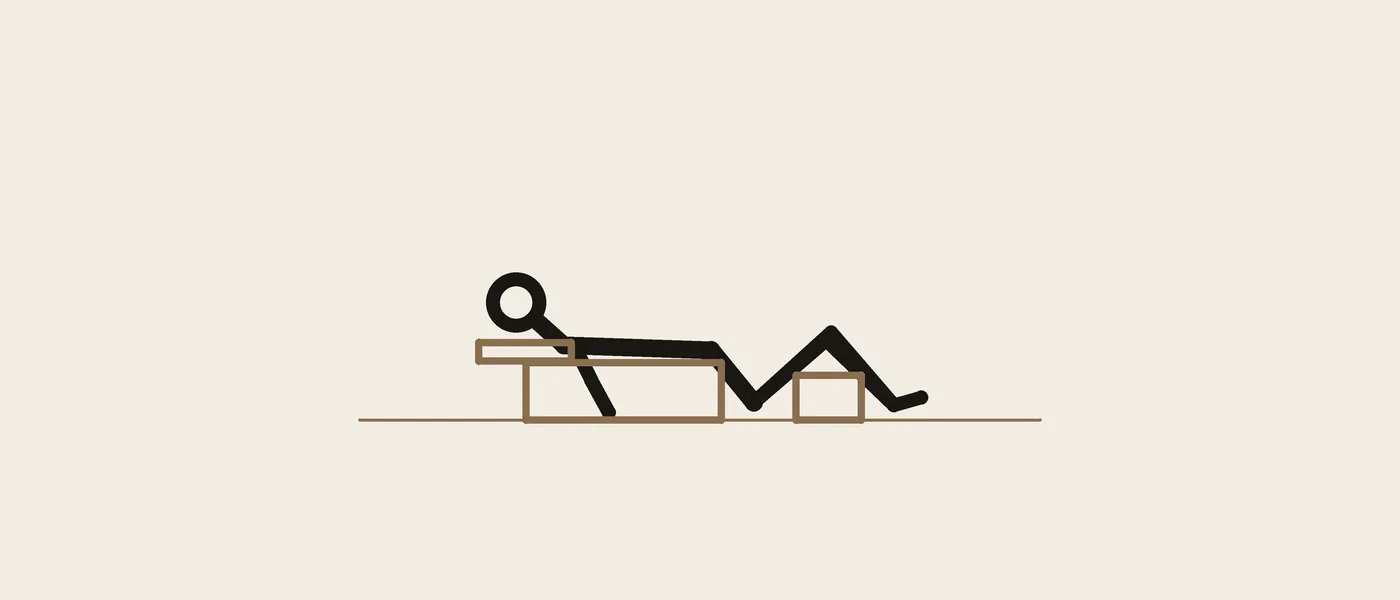
Restorative classes very often end with this shape, just before Savasana: lie down, soles together, knees open. That is Reclined Bound Angle Pose, or Supta Baddha Konasana in Sanskrit, a beginner pose done on your back with the legs in the butterfly shape and the floor, a bolster or a few blocks carrying the weight.
In short: sit with your soles together and your feet about a forearm’s length from your pelvis. Lower onto your forearms, then onto your back, with a folded blanket under your head. Slide a block or a rolled blanket under each outer thigh, rest your arms, and stay a few minutes, or ten and more in a restorative class. To come out, press the knees together and roll onto one side.
The blocks under the thighs are where most people go wrong, because they leave them out. Thighs that hang at the end of their range keep the inner groin stretching and, through the front of the pelvis, can keep the lower back working too. Held from underneath, the same legs let the back settle, and the shape finally becomes rest.
Quick pose overview
- Also known as
- Reclined Bound Angle Pose, Reclining Bound Angle Pose, Reclined Butterfly, Reclining Cobbler’s Pose, “reclining goddess” in some restorative classes
- Sanskrit
- Supta Baddha Konasana, said soop-tah bah-dah koh-NAH-sah-nah
- Pose type
- A restorative pose done lying on the back
- Level
- Beginner
- How long
- 1 to 3 minutes in a flowing class, 5 to 15 minutes in restorative practice
- Main stretch
- The inner thighs and groin, gently; the chest and the front of the hips too when a bolster lifts the back
- What holds the legs
- Props under the outer thighs, ideally; without them, only the end of the hips’ range
- Where it tends to go wrong
- Knees left hanging, heels pulled into the groin, the lower back lifting off the floor
- Props that help
- Two blocks or rolled blankets for the thighs, a folded blanket for the head, a bolster, a strap
- Modify if
- You are in later pregnancy, the groin or knees pull, or the lower back tightens
Be the teacher behind Reclined Bound Angle Pose
What is Reclined Bound Angle Pose?
Reclined Bound Angle Pose is Bound Angle Pose turned onto its back. The legs keep the same shape, soles together and knees out to the sides, but the floor now carries the spine and the head, and gravity draws the thighs open instead of your muscles or your hands.
Restorative yoga uses it as a resting pose, usually over a bolster, which is why some classes call it “reclining goddess”. Our Goddess Pose guide explains that name clash, and an unpublished 2019 draft in the YOGI TIMES archive labels this pose simply “Goddess pose”. If the teacher says goddess and everyone lies down, this is the pose.
Stretch or rest? The same shape, two doses
Reclined Bound Angle Pose can be a stretch or a rest, and the legs decide which. Let the knees hang as low as they go and the inner thighs work at the end of their length for the whole hold. Support the outer thighs from underneath and the stretch drops to a mild one you can keep for ten minutes without noticing it.
Both have a place. A minute with the knees hanging is a fair inner-thigh stretch after a run. A long hold is meant to be the other kind, with nothing working at all, and that version needs props.
An unpublished 2015 draft in our archive, a sequence for times of crisis handed down in the Iyengar tradition, puts the pose second, straight after Savasana, “supported on a bolster or blankets”. It sits that early because it asks nothing of the student but to lie down.
Meaning of the Sanskrit name
Supta Baddha Konasana breaks into four parts: supta, lying down or reclining; baddha, bound; kona, angle; and asana, pose. Put together, it is the bound angle pose done lying down.
The “angle” is the one the legs make, knees wide and feet together. “Bound” fits the seated pose, where the hands hold the feet. Lying down, the binding is softer: the soles press against each other, and in longer restorative holds a strap is often looped around the hips and feet to keep them there.
The name itself is modern. Reference works list Supta Baddha Konasana as a common variant of Baddha Konasana, and trace the seated shape back to an older seat, Bhadrasana, described in the fifteenth-century Hatha Yoga Pradipika. The lying version took its place in modern teaching, especially in prop-based and restorative classes.
Benefits of Reclined Bound Angle Pose
Reclined Bound Angle Pose offers a gentle hip and inner-thigh stretch you can hold while lying completely still. Most other hip openers ask you to balance, sit up or hold yourself in place.
Physical
- A passive inner-thigh stretch. The adductors lengthen under the weight of the legs, with as much or as little stretch as the props allow.
- Room across the chest. Over a bolster, the front of the chest and shoulders open while the arms rest out to the sides.
- A rest for a tired back. With the thighs supported, many people find their lower back rests more easily here than flat in Savasana.
- A long, still hold. Five to fifteen minutes with no muscle work is hard to find in a standing or seated pose.
Mental
A long hold in Reclined Bound Angle Pose gives the mind very little to do. Many students find it calming at the end of a day or a class, and teachers use it to let breathing slow down before Savasana. That is an experience people report, not a measured effect on the nervous system.
What we leave out
Lists of benefits for Supta Baddha Konasana often add toning the abdominal organs, balancing hormones, easing menstrual cramps and “energising” the body. The studies behind the cramp and pelvic-health claims tested sets of several poses together, so they cannot say what this one pose does. We describe what the shape does to your legs and back and stop there.
Muscles worked in Reclined Bound Angle Pose
Reclined Bound Angle Pose mostly lengthens muscles rather than working them. The hips bend, spread apart and turn out, so the muscles that pull the thighs together are the ones that stretch.
Lengthened
- Adductors. Adductor longus, brevis and the front of adductor magnus, the inner-thigh group, take most of the stretch.
- Gracilis. The long, thin inner-thigh muscle that crosses the knee, which is why some people feel the pull near the inside of the knee.
- Pectineus. A small muscle at the top of the inner thigh, deep in the groin.
- Chest (pectoralis). Only with a bolster under the back, which lifts the ribs and lets the arms fall open to the sides.
Working
Almost nothing works in Reclined Bound Angle Pose when it is set up well, and that is the point of it. The outer hip rotators sit in a shortened position and can stay soft. Without support, the inner thighs work quietly against their own length to stop the knees dropping further, which is the effort the props remove.
One detail matters for the lower back. Adductor longus, adductor brevis and pectineus attach to the front of the pelvis, on the pubic bone. When the thighs hang at the end of their range, their pull reaches the pelvis, and that is how a hip stretch can end up felt in the lower back.
How to do Reclined Bound Angle Pose step by step
Reclined Bound Angle Pose takes about a minute to set up, and the set-up decides whether the next ten minutes feel like rest. Put two blocks or two rolled blankets and a folded blanket within reach before you start.
- Sit with the soles together Sit on the mat, bend the knees and bring the soles of the feet together, letting the knees fall out to the sides.
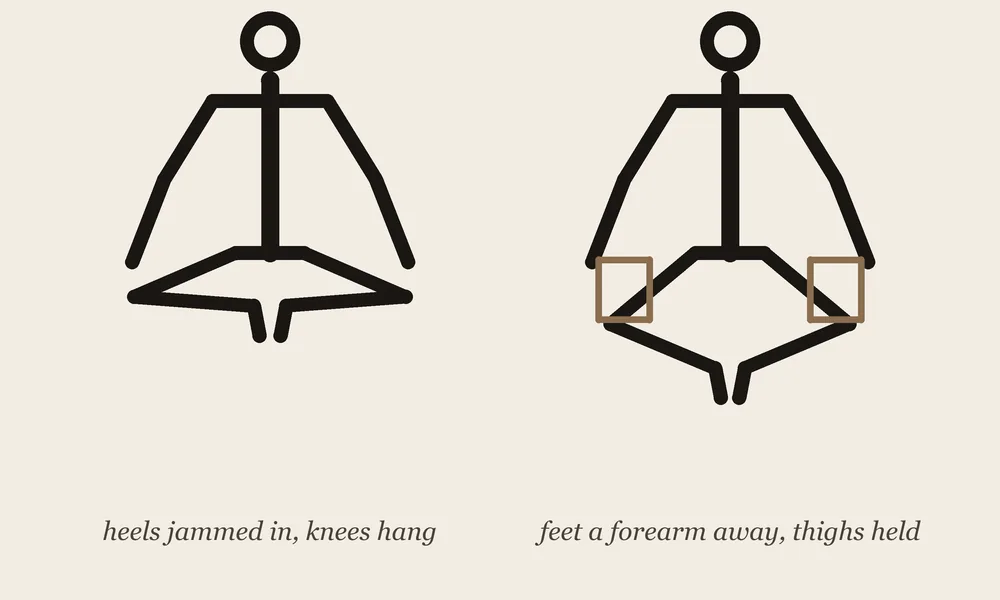
- Set the feet a forearm away Slide the feet forward until the heels are roughly a forearm’s length from your pelvis. Closer makes the stretch stronger; further away makes it gentler.
- Lower onto the forearms Lean back and lower onto your elbows and forearms, keeping the soles together.
- Lie down Ease the back down to the floor one section at a time. Rest your head on the folded blanket.
- Support the outer thighs Slide a block or a rolled blanket under each outer thigh, close to the knee, at a height where the legs feel held rather than hanging.
- Settle the arms Let the arms rest wherever the shoulders feel easiest.
- Breathe and stay Breathe slowly through the nose. Stay one to three minutes in a class, or five to fifteen minutes in a restorative practice.
- Come out slowly Use your hands to press the knees together, roll onto one side and rest there for a breath or two, then push yourself up to sitting.
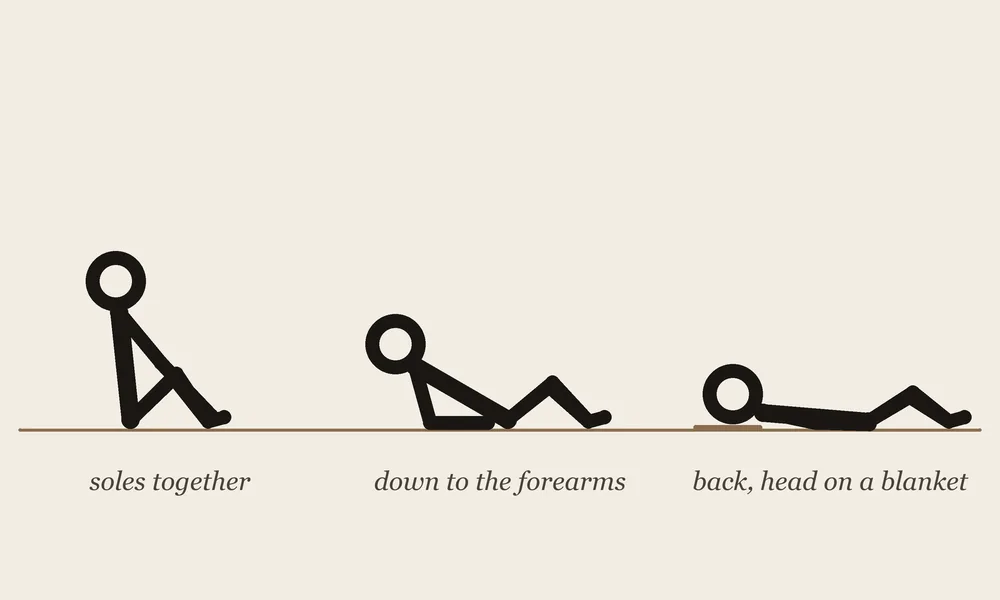
Before you settle, try the hand test in the Alignment section once: it shows whether your supports are high enough for your lower back to rest.
Alignment tips for Reclined Bound Angle Pose
Reclined Bound Angle Pose alignment is mostly about props: what holds the thighs, how far away the feet are, and whether the pelvis and the head are resting or straining.
The thighs: held, not hanging
The weight of each leg hangs from the hip. Without support it pulls the knees down until the inner thighs stop it at the end of their length. That is a stretch, and it keeps going for as long as you lie there. Blocks or rolled blankets under the outer thighs take that weight, so the inner thighs can let go.
Try this in Reclined Bound Angle Pose. Let the knees hang and slide one hand, palm down, under the small of your back. Now put a block under each outer thigh. If the back comes down and presses lightly on your hand, the hanging legs were pulling it into an arch. Raise the support until the back rests on your hand without effort. That height is yours today.
Teacher insight, YOGI TIMES editorial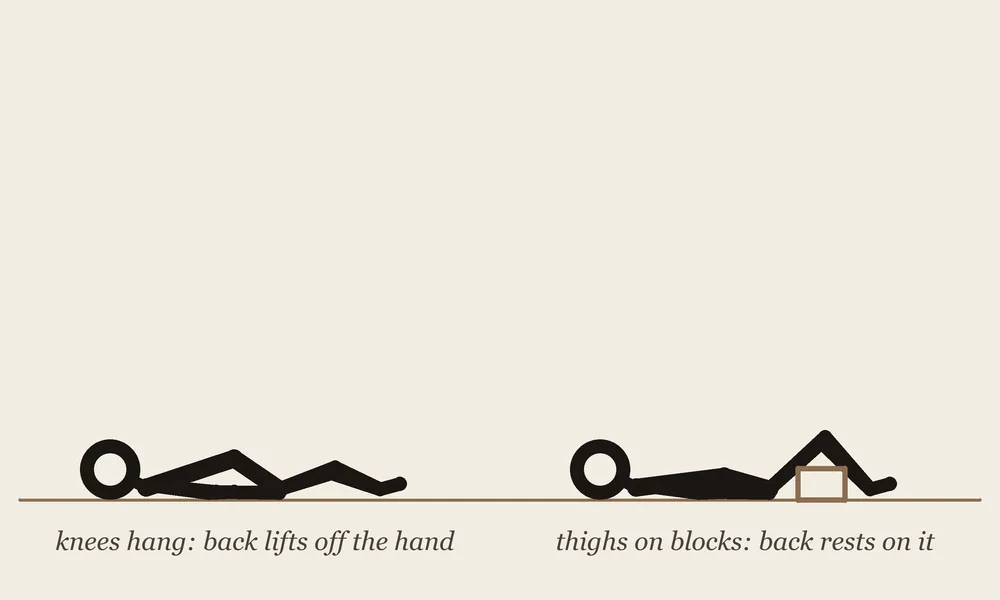
Feet: distance is the dial
The distance between your heels and your pelvis sets how strong the pose is. Heels close to the groin deepen the inner-thigh stretch and pull harder on the knees. Heels further away soften both. For a long hold, start with the feet about a forearm away and move them out rather than in.
Pelvis and lower back
Aim for a lower back that rests close to the floor with its natural small curve, without being pressed flat. A strong arch means the thighs need more support, and the hand test above shows how much. If the back still feels tight after that, a folded blanket under the hips or a bolster under the spine changes the angle enough for most people.
Head and neck
Place a folded blanket under the head so the chin sits a little lower than the forehead. Without it, many people’s heads tip back, the chin points up and the throat feels exposed, which works against the quiet the pose is for.
Arms and chest
Let the arms rest a little away from the body with the palms up, or put one hand on the belly and one on the chest. If the shoulders lift off the floor or the bolster, rest the forearms on folded blankets too.
Common mistakes in Reclined Bound Angle Pose
Reclined Bound Angle Pose mistakes mostly come from treating it as a flexibility test, when the pose is meant to be easy enough to stay in.
Correction: Hold the legs from underneath with whatever is in the room: yoga blocks, rolled blankets, sofa cushions. Keep the hanging version for a minute or two of stretching, not for a ten-minute rest. How to spot it: after a few minutes the inner thighs ache, and getting up feels stiffer than lying down did.
Correction: Take the hands off the knees. The knees go as low as the supports allow, and lower is not the goal in this pose. How to spot it: the hands rest on the knees, or the thighs quiver as you push.
Correction: Slide the feet out to about a forearm’s length from the pelvis. That one change usually softens the groin and the knees at once. How to spot it: a sharp pull at the top of the inner thigh or along the inside of the knee.
Correction: Raise the thigh supports first, then move the feet further away. A blanket under the hips or a bolster under the spine helps if the back still lifts. How to spot it: a hand slides easily under the small of the back, and the back feels tired rather than rested.
Correction: Fold a blanket under the head so the chin tips slightly toward the chest. How to spot it: the chin points at the ceiling and the back of the neck feels short.
Correction: Come out, add height under the thighs or move the feet away, then lie back again. A pinch is a joint signal, not part of the stretch. How to spot it: a small, sharp point of feeling rather than a broad, mild pull along the inner thigh.
Beginner modifications
Reclined Bound Angle Pose can be adjusted with a few household props, and each one below changes one specific thing.
Supta Baddha Konasana with a bolster
Sit with the short end of a bolster touching your lower back, then lie back along it so it supports you from the waist to the back of the head, with a folded blanket on top for the head. The chest lifts and the belly softens. Add blocks under the thighs as usual.
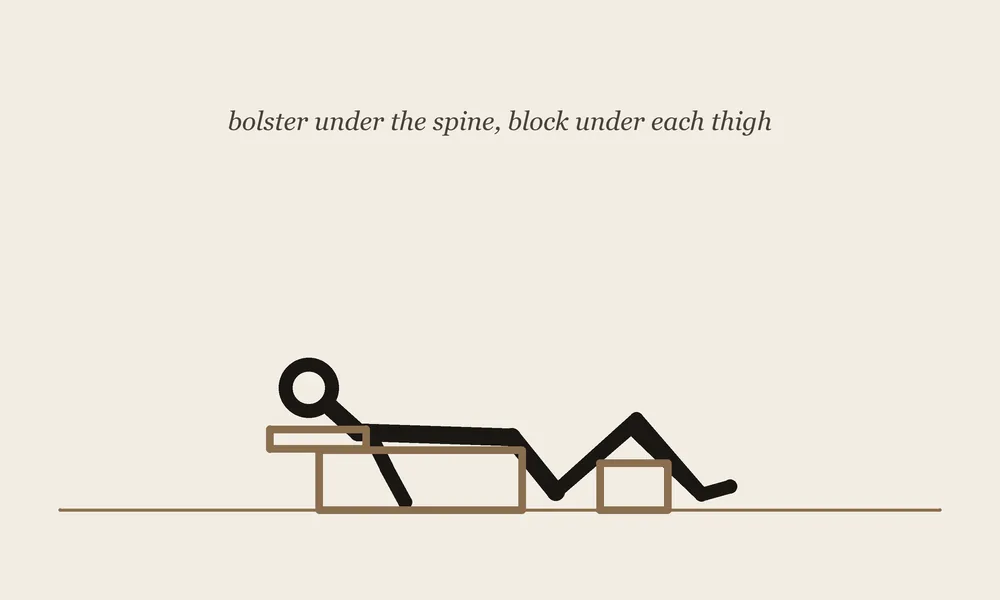
- Higher thigh supports. Blocks on their middle or tall height, or stacked blankets, if the groin or the inside of the knees pulls at all.
- Feet further away. Slide the heels out until the knees sit lower and the legs feel lighter; the shape becomes a wide diamond.
- Bolster on two blocks. One block under the head end, one lower down, so the bolster becomes a gentle ramp. This raises the chest further and suits anyone who should not lie flat for long.
- Cushions at home. Two sofa cushions under the thighs and a pillow under the head do the same job as studio props.
If even supported thighs bother the knees or hips, keep the feet flat on the floor and let the knees rest against each other instead. That is Constructive Rest, a different pose with the same quiet, and our guide to it is still to come.
Advanced variations
Reclined Bound Angle Pose does not get harder in the usual sense; its variations make it longer, more held or more open across the chest.
- The strapped long hold. Loop a strap behind your back at the base of the spine, bring it forward over the hips, across the shins and under the feet, and tighten it just enough to keep the soles together. Lie back on a bolster. An unpublished 2019 draft in our archive gives this set-up a ten to fifteen minute hold.
- Arms overhead. Over a bolster, rest the arms on the floor above the head, elbows bent if the shoulders prefer it, to open the chest and the sides of the ribs further.
- Feet on a block. Rest the joined soles on a block, which lifts the legs slightly and changes where the stretch sits in the inner thigh.
- Back to sitting. The natural progression is Bound Angle Pose itself, where you hold the shape sitting up and your own body does the work the floor does here.
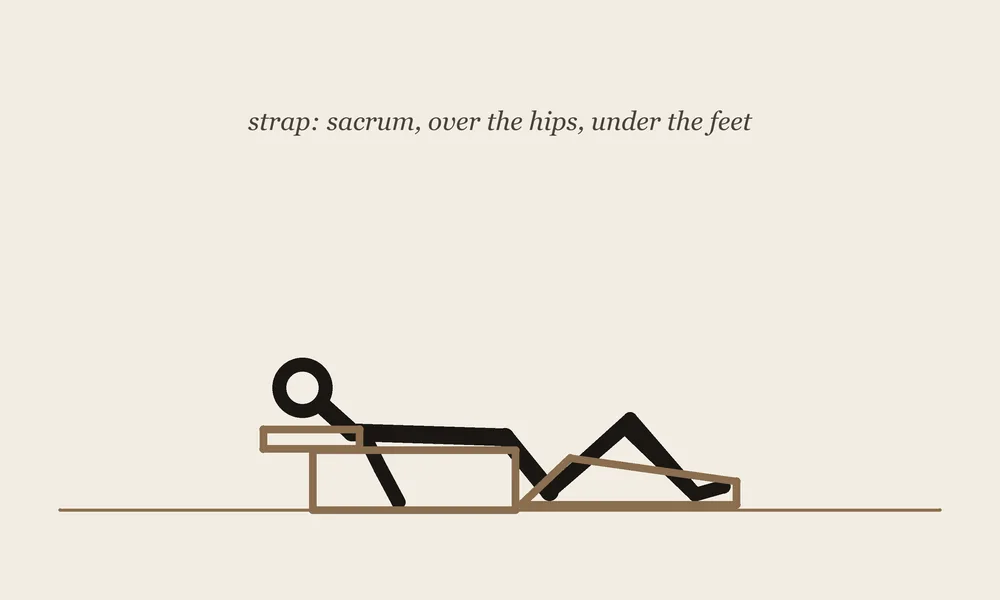
Fasten the strap so it holds the legs without squeezing them, and never use it to pull the knees wider. If the feet tingle or the hips feel locked, loosen it a notch.
Contraindications and safety
Reclined Bound Angle Pose is gentle, but it puts you flat on your back and leaves the inner thighs at length under the weight of the legs. Four situations call for a different set-up or a different pose.
Pregnancy. Lying flat on the back is the issue here, more than the legs. In later pregnancy the weight of the womb can press on large blood vessels, and the NHS advice on exercise in pregnancy is to avoid lying flat on your back for more than a few minutes. Use the bolster ramp with the chest well raised, or lie on your side.
Groin strain or a painful hip. The pose lengthens the inner thigh at the end of its range, under the weight of the legs. After a groin or adductor strain, or with hip pain or recent hip surgery, keep the thighs high on supports or leave the pose out until a professional says otherwise.
Knees. With the soles together and the knees hanging, the pull can travel down the inner thigh to the inside of the knee. Support the thighs close to the knee and move the feet further away; skip the pose if the knee still complains.
Lower back and sacrum. A pinch or tightness in the lower back usually means the set-up needs changing: higher thigh supports, feet further away or a bolster under the spine. If the sacroiliac joints at the back of the pelvis ache after the pose, support the thighs higher next time. With a current back injury, ask a doctor or physiotherapist first; the NHS page on back pain explains when to get it checked.
Come out if you feel sharp pain, pins and needles, dizziness or numbness in the legs, using the same slow exit as always: knees in, onto your side, then up.
Teacher cues for Reclined Bound Angle Pose
Reclined Bound Angle Pose cues work best when they are few and quiet, because a long hold is ruined by a teacher who keeps talking.
- “Feet a forearm away from you.”
- “Blocks under both thighs. Nobody gets to skip them today.”
- “Slide a hand under your lower back. If the blocks went in and the back came down, they are high enough.”
- “Chin a little lower than the forehead.”
- “Let the floor hold the legs.”
- “Knees in before you get up.”
The hand-under-the-back cue lets students check their own set-up, which saves the teacher a walk around the room and keeps the room quiet.
Ready to teach this pose in person?
Preparatory poses
Reclined Bound Angle Pose needs little preparation, but a few poses help the hips and back arrive ready to rest:
- Bound Angle Pose (Baddha Konasana): the same leg shape sitting up, so you know how far your knees open before you lie back.
- Happy Baby Pose (Ananda Balasana): on your back with the knees wide, a short, active turn-out before the passive one.
- Constructive Rest: on your back with the feet flat and the knees together, to let the lower back settle first. Guide still to come.
Counterposes
Reclined Bound Angle Pose leaves the hips wide and turned out, so the counterposes bring the knees back together gently before you get up:
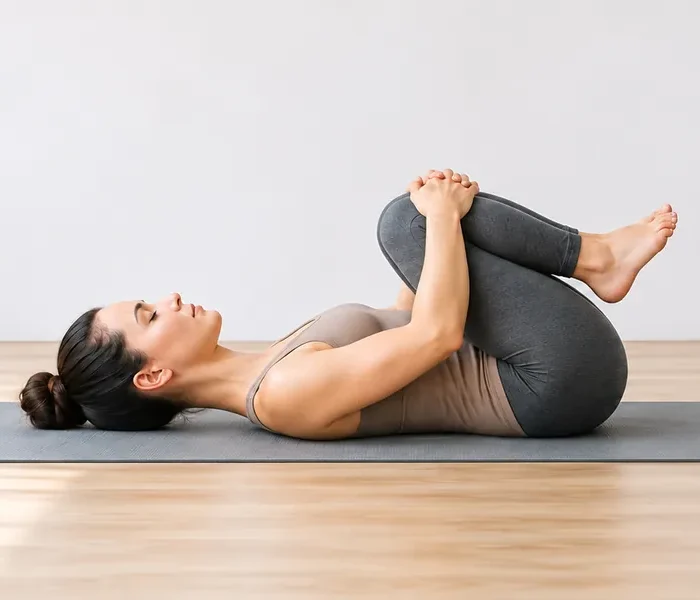
- Wind-Relieving Pose (Pawanmuktasana): hug the knees to the chest, which closes the hips and rounds the lower back slightly after the long open hold.
- Corpse Pose (Savasana): legs long and apart, the natural next pose at the end of a practice.
Sequences including Reclined Bound Angle Pose
Reclined Bound Angle Pose works best near the end of a practice, when the body is warm and there is nowhere else to go.
About fifteen minutes
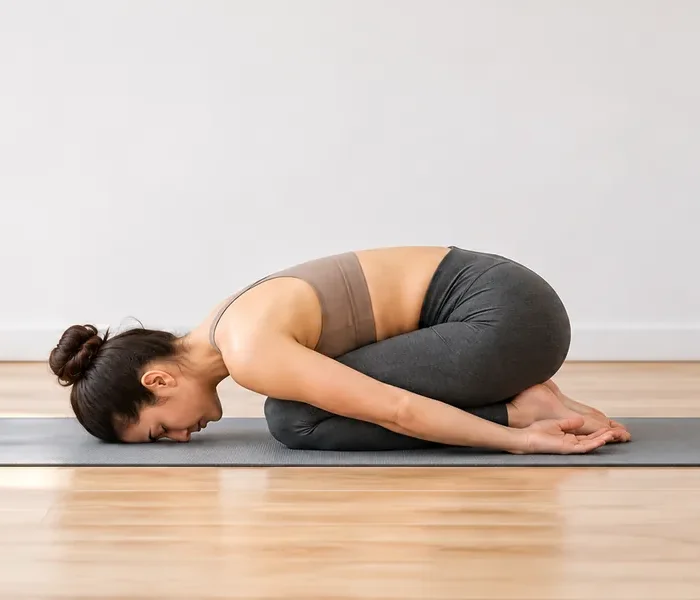
- Child’s Pose, 2 minutes
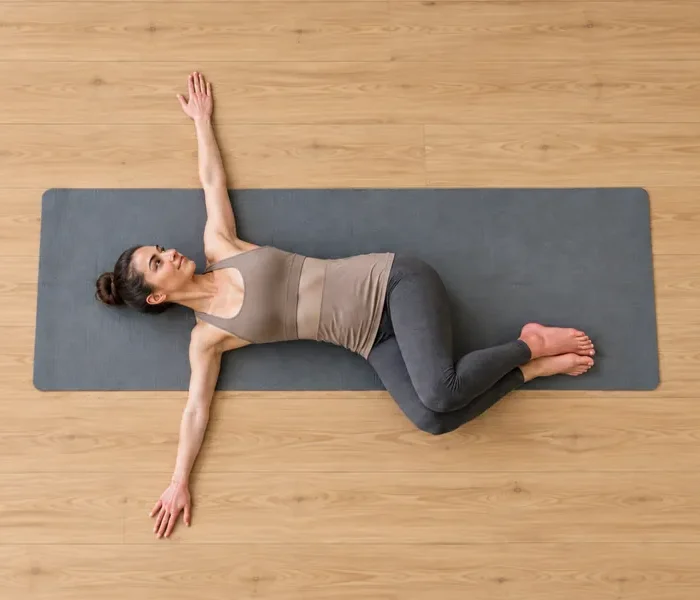
- Reclined Spinal Twist, 1 minute each side
- Supta Baddha Konasana over a bolster, blocks under the thighs, 6 minutes
- Wind-Relieving Pose, 5 breaths
- Corpse Pose, 4 minutes
About twenty minutes
- Corpse Pose, supported, 5 minutes, eyes open
- The butterfly legs on your back with every prop in place, 8 minutes
- Legs-Up-the-Wall, 5 minutes
- Lie on your side, 2 minutes, then sit up
About eight minutes
- Bound Angle Pose, sitting tall, 1 minute
- Lying back with the knees left to hang, 2 minutes
- Slide in two blocks and stay 3 minutes more
- Wind-Relieving Pose, 5 breaths
The quiet practice follows the order of a sequence in our archive that put the pose straight after Savasana. For a longer evening set, our full moon restorative practice holds it for five minutes with pillows under the knees.
What this pose teaches
What is left for the body to do in Reclined Bound Angle Pose once the floor and two blocks hold everything? Very little, and many students find that harder than effort. They lie back, the knees hang, and the habit of making a pose “work” keeps the inner thighs and the lower back busy.
Adding the supports is the lesson. Rest in yoga is something you set up, the same way you set up a standing pose: feet in the right place, weight carried by the right thing. Once a student has felt the back settle onto a hand after the blocks went in, “relax” stops being an instruction and becomes a set-up they know how to make.
Put your name on Reclined Bound Angle Pose
Related poses
Reclined Bound Angle Pose belongs to two families at once, the butterfly-legged hip openers and the poses done lying on the back:
- Bound Angle Pose (Baddha Konasana): the seated parent pose, where the hands hold the feet and the back holds itself up.
- Happy Baby Pose (Ananda Balasana): also on the back with the knees wide, but the hands hold the feet and the knees draw toward the floor.
- Reclined Butterfly on a Bolster: the fully propped restorative version; for now its set-up is under Beginner modifications here.
- Fish Pose (Matsyasana): another chest-opening pose on the back; guide still to come.
- Restorative pose guides and all pose guides.
Reclined Bound Angle Pose: what people ask
For a hold longer than a minute or two, yes, or something that does the same job: rolled blankets, cushions or a folded towel. Place them under the outer thighs near the knees rather than right under the kneecaps. Supports have nothing to do with stiff hips. They let the inner thighs and the lower back stop working.
Usually because the legs are hanging at the end of their range and the heels are close to the groin. Move the feet further from your pelvis and raise the supports under the thighs. An ache that fades once the legs are held is ordinary stretch; a sharp pull at the top of the inner thigh is a reason to come out.
The inner-thigh muscles attach to the front of the pelvis, so legs hanging at full stretch can tip the pelvis and arch the lower back. Higher supports under the thighs usually fix it. If not, move the feet away, or lie back on a bolster with a folded blanket under the hips.
One to three minutes is common in a flowing class. In restorative practice, five to fifteen minutes is usual once the thighs and head are supported. Stay as long as the legs feel held and nothing tingles or pinches, then press the knees together and roll to one side.
The leg shape is not the concern; lying flat on your back is. The NHS advises avoiding activities that keep you flat on your back for more than a few minutes in later pregnancy, as it can make you dizzy. Practise it on a bolster raised into a ramp, or lie on your side, and check with your midwife or doctor.
Yes. Reclined Butterfly, Reclining Bound Angle and Reclining Cobbler’s Pose are English names for Supta Baddha Konasana. Some restorative teachers also call it reclining goddess. The seated version, Bound Angle or Butterfly, is a separate pose with the same leg shape and more work for the back.
Final thoughts
Put something under each thigh before you decide how open your hips are. Reclined Bound Angle Pose is at its best when the legs, the head and the lower back are all held, and the only thing left for you to do is breathe.
If you would like to lead this kind of class one day, read what it takes to become a yoga teacher who can set up a restorative class. For practice at home between classes, the beginner yoga app we chose after testing has guided restorative sessions that include this pose.
References
- Baddha Konasana, Wikipedia, for Supta Baddha Konasana as a common reclining variant, the glosses supta (supine, reclining), baddha (bound), kona (angle), and the older seat Bhadrasana in the Hatha Yoga Pradipika. Checked 14 November 2026.
- Supta and Baddha, Wisdom Library, for the senses “asleep, sleeping” and “bound, tied”. Checked 14 November 2026.
- Exercise in pregnancy, NHS, for the later-pregnancy limit on time spent flat on the back. Checked 14 November 2026.
- Back pain, NHS, for when back pain needs checking. Checked 14 November 2026.
- YOGI TIMES archive: our Bound Angle Pose and Goddess Pose guides; two unpublished archive drafts (2015, a sequence for times of crisis in the Iyengar tradition; 2019, a bolster and strap set-up with a 10 to 15 minute hold).
- Teaching sources read on 14 November 2026 and not linked: US pose libraries and teaching articles, and German, Spanish, Swedish and Norwegian pose pages. They agree on the soles together, props under the thighs and a bolster under the spine, and differ on how close the feet should be and how long to stay; the page reports both.
- YOGI TIMES search data from Google Search Console, November 2025 to November 2026, pulled 14 November 2026: no impressions for searches containing “supta baddha” and one for “reclined bound angle”.
- The hand test under Alignment follows from the pose’s anatomy: the inner-thigh muscles attach to the front of the pelvis, so their pull at full stretch can reach the lower back. We found no source that uses a hand under the back to choose the height of the thigh supports, so the page labels it a YOGI TIMES editorial deduction.
Related Posts


Free course finder
Which online course fits you?
One question, and we send you all nine programs compared honestly, including who each one is not for.
One short email series, no spam. Unsubscribe anytime.
Free comparison
Nine online courses, compared honestly
Price, format, certificate, and the column most sites skip: who each course is not for. Read it before you pay.
One short email series, no spam. Unsubscribe anytime.

YOGI TIMES · Your privacy
A few cookies, only with your yes
We use cookies to understand what you read and to measure our own marketing. Nothing is set until you choose. Privacy policy